

Japan has a reputation as one of the safest places in the world to travel alone, and for the most part it earns it. You can take the last train. You can walk back to your hotel at midnight. You can leave your bag on a cafe table while you go order, and it will still be there. If you are planning a solo trip to Japan as a woman, that reputation is probably a big part of why Japan made the list in the first place.
Here is the part nobody warns you about.
Japan is also one of the easiest countries on earth to spend ten days in without having a single real conversation.
You will talk, technically. You will say sumimasen, you will order food, you will thank a station attendant. But you can go Tokyo to Kyoto to Osaka and back, see everything on your list, come home with a camera roll people actually envy, and slowly realize you never talked to anyone. Vending machines, ticket machines, ordering tablets, konbini staff who are perfectly polite for exactly thirty seconds. The efficiency that makes it comfortable is the same efficiency that seals you in. Nothing here requires you to need another person, so you never do.
So this is the practical version. Not "put yourself out there," which is not advice, it is a bumper sticker. Specific places, specific moves, and the one thing worth doing before your flight.

This is the standard advice, and it works. Book a hostel with a bar or a real common room instead of a business hotel, show up at the free-drink hour, and you will be talking to somebody within ten minutes. Nobody there is a stranger for long, because everyone arrived alone and everyone knows it.
Just be clear-eyed about what you are getting, which is mostly other travelers. It is fun, it is genuinely easy, and it is a rotating cast of Australians and Germans doing the exact same route as you, three days ahead or three days behind. The friendship has a departure time attached to it from the first sentence.
That is not nothing. A hostel crew will get you to an izakaya you would not have found alone. But if you flew across the Pacific to meet Japan, a room full of tourists is a strange place to look for it. Guesthouses in smaller cities tend to skew more local than the big Tokyo party hostels, and the staff at those places are often the most connected people you will meet all trip.
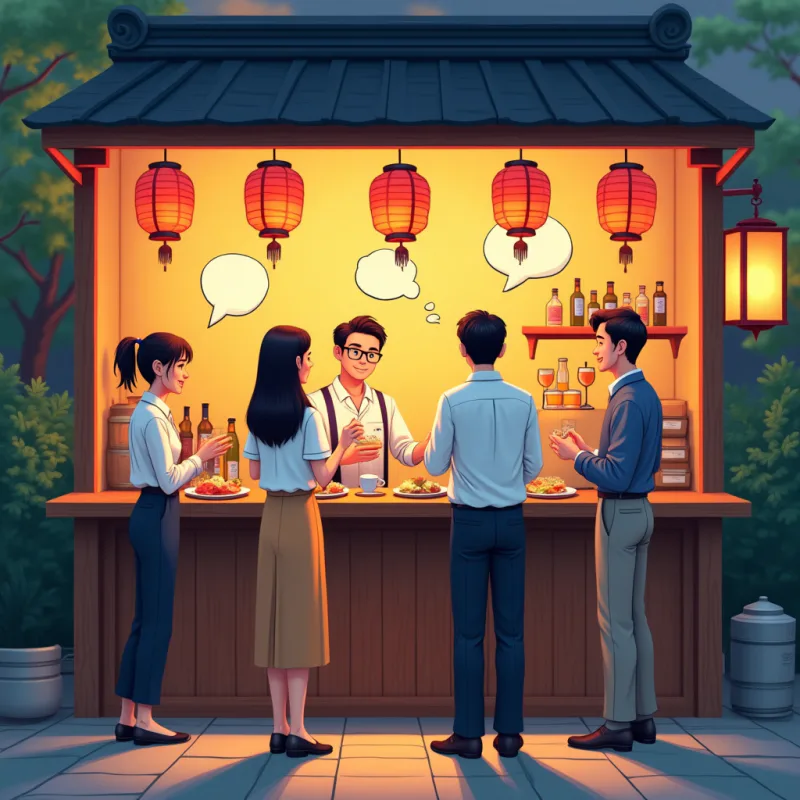
If you want the single highest-yield place to talk to a local in Japan, it is a tachinomi, a standing bar.
Here is why they work. Sit down in a restaurant and you are in a sealed pod with your own table, your own menu, your own bubble. A standing bar has no tables and no assigned seats. People stand shoulder to shoulder, they rotate through in an hour, and there is an unspoken agreement that talking to whoever ends up next to you is completely normal. The whole format is built for strangers. You are not intruding. That is the point of the room.
The mechanics, if you want them. Go early, roughly six to eight in the evening, when the after-work crowd lands and before anyone is drunk. Order the same thing as the person beside you, which is both a good ordering strategy and an opening line. Let the master behind the counter do the introducing, because that is half his job and he is better at it than you are. Yakitori counters work the same way.
Try the tachinomi clustered around train stations rather than the ones in guidebooks. Omoide Yokocho in Shinjuku is famous and touristy but still fun. Osaka's Tenma area is denser and looser. Golden Gai is a coin flip, some bars are lovely and some have a cover charge and a regulars-only atmosphere you will feel in about four seconds.
On safety, since this is a bar and you are alone. Standing bars are public, well lit, small, and you can leave at any moment without a scene. Being the only woman at the counter is unremarkable and almost never a problem. Pace your drinks, keep your own tab, and if a place feels off, walk out. You are not being rude. You are being a person who leaves.
Here is the thing about Japan that takes most travelers years to figure out. This is not a country that runs on introductions. It runs on repetition.
Nobody is going to strike up a conversation with you on your first visit anywhere, and that is not coldness, it is just the tempo. But go back to the same place three times and something shifts. First visit you are a customer. Second visit you get recognized, maybe a slightly warmer greeting. Third visit you get the nod, and often a question, because now you are not a tourist, you are the person who keeps coming in.
Four days in one city is enough for this, which is why it is criminally underused. Pick one small independent cafe near your hotel, not a chain, ideally one with a counter. Go at the same time each day. Sit at the counter, not the corner table with your laptop.
And when you talk, ask about the thing they care about. Where the beans are from. Why they make it that way. Which one they would drink. A genuine question about someone's craft gives them a script, and a script is exactly what a shy person needs to talk to a foreigner. The same trick works on the bartender, the bookshop owner, and the guy at the tiny ramen counter.
Small talk is hard in any language. A shared task is not.
Cooking classes, pottery, soba making, a walking tour, a hike, a run club. A shared task beats small talk, because you are not standing there manufacturing "so, where are you from." You are both trying to pleat a gyoza and both failing, and the conversation happens sideways while your hands are busy. That is how humans actually make friends, and it is the one social format that survives a language barrier intact.
One caveat worth knowing. A lot of tourist-facing classes are full of other tourists, which puts you right back in the hostel situation. The smaller and less English-marketed the class, the more likely you are sharing a table with someone who lives there.
Everything above is what to do once you are standing in Japan. This is the part to handle at home, and it is the one that actually changes the trip.
Most people download a friend app on day eight, in a hotel room, after realizing they have not had a real conversation all week. That is too late. Day eight is when you are tired and half your trip is gone.
SewaYou is a map. You open it and real people near you show up on a map, people who explicitly want international friends. There is no swiping, no filters, no algorithm deciding who you are allowed to see. You are on the map too, so people around you can find you the same way. That is the whole product.
Which is why installing it before you fly matters. Write your profile at home, mention you are visiting and roughly when, and explore Shibuya or Kyoto on the world map to start conversations before departure. Browsing your destination does not change your actual location or make your profile appear there. You can also find people nearby during your trip and in your own neighborhood when you get home.
Make Japanese Friends On a Live World Map
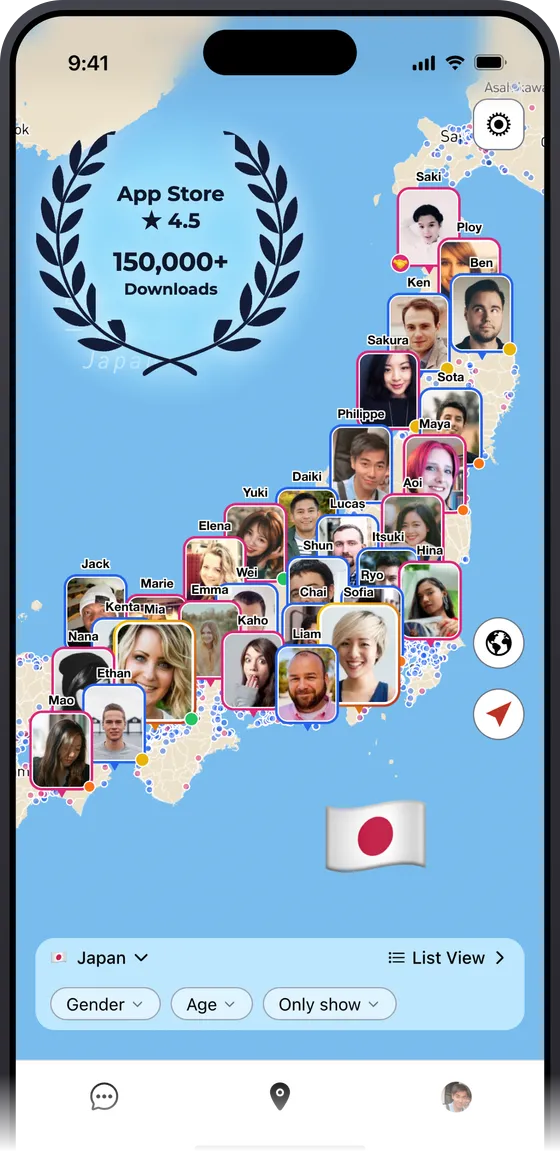
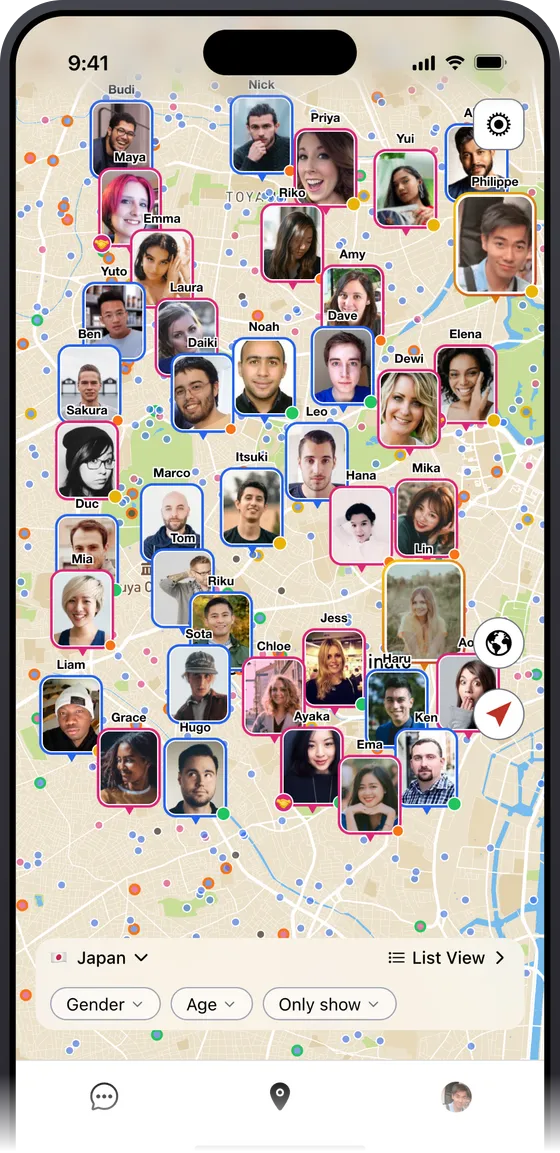
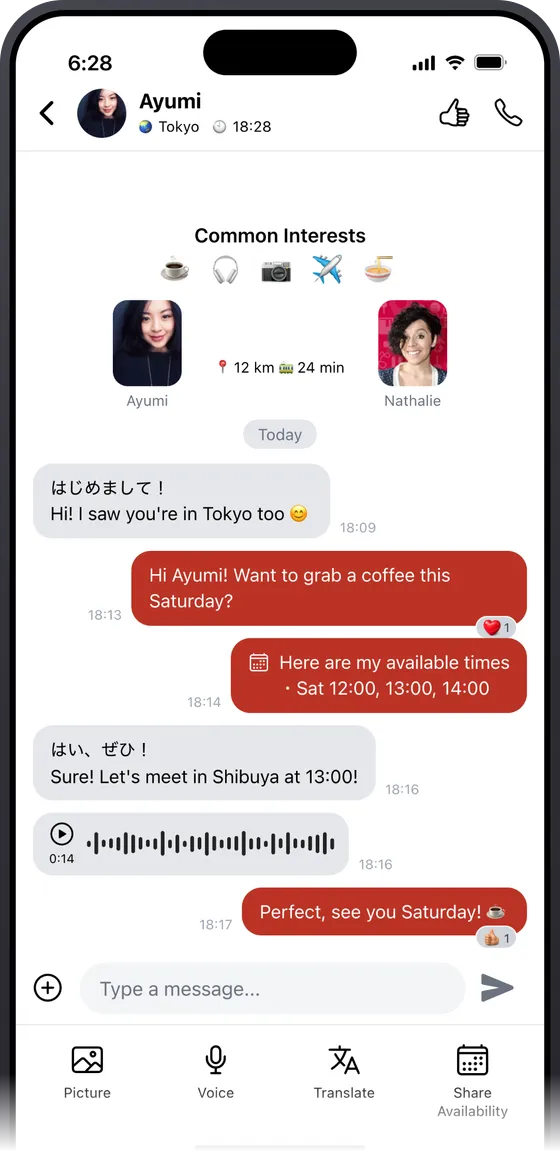


Then meet like a sensible adult. Coffee, daytime, a public cafe near a big station, and tell somebody at home where you are going. Your position on the map is approximate and never your exact address, so you are the one deciding what you share and when. And if you would rather skip the entire question of unwanted attention, turn on Same Gender Mode for women only, which means you only see, and are only seen by, other women. A lot of solo travelers use it for exactly that reason and never turn it off.
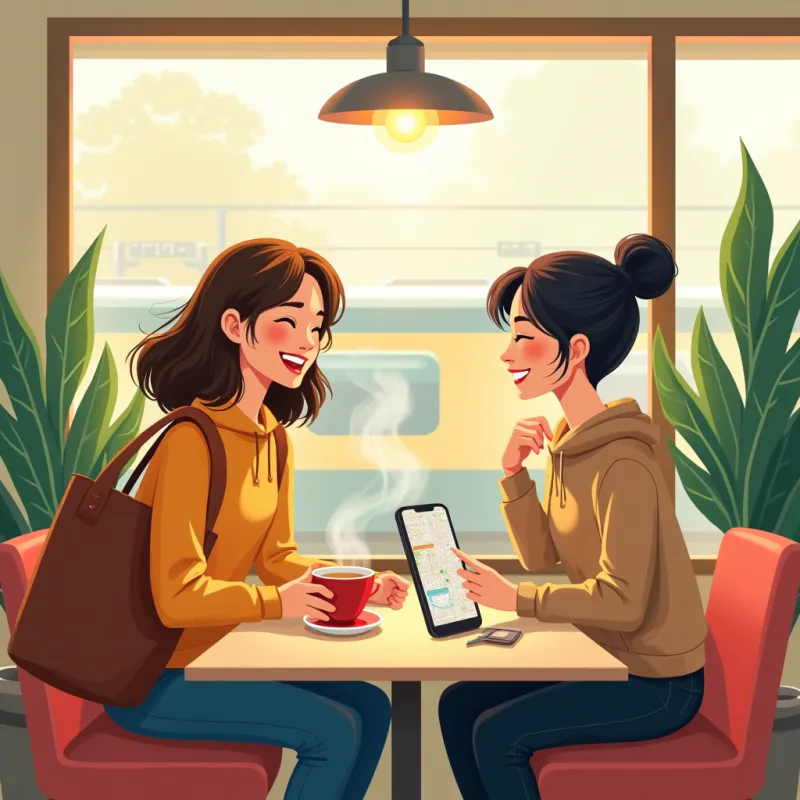
You can see Kyoto perfectly well on your own. The temples do not require a companion, and honestly some of them are better without one.
But there is a difference between seeing a city and being shown one, and it is bigger than it sounds. It is the difference between the restaurant with the English menu and the one with six seats and no sign. Between the tourist route through a neighborhood and the shortcut somebody's used since high school. Between photographing a festival and being handed something and told to try it.
One local friend rewrites the trip. Not because they become your tour guide, they will not, and you should not want that. Because a place stops being scenery the second someone who lives there is standing next to you in it. That is also the friendship that outlives the flight home, the one still texting you in November about the snacks you liked.
Japan is safe enough that you can do this trip completely alone and be totally fine. That is exactly the trap. Fine is easy to settle for here.
So do the small things. Take the counter seat. Go back to the cafe a third time. Stand at the bar and order what he is having. And before you get on the plane, download SewaYou and open the map, so that on your first morning in Tokyo there is already someone nearby worth saying hi to.


