

If you're learning a new foreign language, or just trying to perfect your English or any language that you've been learning for decades, I'm pretty sure that using a language exchange website or application comes to your mind.
No need to explain what a language exchange is. Ideally, the potential language partner should be learning your native language, and they should speak natively the language you're learning.
A lot of websites offer this kind of service, like Interpals, Conversation Exchange, or My Language Exchange, but also more modern ones like Tandem or HelloTalk. There are also newer map-based apps like SewaYou.
Being a language enthusiast myself, I've used language exchange sites and apps for years. But in this article I'm not gonna give you a review of each one of them. Instead I'd like to give an overall point of view on language exchange itself. Here are some of my takeaways.
People come to language exchange for lots of reasons. Some just want to chat with someone from another country when they're bored, some want new friends, and some are hoping to meet a partner.
That's human. Language exchange sessions can turn romantic, and if exchanging culture and language brings two people closer, why not. The problem only starts when expectations don't match: one person wants to practice, the other wants something else.
The typical elements that constitute a language exchange are:
The profile photo has a huge influence on who gets a first message.
When people browse a list of profiles, the photo is the first thing they see, and it often decides who they write to before they read a single word of the bio.
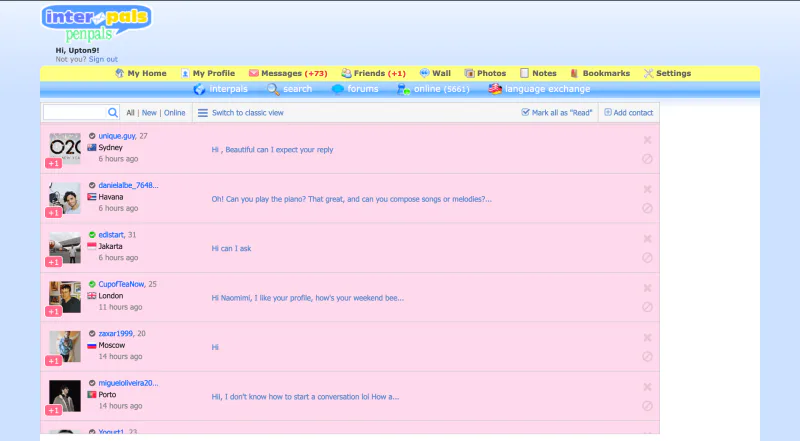
That's why it helps to say clearly in your profile what you're looking for. If you only want language practice or friendship, write it in your bio, and feel free to ignore messages that aren't what you came for.
If someone keeps pushing after you've said no, block and report them. Your time is better spent on the people who share your goal.
The simple reason is that language exchange has been around for decades, and the best-known sites are easy to find. People see a big community and sign up, and the cycle continues.
In my experience, a lot of conversations that start on a language exchange site quickly move to a messaging app people already use every day, like Skype, LINE, WhatsApp, Instagram or Facebook.
That's natural. People like real-time notifications and voice and video calls in the app they already have open all day. So conversations follow them there.
So does it mean that there is no meaning for using all those language exchange websites? Not at all. Try them by yourself and see what works for you. What I can tell, in my view, is that relationships that stay inside a chat window tend to be short-lived unless they move into real life. But is it really the goal to do so to begin with?
Some apps have added other features, like a social feed of posts (like HelloTalk's Moments) where native speakers can respond to what you write and help you spot your mistakes. This is a really great feature. As with any social feed, what you get out of it depends on who you follow.

Another way is to have a network of professional teachers directly part of their core features (like italki). Many language exchange apps and websites end up looking quite similar, and in my view their real asset is their community.
Swiping, made famous by dating apps, has also arrived in language exchange. Some apps let you browse profile cards and swipe to send a friend request, and you chat once the other person accepts.
An example is Langmate, which describes itself as a place where people who love Japan come to meet Japanese people, make friends and just talk. According to its own site, matching and chatting are free, with paid credits and plans for extras, and its App Store text says the free cap on new chats is the same for everyone, whatever their gender.
The same kind of apps also exist for Korea given the popularity of the Kpop culture.
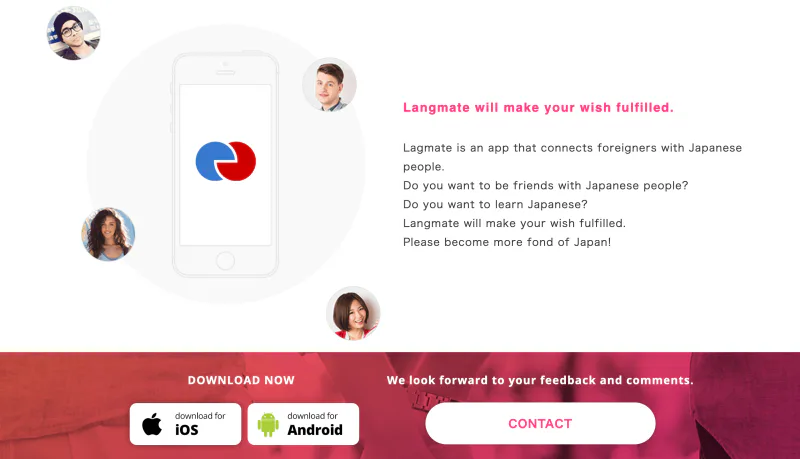
In my view, card-swiping suits people who enjoy browsing profiles. If you'd rather pick someone because of what they write, or because they live near you, a profile-based or map-based app may fit you better. Whichever model you pick, read the pricing page first so you know what is free and what costs extra.
Another type of language learning app is the AI-based chatbot app, and it has spread like mushrooms. OMG, how many times I wanted to close the YouTube app when I see those apps ads pop out over and over again...
Don't get me wrong, the idea was kind of well thought (simple idea though), but many of the ones I tried just didn't work for me.
You're being asked to say something out loud in order to complete an exercise, and when I try to just swear or say something in a different language, or worse, just saying some random things, it was still considered as a valid answer...🙄
As you read the following paragraph, you might probably think that this is a shameless plug, but hear me out.
If we take all of the above points, the ideal language exchange app will have:
Of course, technology-wise, those features can be implemented. But what can't be changed is the human behavior side of things. Identity checks and profile reviews help, but no app can guarantee how people behave once they're in.
What I'm trying to do with SewaYou, the app that I've built, is to make it easy to meet people in the same area around you in real life, as friends, with the language exchange happening naturally along the way.
Want to keep things platonic? You come to the right place. On SewaYou, you can enable the Same Gender Mode option, and only interact with people in the same gender.
Users know what to expect. Instead of endless messages from users from all over the world which end up being ignored on either side, I focus on making it easy to get from a first message to a real meetup, something that can be done quickly and simply. The promise is not to have life-long relationship with everyone you'll meet, but I believe it will contribute immensely. A 30 minutes 1-on-1 real-life interaction is worth more than 3 days of chatting.
Make Japanese Friends On a Live World Map
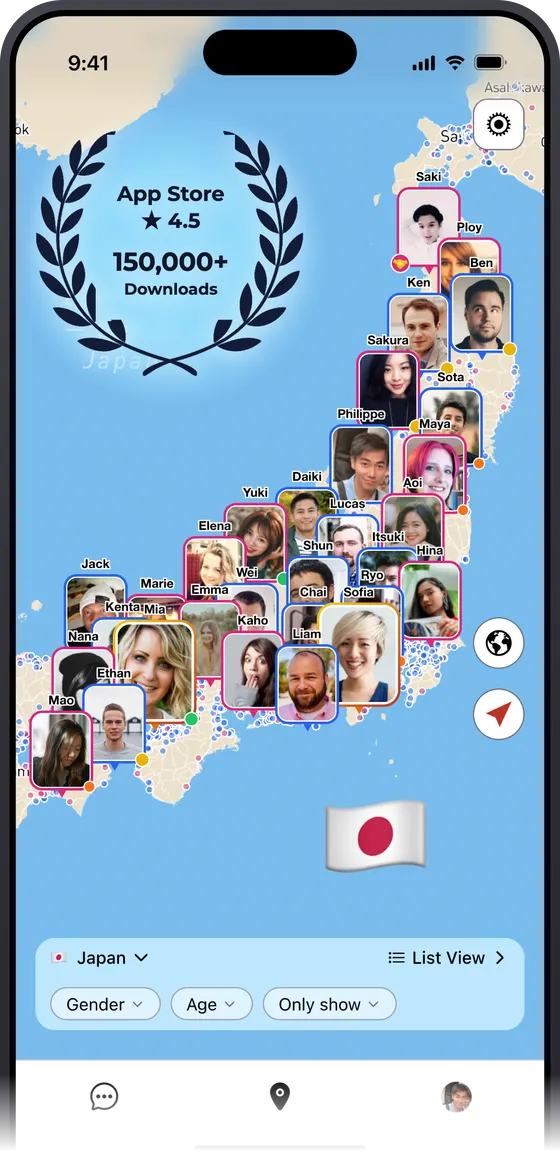
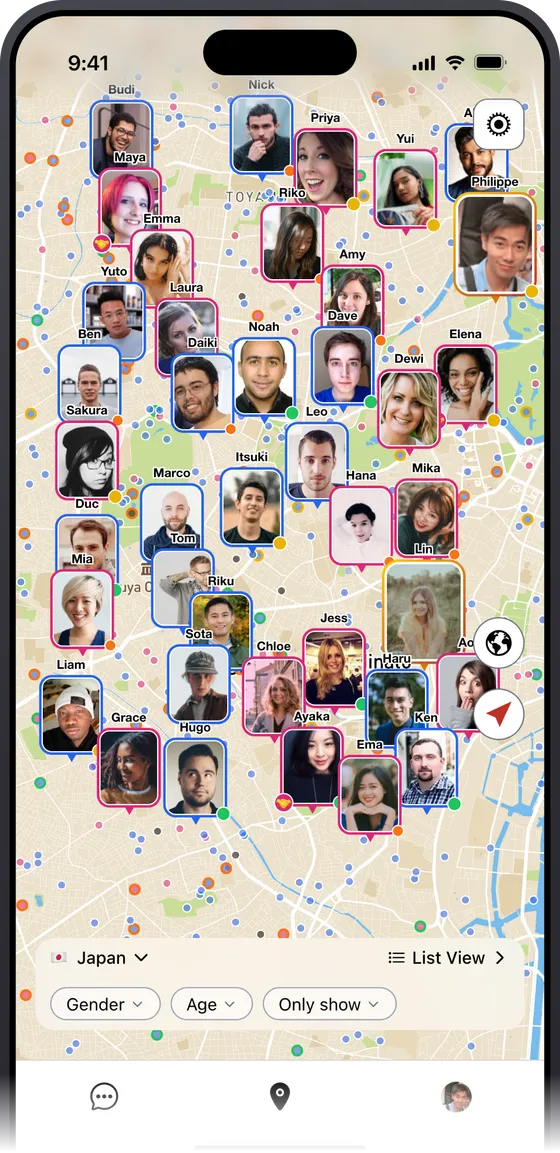
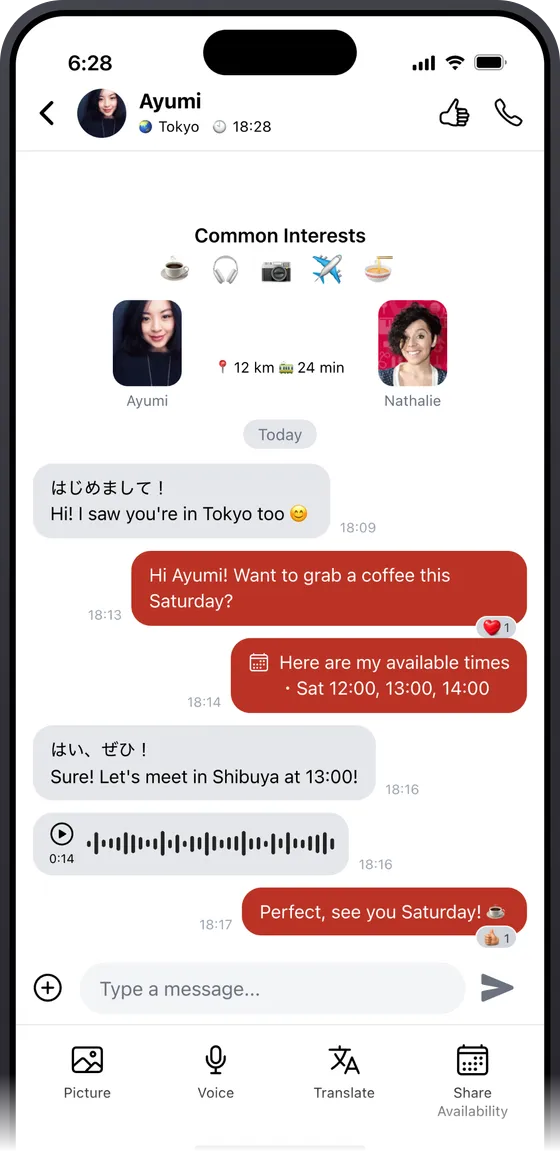


Some people might sound really weird or creepy on a chat, but are actually really nice people to interact with in real life.
The core focus of SewaYou is on the location and users availability. Of course, it will not sound safe to directly meet up with people you just meet online via an app, but how come people date complete strangers they met through dating apps? I don't think that people are hesitant to meet others because they think that it is not safe to do so.
People won't meet because it doesn't fill an urgent need. Most of us are learning a foreign language, but it won't kill not to practice every single day. Moreover, despite saying that we are busy, most of us always have one or two spare hours after work to do something useful such as meeting someone new instead of scrolling through our phones...
The challenge and ultimate goal that SewaYou is pursuing is to make the logistics to meet up with someone seamlessly easy, and to help those real-life meetups grow into real friendships, with language practice as a bonus.
The long term vision is to make people think that meeting someone for 2 hours in a cafe from an app becomes a common thing, like the way Uber and Airbnb make people think that it's completely normal to stay in a stranger house or ride on a stranger car.
There is a looooong way ahead to achieve that long term vision though 🤔


