

Every guide to moving to Osaka tells you the same thing: Osakans are warm, loud, generous with strangers, the Kansai dialect breaks the ice, you'll be making friends in a week. The first part is true. The "in a week" part is a fantasy that costs new arrivals three lonely months on average.
Osaka rewards the foreigner who already knows one local. It does not reward the foreigner standing alone in Namba on a Friday night hoping someone strikes up a conversation. The friendliness is real, but it activates around an existing introduction, not around an isolated stranger.
The good news: getting that one introduction before you land is the highest-leverage move you can make for the entire first year in Kansai.

Here is the version most solo movers live and nobody warns about.
Week one: hotel, apartment hunt, exhausted. You eat at the konbini across from your temporary place because you do not yet know what is good.
Week two through four: you start the job. You learn the commute. Your colleagues are friendly but they go home to their families. You realize the famous Osakan warmth is real but it lives in groups, not in 1-on-1 cold openers.
Month two: you try the meetup scene. The international meetup at a bar in Shinsaibashi is mostly other recently-arrived foreigners in the same loop as you. You exchange Line IDs. None of you follow up because none of you are local enough to suggest a "I know a place" plan.
Month three: you accept that this is just how it is. You start booking weekend trips out of the city to break the loneliness. Some people never break the loop and just leave Osaka after a year.
The version below skips the loop entirely.
Tokyo absorbs strangers. The scale of the city means a lonely foreigner is just one of thousands of lonely foreigners, and there are enough events, enough meetups, enough English-friendly venues that you eventually bump into someone.
Osaka is smaller and tighter. The international community is real but more concentrated. The Osakan locals on the apps and meetup scene are explicitly there because they want to meet foreigners. The hit rate on a pre-arrival message is higher than in Tokyo because the audience is smaller and more intentional.
This means three or four well-aimed messages a month before your move land you a real introduction. In Tokyo you might need ten messages to land two coffees. In Osaka three messages reliably land one or two.
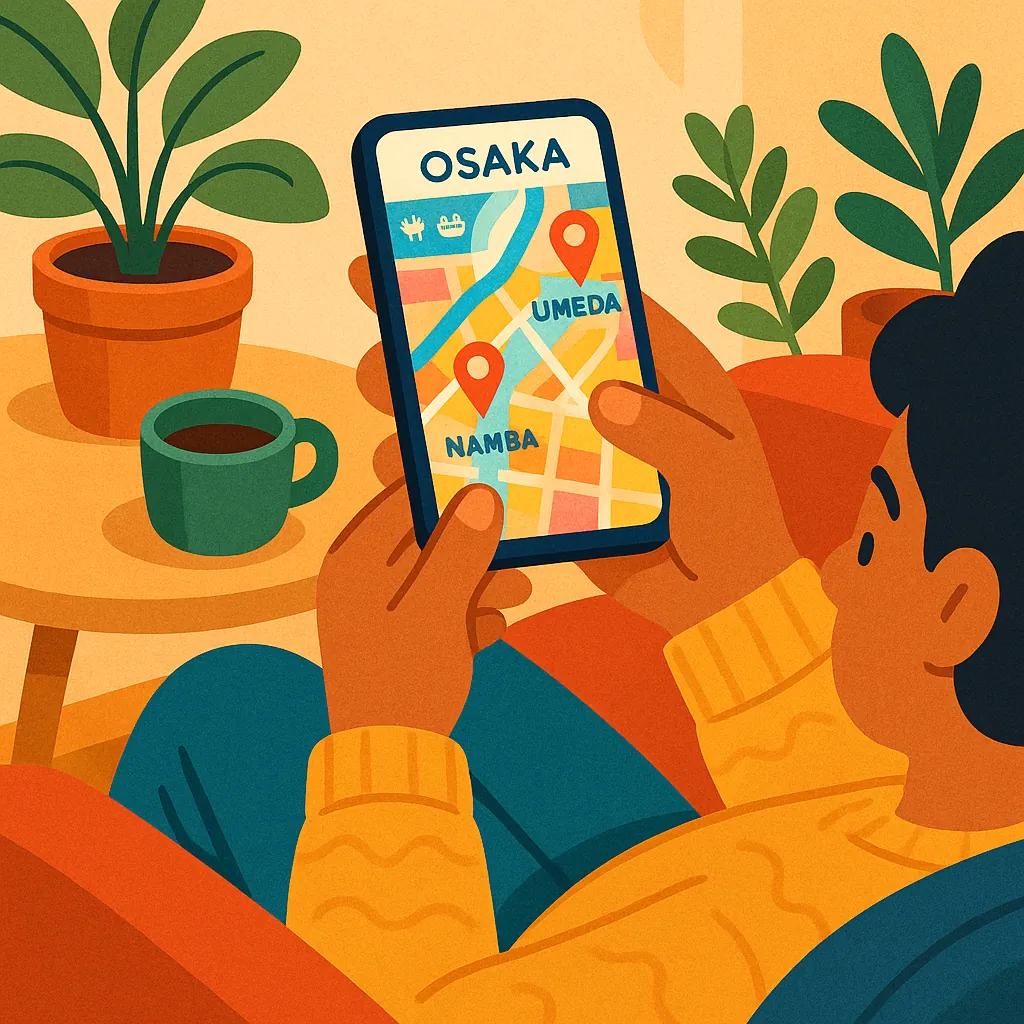
SewaYou is a map-based app where you can set the map to anywhere in the world, including Osaka, from your couch in any country tonight.
Make Japanese Friends On a Live World Map
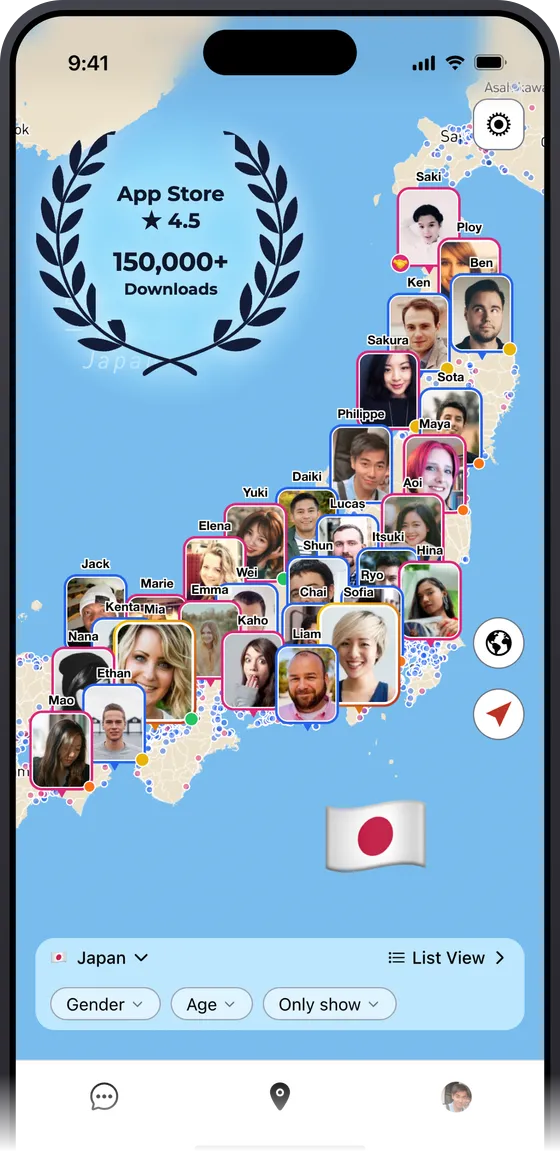
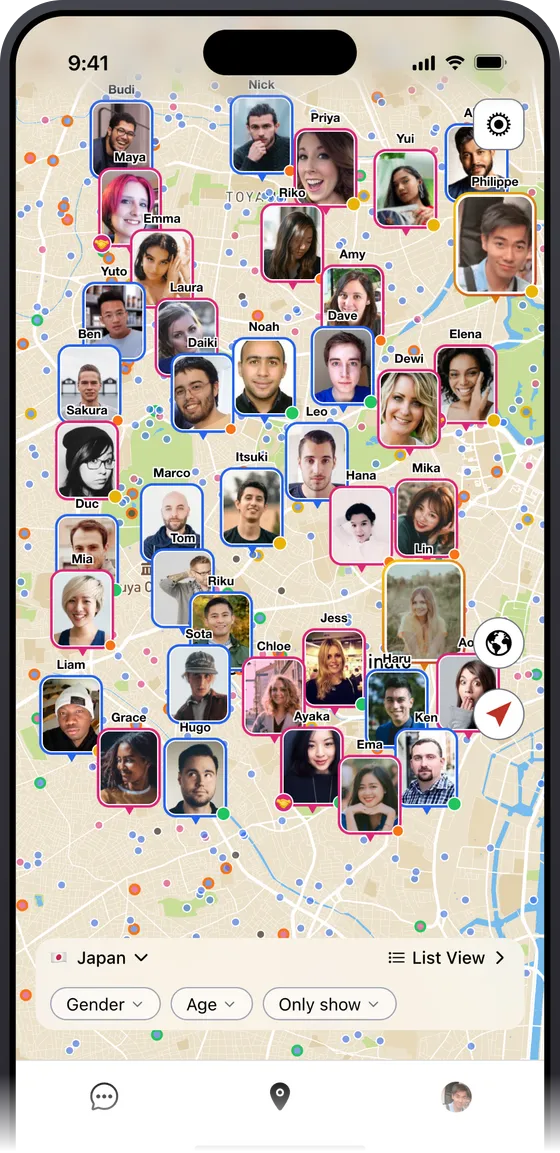
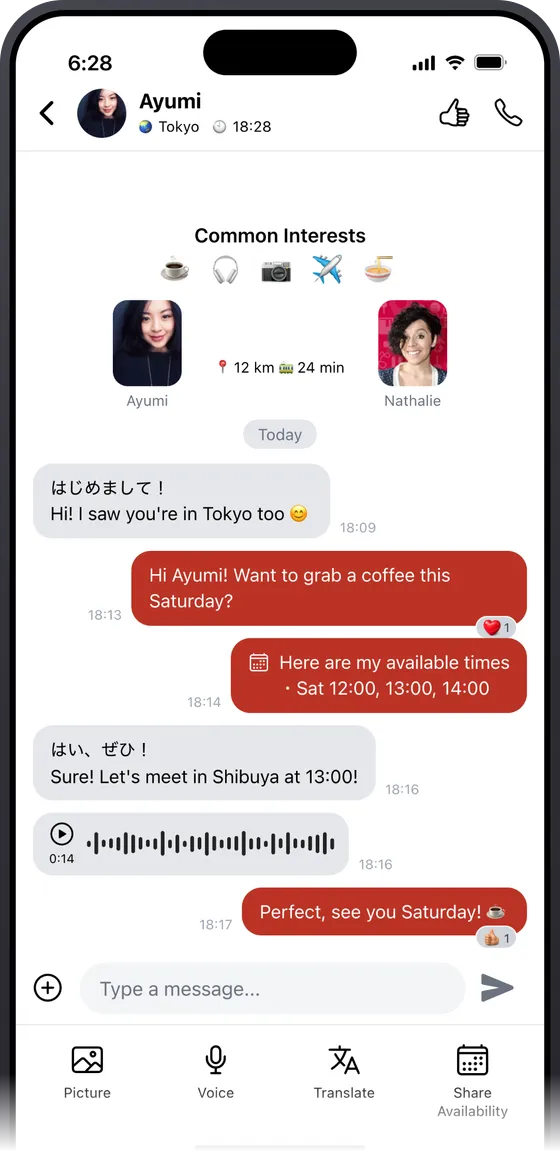


Four moves, Osaka-tuned:
Install SewaYou, set the map to Osaka. Zoom to Namba, Umeda, Tennoji, Fukushima, wherever you'll be. The denser central wards are where most of the friendliest 20-40 age cohort hangs out.
Read the profiles of three to five locals near where you'll be living. The signal is strong here. Osakans on the app skew curious and chatty.
Send short, honest, slightly more playful messages than you would for Tokyo. Kansai social norm is warmer, less formal. Try: "Hi, I'm moving to Osaka on August 10, will be living near Tennoji. Looking forward to it. Want to grab takoyaki and complain about the heat with a confused new arrival sometime that first weekend?"
Confirm one or two for your first Saturday or Sunday. Calendar it.
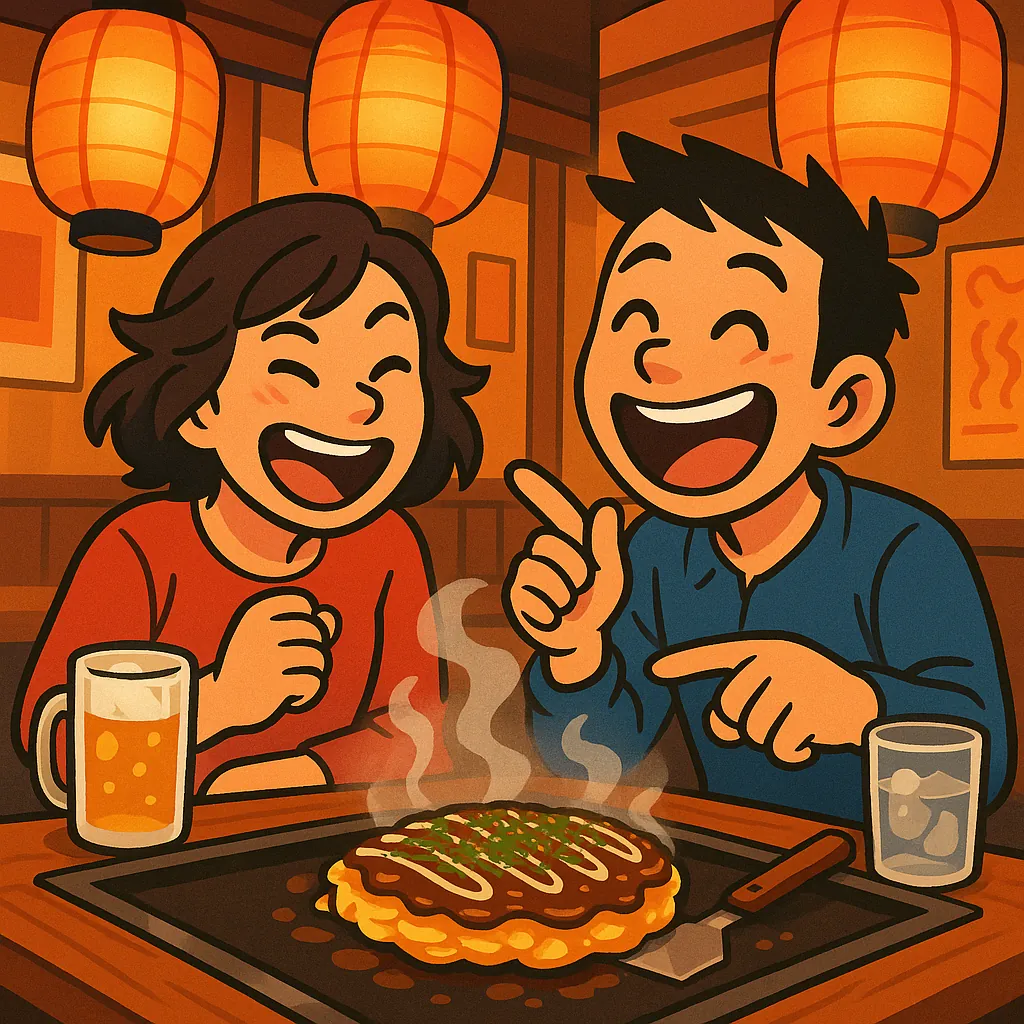
The reason that last message works in Osaka and would feel slightly off in Tokyo: Osakans appreciate self-deprecating warmth and food-anchored plans. The local equivalent of "let's grab coffee" is often "let's grab okonomiyaki and chat." You are signaling that you get the city's vibe.
Skip "what should I see in Osaka," same as Kyoto and Tokyo, the answer is generic.
Three Osaka-specific questions that unlock the resident layer:
"What's a regular Tuesday night near your place look like?" You'll hear about the standing bars in Fukushima, the local yakiniku spot in Tsuruhashi, the kushikatsu place that doesn't bother with English menus. Tuesday-night patterns are friendship patterns.
"What is one thing about the Kansai dialect that I should pick up week one to not sound like a tourist?" This is gold. You will get five phrases in the first ten minutes that you cannot find in any textbook. "なんでやねん" as a friendly tease, "ほんま" instead of 本当に, "おおきに" at the small shops. You arrive at week two already pattern-matching to the local rhythm.
"Where in Osaka do you go when you want a quiet weekend?" The Namba and Dotonbori experience is the tourist version. The resident weekend is Nakanoshima island walks, Hoshigaoka park, Sumiyoshi shrine on a quiet morning, a tachinomi standing bar in Fukushima. This is the city you actually want to live in.
A few small things your pre-arrival friend can save you from learning the hard way.
Osakan business signage is louder and more competitive, so the "best ramen in the area" sign means almost nothing. Tabelog ratings (see the Tokyo apps article) are the trustworthy layer here too, and the same 3.5+ threshold applies. Your local can shortcut you to the actually-good spots in your ward.
The Kansai work-week social rhythm is real. Friday and Saturday nights are warm and easy to make plans. Tuesday and Wednesday are deader than in Tokyo. Booking your second coffee for a weekend, not a midweek evening, will get a higher hit rate.
The three-month loneliness loop is not inevitable. It is just what happens by default when you arrive without a single local contact.
One coffee on your first weekend changes the shape of your entire first year. You have a person who can text you "we're going to a kushikatsu place Friday at 8, you in?" The compounding starts immediately.
SewaYou works in Osaka and every major city in the world. Set the map to Namba, Umeda, or wherever you'll be tonight. Send three messages. The Osaka you actually want to live in is one coffee away.
For Tokyo, How to Have Friends Waiting When You Land in Tokyo and The 5 Apps You Should Actually Download Before You Move to Tokyo.
For Kyoto, Moving to Kyoto Alone? Make Friends Before Your Flight.


