

You did everything right. You studied Japanese for years, did a year abroad, ran every single interview in Japanese, and got hired onto the Japanese side of a company where you are the first foreigner to do that job. You should feel proud. Instead you feel like a joke.
The two Japanese hires who started the same day as you get regular training, get welcomed at the party, get handed tasks even when they are already drowning. You get none of it. Your "training" is eavesdropping while someone teaches them, then working it out from the manual. People discuss things you actually know about, three feet from your desk, and check the computer, the emails, anything, before they would think to ask you.
If this is you, read the next line twice. This is almost never about your Japanese.

What you are running into has a name even if nobody at your office will say it. You have been quietly sorted into a category: the foreigner who is pleasant to have around, useful for the occasional English emergency, and not really a colleague.
The proof is in the pattern you already noticed. You step into a conversation, you know the answer, they are shocked, they thank you. Next time the exact same situation comes up and they do the exact same thing again, talking past you, problem-solving the slow way, never turning their head. The thank-you was real. It just never updated their mental model of who you are.
That gap is not a verdict on your ability. It is a default setting. And defaults do not change because you quietly prove them wrong once. A single correct answer does not rewrite a category. Repetition does.
Japanese offices run on a deep assumption that the foreigner is a guest, a temporary visitor, someone who will be confused and needs protecting from "real" work. Your colleagues are almost certainly not being cruel. They are being careful in a way that feels like exclusion from the inside.
There is also a quieter thing happening. They do not know how to place you. The two new Japanese hires fit a script everyone understands: new grad, gets trained, gets tasks, gets welcomed. You do not fit a script. So instead of improvising one, people freeze and route around you. The path of least resistance is to keep checking the computer instead of asking the person whose role in the office is still undefined.
None of that is a comment on whether you are good enough. Imposter syndrome is reading a system problem as a personal one.

You cannot fix a whole office's defaults, but you can make yourself impossible to route around. A few moves that work better than waiting:
Stop weighing in and then retreating. When you know the answer, give it, and add one sentence that claims the territory: "Happy to take the English inquiries from now on, just send them my way." You are not being pushy. You are writing the script they could not write for you.
Go to your boss directly, once, in a calm one-on-one. Not a complaint. A request: "I want to grow here. Could I get the same on-the-job training the other two new staff are getting?" Most managers genuinely have not noticed the gap. Naming it plainly, in Japanese, using the keigo you already have, does more than a hundred gentle hints.
Ask for the tasks you can already do. They hesitate before giving you work because handing work to an undefined person feels risky. Remove the risk: "I can handle textbook sales and the foreign-teacher coordination, give those to me." Specific beats general.
And yes, the answer to "do I have to ask them to teach me too" is basically yes, at first. It feels unfair. It is also the fastest way out of the front-desk box.
Here is the part nobody tells new arrivals. Even if every one of those moves works, even if you become respected and trusted and handed real responsibility, the office is still a place you leave at 6pm. Colleagues who go home to their families are not going to be the people who make Japan feel like home.
A huge amount of the anxiety you feel before work is not really about the tasks. It is about belonging. You are pouring your entire need to be seen as an equal into one room full of people who, for now, see you as the foreigner at the front desk. That is too much weight for one workplace to carry, for anyone, in any country.
Belonging that depends on coworkers is fragile belonging. The fix is not only to climb the office ladder. It is to build a life where your sense of being seen does not hinge on whether Tanaka-san remembered to ask your opinion today.

When you have actual friends in your city, people who chose you, who text you about weekend plans, who treat your Japanese as a normal thing and not a novelty, the office stops being your whole world. The eavesdropped training and the party you were left out of still sting, but they stop defining your week. You walk in lighter, and ironically, lighter is exactly the energy that makes colleagues start treating you as an equal.
SewaYou is a map-based app that shows you people near you, in your city, who actually want to meet new friends. You set the map to your neighborhood, read profiles, and message people who are open to a coffee or a walk this weekend. No "language partner who flakes," no swipe-and-vanish. Just locals and fellow residents who are looking for the same thing you are.
Make Japanese Friends On a Live World Map
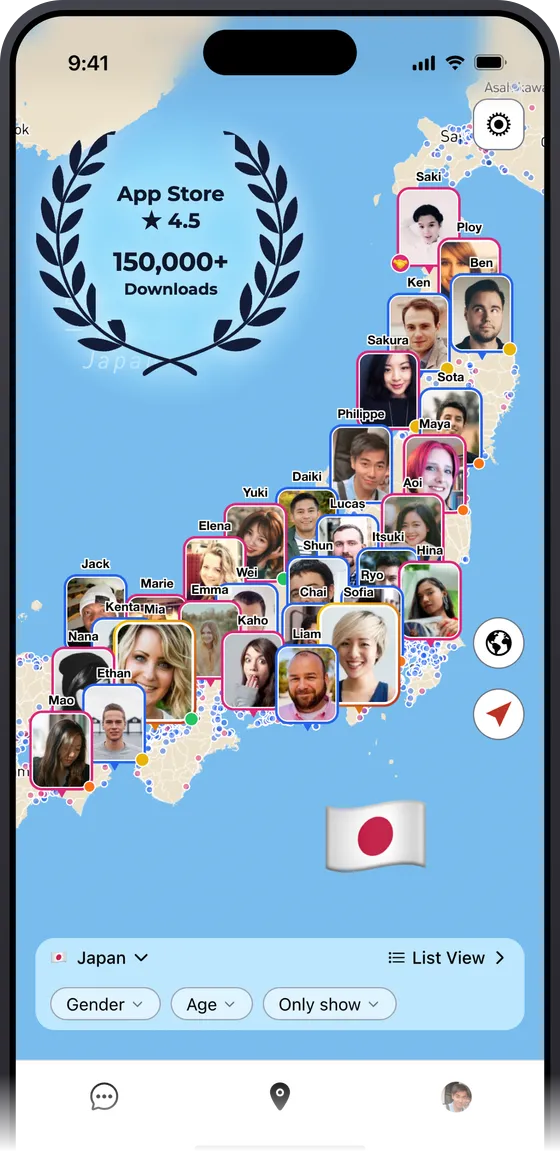
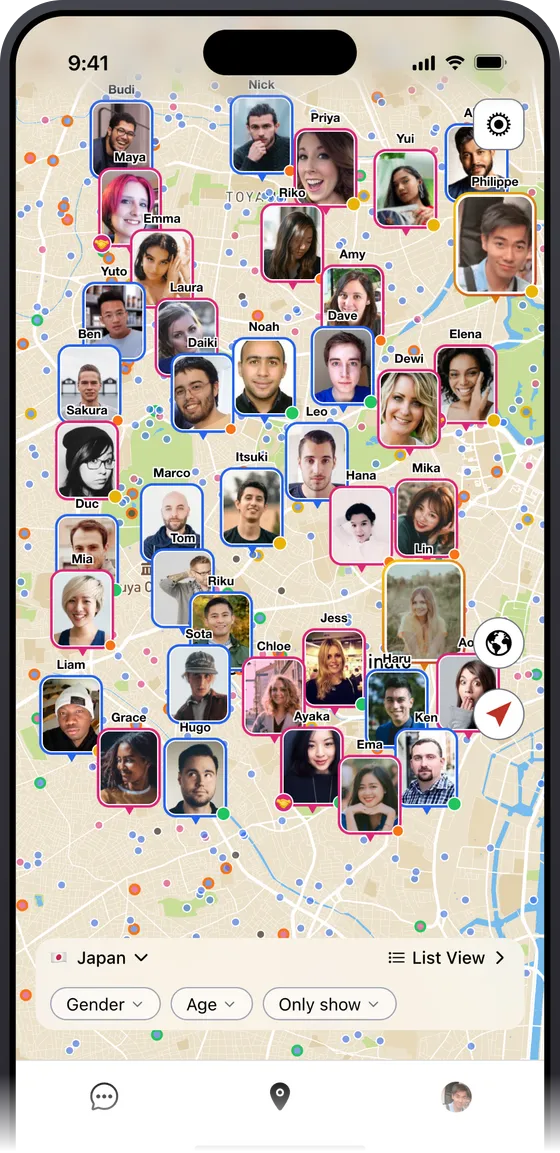
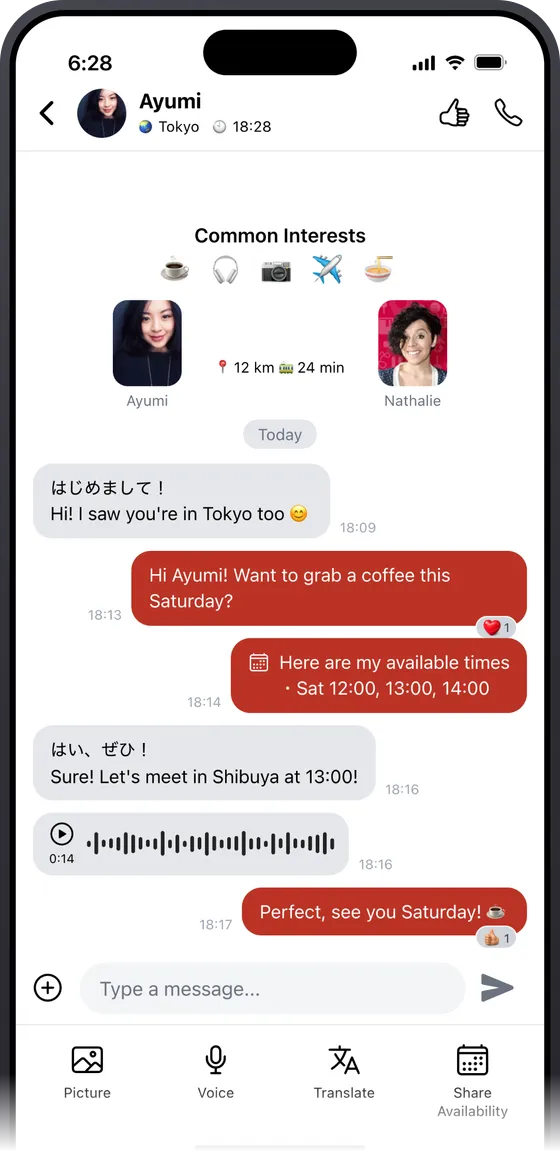


The point is not to fix work by escaping it. The point is to stop letting one office decide whether you belong in this country. You speak the language. You made the leap. You are not a joke. You are one good friend away from feeling it.
Set the map to your area tonight, read a few profiles, send two honest messages. The office will still be there Monday. So will a version of you that does not need it to feel whole.
For arriving with people already in your corner, How to Have Friends Waiting When You Land in Tokyo.
For the apps worth installing before the move, The 5 Apps You Should Actually Download Before You Move to Tokyo.


