

People who move from Tokyo to Kyoto often describe the social adjustment as a second culture shock. Kyoto looks like Tokyo's quieter, prettier sister. Then you live there for a month and realize it is a fundamentally different city to make friends in.
Tokyo is anonymous. You can be invisible for a year if you want. That is bad for loneliness but good for low-friction social experimentation: nobody notices you bouncing between meetups.
Kyoto is the opposite. The neighborhood you live in has memory. The cafe owner remembers your face by week three. The local etiquette is older and quieter and harder to violate without realizing. If you arrive without a single contact, your social runway is short.
This is not bad news. It is exactly why the pre-arrival friendship playbook works better in Kyoto than in Tokyo.
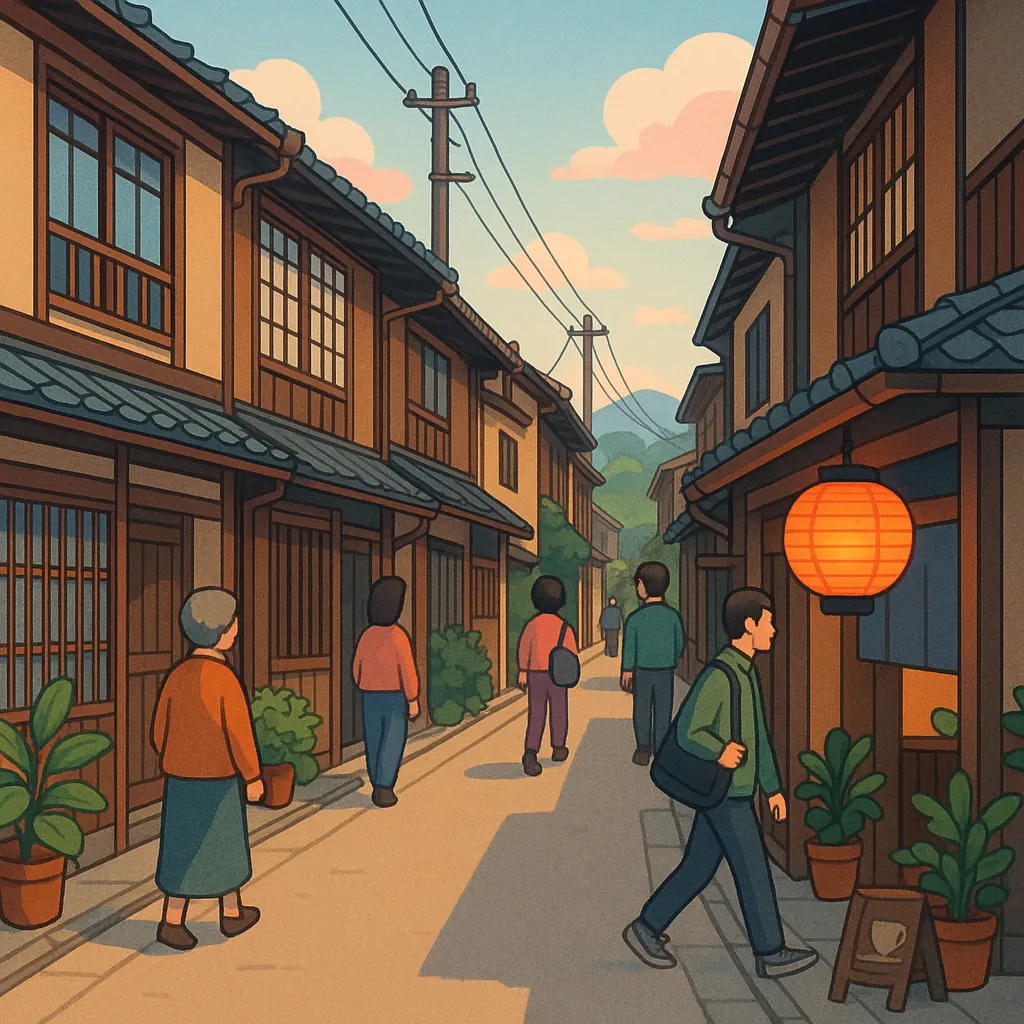
The standard tourist version of Kyoto is temples, gardens, geisha sightings, matcha sets. None of that is wrong. None of it is where you make friends.
The friend-making layer of Kyoto runs on smaller, slower rhythms. The local izakaya the same five people go to every Friday. The riverside walk on the Kamogawa. The neighborhood association events. The international meetup at the university that is the same 30 faces every month. You can live in Kyoto for six months and never accidentally find these.
Tokyo lets you stumble into communities. Kyoto requires you to be introduced.
The pre-arrival reframe is: get yourself introduced before you arrive.
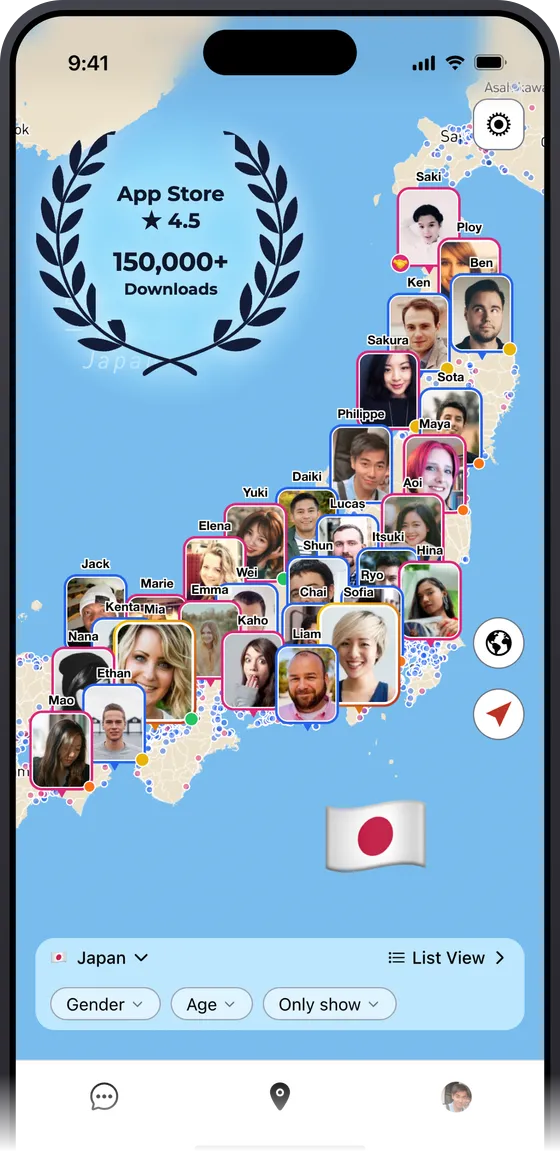
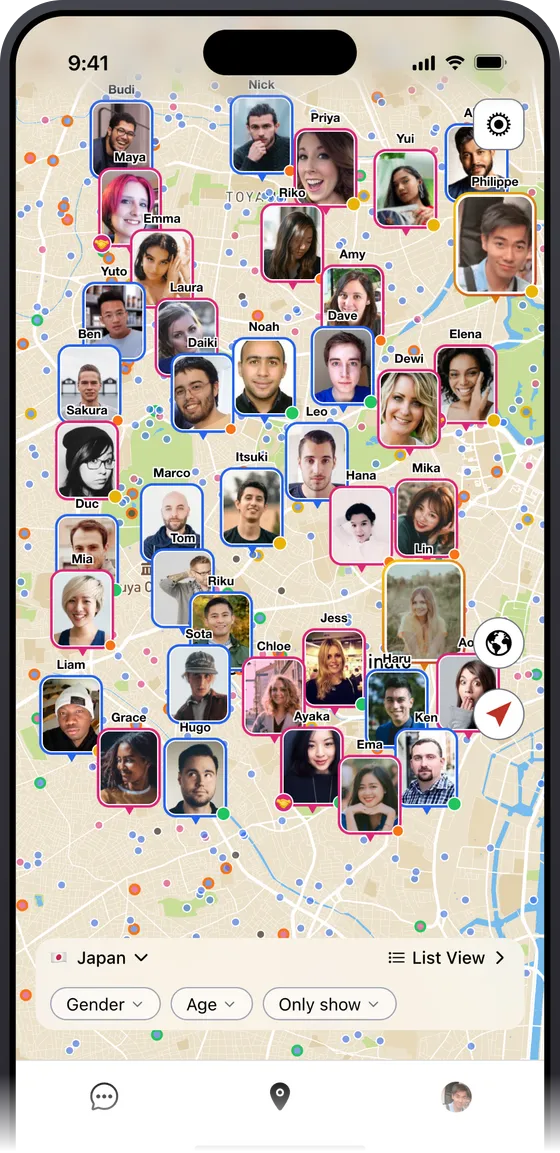
SewaYou is a map-based app where you can set the map to anywhere in the world, including Kyoto, from your couch in Berlin or Vancouver tonight.
Make Japanese Friends On a Live World Map


The same four moves as the Tokyo version, but Kyoto-tuned:
Install SewaYou, set the map to Kyoto. If you have an apartment lined up, zoom to your ward, Sakyo-ku, Higashiyama-ku, Nakagyo-ku, wherever you'll be. If not, zoom to your university or your future office.
Look at the people on the map. Kyoto has a much smaller foreigner population than Tokyo, and the locals on the app skew genuinely interested in meeting people. Read profiles. The signal-to-noise is high.
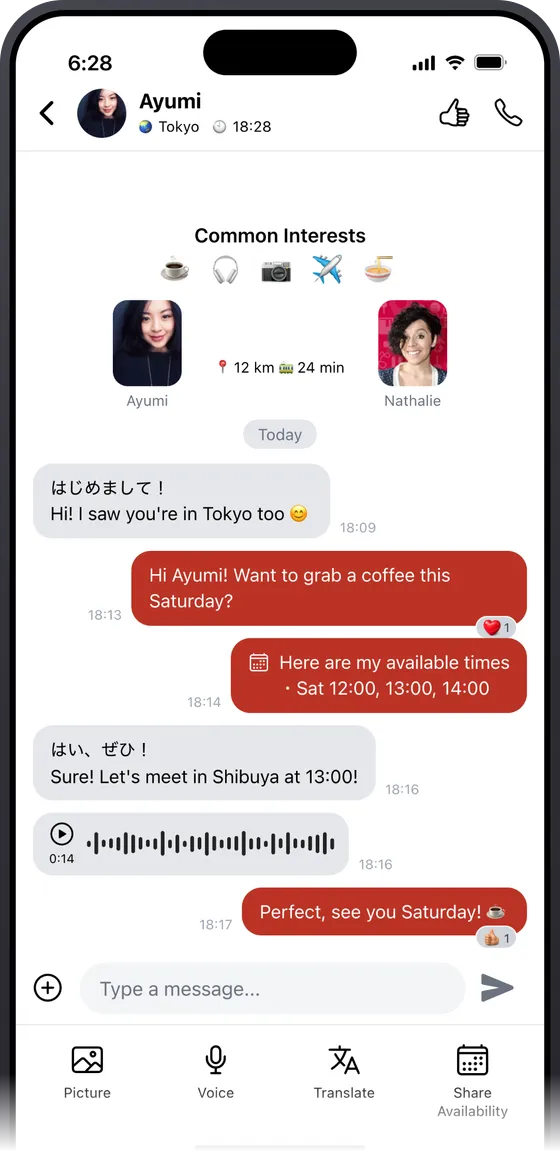
Send three to five short, honest messages. Try: "Hi, I'm moving to Kyoto on July 3 and will be living near Demachiyanagi. I'd love to meet someone local for coffee my first weekend. Are you around the 5th?"
Confirm 1-2 for that first Saturday or Sunday. Calendar it. You now have a real introduction to the neighborhood layer of Kyoto that a year of tourist research could not give you.
The reason this works in Kyoto specifically: locals here are aware that the city is hard to break into, and the people on the app are explicitly there to make that easier for someone. You are walking through the door they propped open.
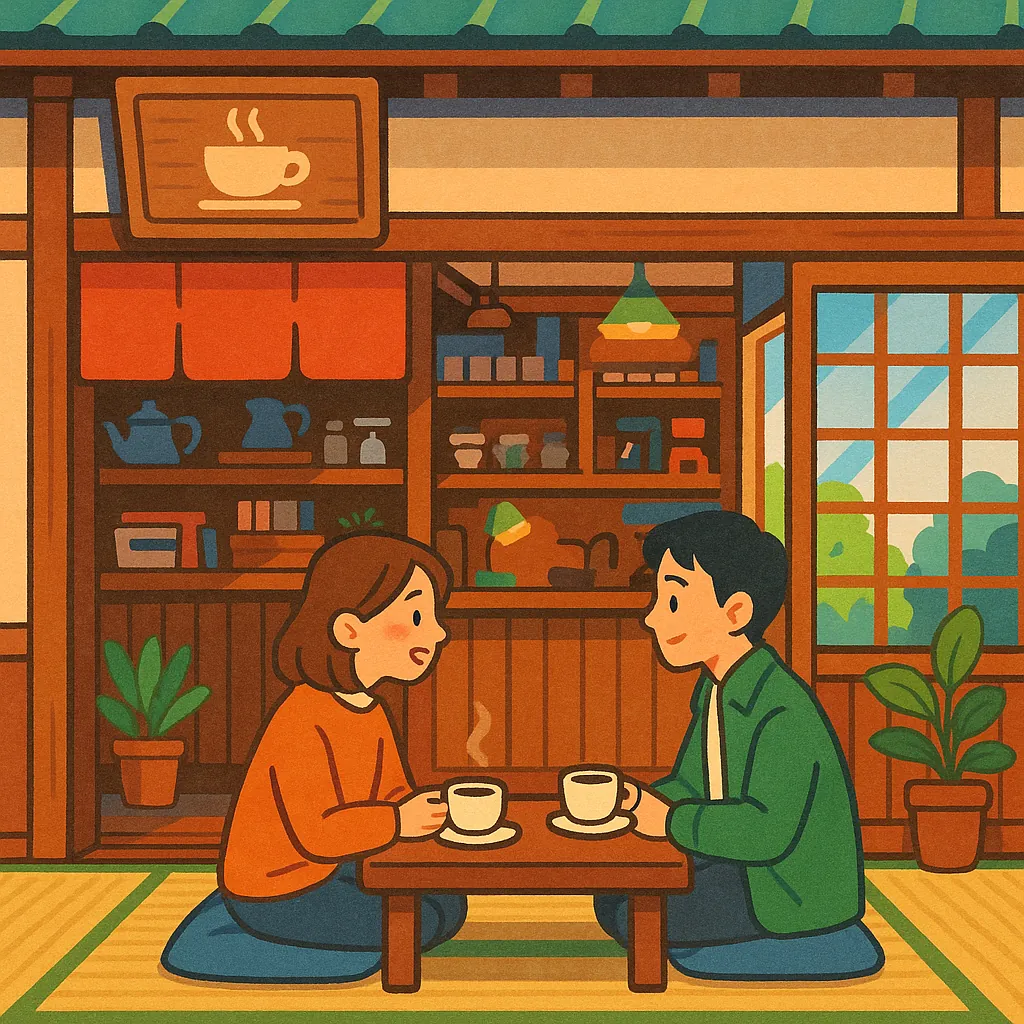
You waste the first coffee if you ask "what should I do in Kyoto." That gets you Fushimi Inari. You can Google that.
Better questions:
"What does your normal Tuesday night look like?" This is the friendship layer. You will hear about a 19:00 yakitori place on Marutamachi, a running group along the Kamogawa, the weekly board game night at a Sanjo cafe. None of these are on any guide. All of them are where you become a local instead of a long-term tourist.
"Where do non-touristy Kyoto people go on the weekend that isn't a temple?" Now you have your second Saturday: the Saihoji moss garden requires a postcard reservation, sure, but Iwakura's quiet hills, Kibune's river dining, the morning markets in Kamigamo, that is the layer you want.
"What is one thing about living in Kyoto that genuinely surprised you?" This is the slow-info layer. The trash sorting rules that vary by ward, the unspoken rule about not eating while walking in Gion, the bath etiquette at the nearby sento. You will absorb a year of cultural footnotes in 90 minutes.
Two small things that the pre-arrival friend can tell you, and that will save your first six months of relationships.
Voice levels matter more in Kyoto than in Tokyo. The base volume of public conversation is one notch quieter. A perfectly normal Brooklyn restaurant voice will register as loud in a Sanjo cafe. Your local friend will tell you this if you ask. The internet will not.
Bicycle culture is real and the rules are real. Sidewalk biking is technically illegal and very normalized, but there are spots (Pontocho, parts of Gion, certain narrow Higashiyama streets) where doing it gets you a polite-but-sharp word. Knowing these as a new resident saves you a lot of awkwardness.
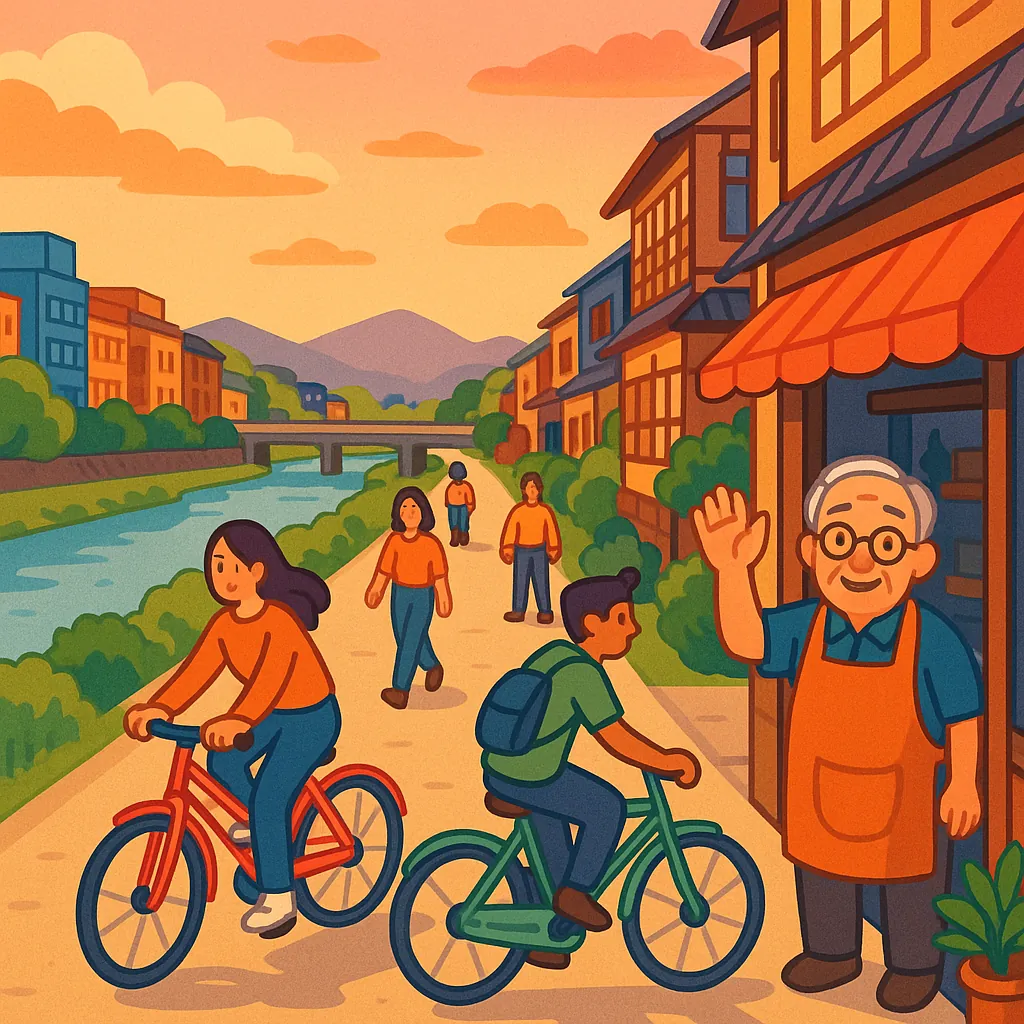
In Tokyo a lonely first month costs you energy and morale. In Kyoto a lonely first month risks something worse: settling into the tourist version of the city instead of the resident version. The longer you go without an introduction, the more your Kyoto becomes Kinkakuji and Arashiyama bamboo. The resident layer never opens.
Three coffees in your first two weeks flips this. You are now meeting friends-of-friends, attending the running group's Sunday morning meetup, getting invited to the local yakitori counter. By month three you are not "the foreigner who just moved here," you are a familiar face at three different places.
SewaYou is the lever for that. Tokyo, Kyoto, Osaka, Paris, Seoul, every major city in the world. Set the map to your future Kyoto neighborhood tonight. Send three messages. The version of Kyoto you actually want to live in starts now.
For Tokyo, How to Have Friends Waiting When You Land in Tokyo and The 5 Apps You Should Actually Download Before You Move to Tokyo.
For Osaka, Moving to Osaka Solo: The Pre-Arrival Move That Saves You 3 Lonely Months.


