

The last day in a country can make every decision feel dramatic.
The apartment is half empty. Your favorite convenience store is still open, but you are seeing it differently. The train announcement you once ignored suddenly sounds like something you will miss. Even a decision you made carefully can start to feel like a mistake simply because leaving hurts.
That is the trap. A good life can still end. You can love Japan, feel deeply rooted here, and still decide that your next degree, job, relationship, or season belongs somewhere else.

When people leave Japan after several years, they often ask the wrong question: “If this place was right for me, why am I so upset to go?”
Because attachment is supposed to hurt when it is interrupted. You have not only chosen a location. You have built routines, learned how to move through the city, found favorite places, and become a slightly different person in the process. A move can take away the ordinary details that made you feel capable.
The sadness is evidence that the years mattered. It is not a reliable review of the decision waiting for you at the airport.
I used to think a confident decision should feel clean. In reality, important choices often come with two true statements sitting next to each other: “I am grateful for what I had” and “I need to go.” Grief, not a verdict.
There is a romantic idea that perseverance means remaining in the place where you started. If you have already invested years in Japan, leaving can look like giving up just before everything finally settles.
But time invested is not a contract with the future. A familiar life can be beautiful and still stop fitting your direction. Maybe the work you want is elsewhere. Maybe a new school offers the research environment you need. Maybe your personal priorities have changed. Maybe the uncertainty around your long-term plan is asking you to make a practical choice before you feel emotionally ready.
None of that cancels the effort you made here. It means you are using what you learned to choose the next step.
The better question is not, “Can I endure another few years?” It is, “What kind of life am I trying to build, and where is the next useful piece of it?” Uncertainty changes the calculation.
This is especially important when your goal requires a long runway. A PhD, a career change, or a serious professional path can ask for years of focus. You are allowed to consider whether the conditions around that plan feel stable enough for you. That is planning, not disloyalty.
The first months after a move can be unfair to the new country. You compare every small inconvenience with the version of Japan you polished through memory.
You know which train exit saves time. You know how to order your usual meal. You have learned the rhythm of convenience stores, classrooms, offices, and neighborhood streets. In a new city, you may suddenly be bad at things that used to be automatic. That loss of competence can feel like a loss of identity.
Give the new place a different assignment. It does not have to reproduce your Japan life. It needs to offer the relationships, opportunities, and daily rhythm that make your next chapter possible.
You can miss the quiet efficiency of one place while appreciating the energy of another. You can struggle with a new social style without deciding that you made a mistake. Leaving is not erasing.

Before you go, write down what you actually want to carry forward. It might be a habit of walking everywhere, a more patient approach to language learning, the confidence to eat alone, or the friend-making routines that helped you stop feeling like a visitor.
Keep the lesson, not just the photograph. The point of living abroad is not to preserve one perfect setting forever. It is to become someone who can create a meaningful routine again.
Vague goodbyes create vague regret. “I will miss everyone” is true, but it gives your mind no way to stay connected to the people who mattered.
Choose a few people and make a clear plan. Have one final meal. Take a walk through a familiar neighborhood. Tell them what their presence changed for you. Exchange a way to stay in touch that both of you will realistically use.
You do not need to promise that nothing will change. Friendships across countries often need a new shape. A monthly voice call, a shared photo thread, or a message when one of you has a difficult week can be enough to keep the door open.
Also say goodbye to places. Visit the café where you studied, the park where you reset after work, or the station that carried you through your first confusing months. Small rituals help your brain understand that the chapter is ending. Goodbyes work better when they have a shape.

After moving, the hardest loneliness is sometimes not being alone. It is having no one who understands why you can be excited and homesick in the same conversation.
People who have moved countries often understand this quickly. They know that “How is the new place?” can be a complicated question. They will not force you to choose between praising Japan and admitting that leaving was necessary.
You can look for them through a university, workplace, hobby group, local community, or language exchange. Start with a small meeting. You are not auditioning for a replacement best friend. You are giving your new life a few witnesses.
That is where SewaYou can help. It is a map-based app for finding people nearby who are open to friendship and language exchange, whether you are new to a city, returning home, or starting over somewhere in between.
Make Japanese Friends On a Live World Map
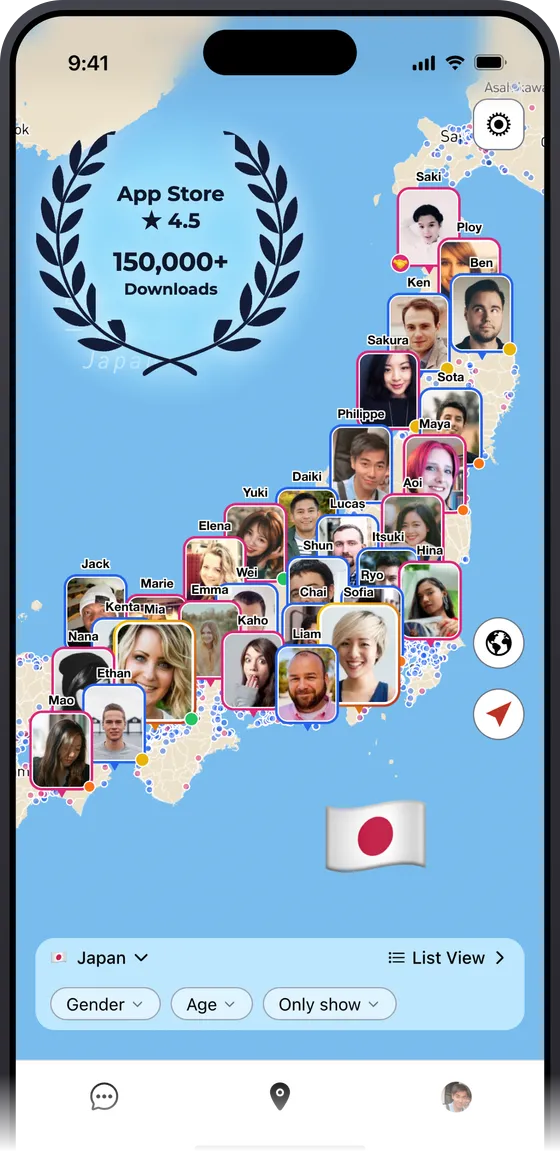
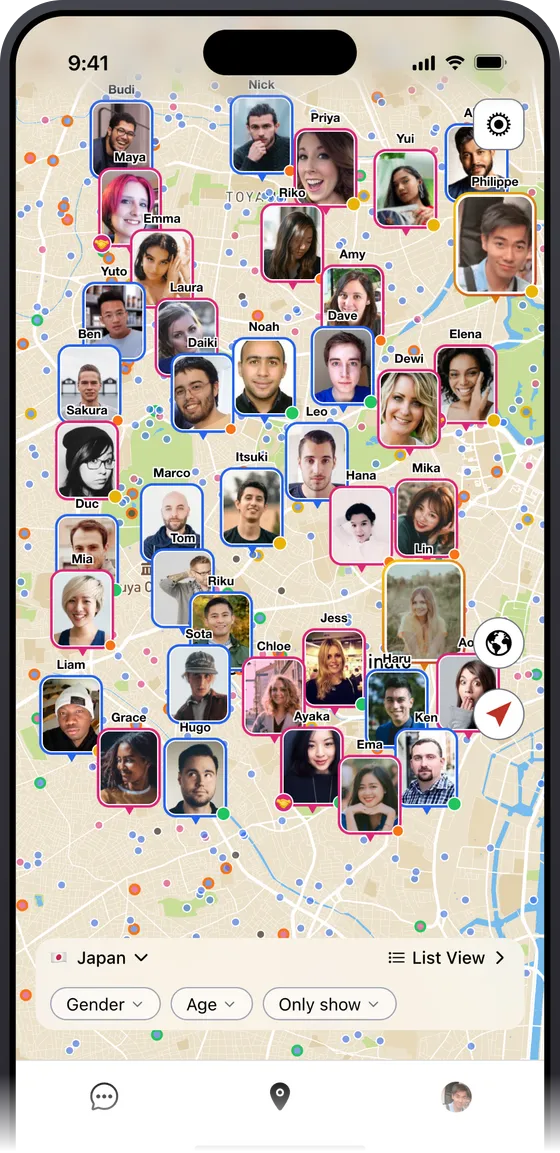
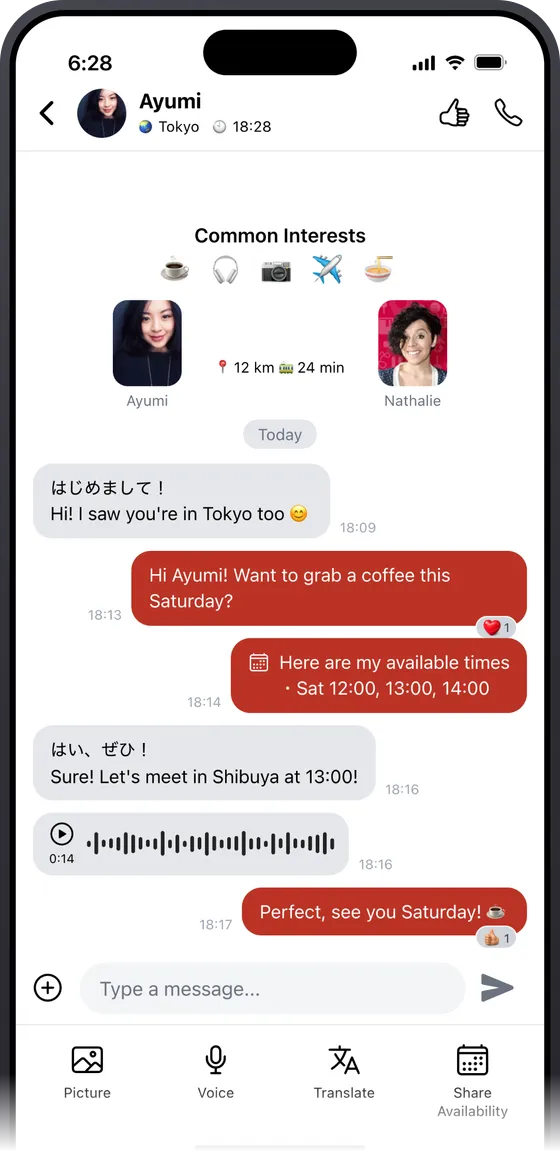


The app does not ask you to stop missing Japan. It simply makes it easier to meet someone who can share an ordinary coffee, practice a language, or explain the small social details that make a new place feel less anonymous.
You may never receive a perfect sign that leaving was correct. Most decisions about the future do not come with one. You make the best choice you can with the information, priorities, and energy you have at that moment.
Later, you may discover that you want to return to Japan. You may build a life elsewhere and feel completely at home. You may do both at different points. A decision is not a permanent judgment on the place you left.
If your final day feels heavy, let it be heavy. Thank the people and routines that helped you grow. Then ask what they prepared you to do next. Choose people, not just places.
Leaving Japan does not turn your years here into a failed attempt. It can mean that your life became large enough to hold more than one home.
When you are ready to meet someone in the next one, SewaYou gives you a simple place to begin. Find a nearby person, make a low-pressure plan, and let your new routine start with one real conversation.


