

You can be deeply involved in your parents' lives and still be the person who finds out about a crisis last.
That is the strange math of living abroad. You call every week, visit when work allows, and keep up with the family group chat. Then a fall, a confusing medical appointment, or a sudden hospital stay turns everyone into an emergency manager. The sibling nearby has information. You have a time zone, a flight search, and twelve unanswered questions.
I used to imagine long-distance caregiving as one huge decision, such as whether a parent should move into a care home. It is usually less dramatic and more exhausting than that. Distance turns care into coordination.
The most useful thing you can do is build a small family system while everyone is still well enough to take part. It will not prevent every surprise. It will stop every surprise from becoming a debate about who knew what, who was supposed to call, and who is doing more.

When people talk about aging parents, the conversation often jumps straight to the most emotional question: can they stay at home? That question matters, but it is not the first one to answer.
First, map the people and practical details around your parents. Who lives close enough to visit on short notice? Who has a key? Which clinic do they use? Who knows their medication routine? Who can translate, drive, handle a form, or join a video call with a doctor?
Do this with your parents, not only among the siblings. Ask what they want to protect, what kind of help they would accept, and what they absolutely do not want. You may discover that the family is arguing about a future they have never actually described together.
Put the basics in one shared place that the family can reach from abroad. Keep it simple: contact names, important documents, doctors, allergies, current medications, insurance details, and the first person to call. Write the boring details down.
The document is not a prediction. It is a starting point. Review it whenever someone moves, changes doctors, starts a medication, or notices a new difficulty.
Sibling conflict often gets described as a personality problem. Sometimes it is a visibility problem.
The person living nearby may be spending hours on errands, appointments, and small decisions that never appear in the family chat. The sibling abroad may be paying for flights, taking calls at work, or covering expenses that are easy for everyone else to overlook. Meanwhile, the most emotionally difficult work may belong to the person who speaks with a parent every day.
If the family only counts money or physical visits, the accounting will feel unfair because it is incomplete. List the actual categories of work: regular check-ins, transport, paperwork, finances, home maintenance, research, emotional support, emergency response, and time away from work.
Then assign owners for now, with a backup for each important task. A person can own researching local services without being the person who visits. Someone else can manage a shared expense record. Another sibling can be the point of contact for the clinic, subject to whatever permissions the parent and local rules require.
Fair is not always equal. The goal is a clear agreement that reflects capacity, distance, money, time, and preference. Revisit it before resentment turns into a scorekeeping contest.
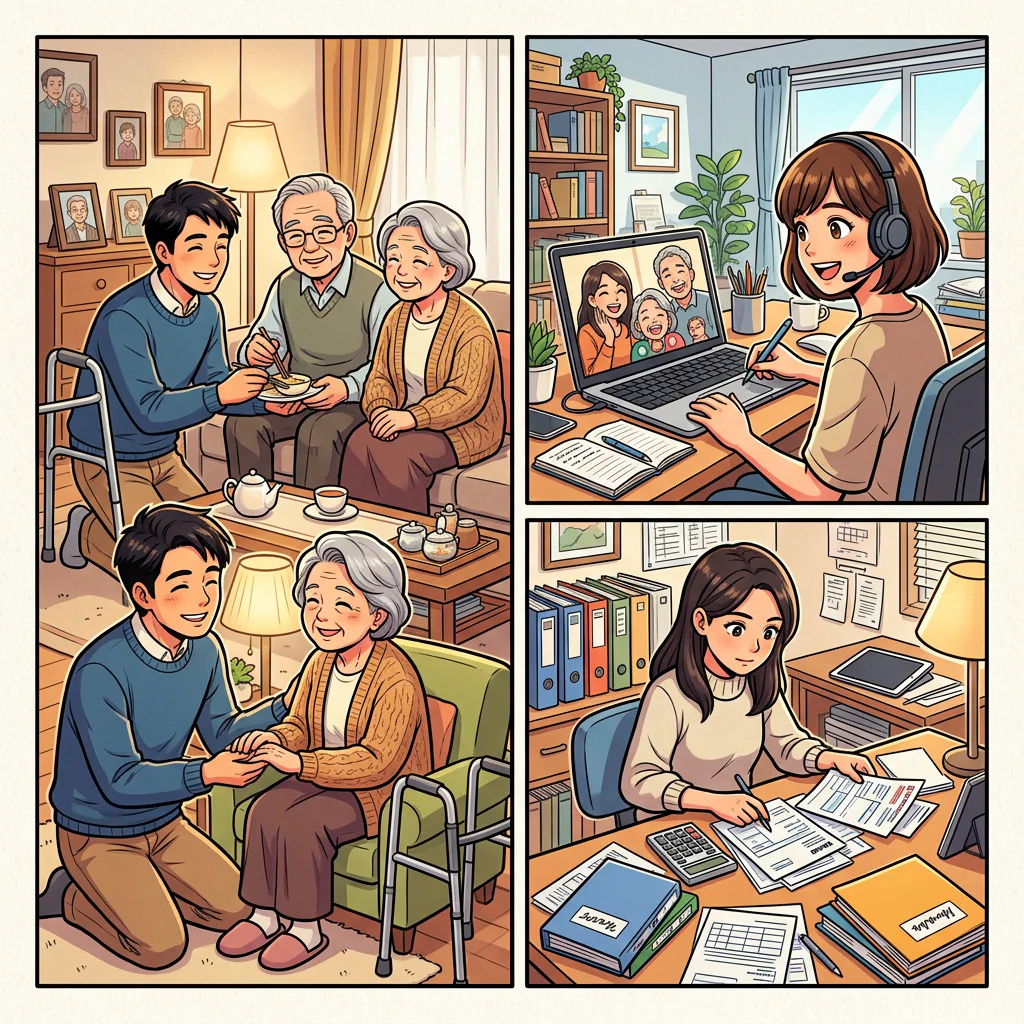
Memory changes are especially difficult from another country because a short call can make everything sound normal. A parent may be sharp for twenty minutes. A sibling may see the same question repeated three times in one afternoon.
Do not make the first conversation a courtroom about whether a parent is "really" forgetting things. Ask for specific observations instead. What happened? When? Was there a safety issue? Is the change new, getting more frequent, or affecting meals, medication, money, driving, or appointments?
Keep a dated, factual log that family members can contribute to. It gives a doctor a clearer starting point and gives siblings something better than competing impressions. It also helps you notice patterns when you are only home for a few weeks each year.
The legal and medical steps depend on the country and, often, the local jurisdiction. In general, families may want to ask a qualified local professional about advance directives, health-care decision-making authority, financial powers of attorney, document access, and permissions for speaking with providers. Memory changes need a log. They also need conversations early enough for the parent to participate in decisions wherever possible.
If there is an immediate safety risk, contact local emergency services or an appropriate local professional. A blog post cannot tell you what authority applies to your family.
The first crisis is a terrible time to discover that nobody knows who can get into the house.
Try a short decision drill with your family. Ask: if a parent goes to the hospital tonight, who receives the first call? Who goes to the house? Who tells the other siblings? Who can speak with the medical team? Who looks after the pet? Who books travel? Who keeps working and handles the tasks that do not stop?
You do not need a perfect answer. You need the gaps to become visible while there is time to close them.
The same applies to a move into a higher level of care. Before comparing facilities, agree on the signals that would make the current arrangement unsafe or unsustainable. Daily functioning, falls, wandering, medication mistakes, isolation, and caregiver exhaustion may all matter, but your family should discuss how you will evaluate them rather than waiting for one dramatic event to force the decision.
If you work at a university or in another job with formal leave processes, learn the options before you need them. Ask what documentation is required, what flexibility is realistic, and how much notice a supervisor usually needs. You are not promising that you will leave tomorrow. You are finding out which choices exist.
Practice the emergency before it arrives. A fifteen-minute conversation can save hours of panic later.

There is a guilt trap in long-distance care. Because you are far away, every ordinary social plan can start to feel irresponsible. You skip dinner with friends because you might be needed. You stop telling people what is happening because explaining the family situation feels like another task. Your world abroad gets smaller just when you need more support.
Staying connected to your own community is not a betrayal of your parents. It gives you people who can listen when a call leaves you shaken, help you think through a practical problem, or simply give you one hour in which you are not the family coordinator.
That matters especially when you live in Japan and your family is elsewhere. You may already be translating your daily life, building friendships in a second language, and handling work across a long flight. Protect your own support system.
This is where SewaYou can help. It is a map-based app for finding nearby people who are open to meeting, chatting, and exchanging languages. You can meet a local who understands your city, another person living far from family, or someone who simply makes a difficult week feel less solitary.
Make Japanese Friends On a Live World Map
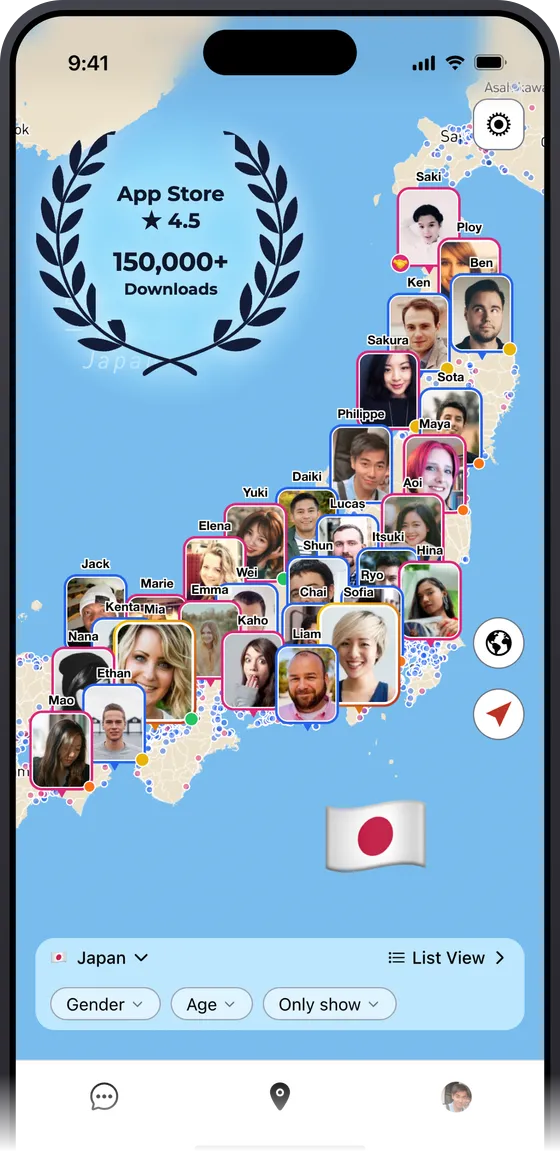
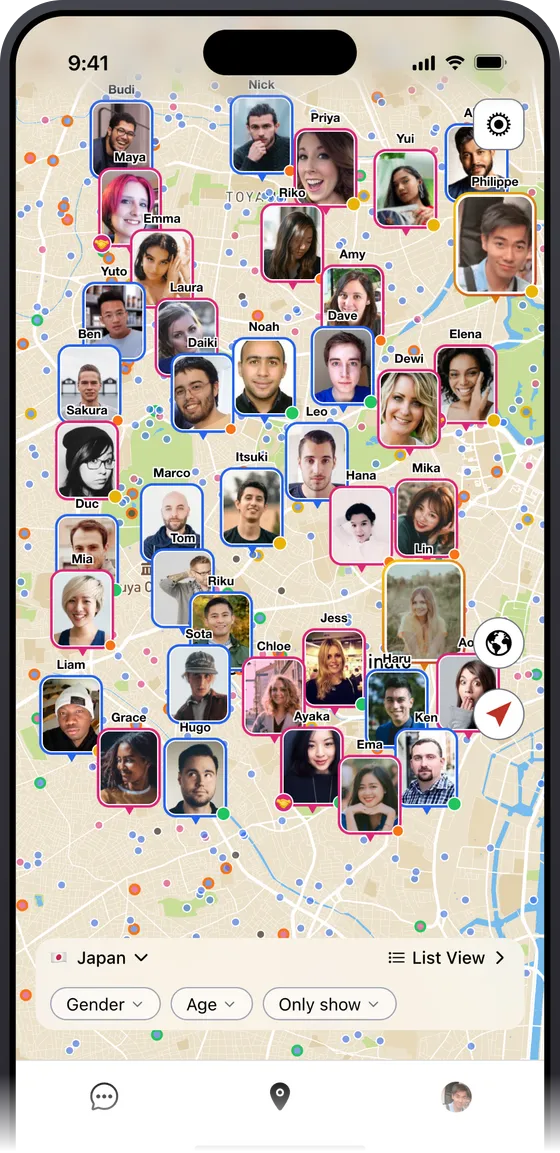
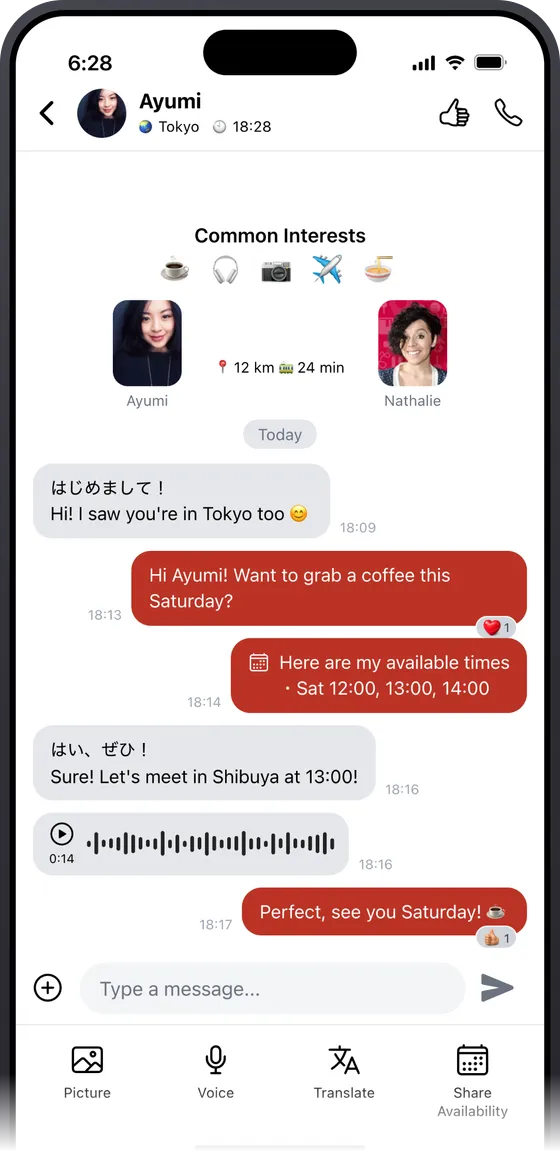


You do not need to explain your entire family history in a first message. Try something small: a coffee, a walk, or a language exchange near home. The point is not to create a replacement family. It is to make sure your life abroad still contains people who know you as a whole person.
Talking about aging, illness, money, and death can feel like inviting bad news into the room. It is understandable to postpone it. But silence does not keep a family peaceful. It only makes the first serious conversation happen under pressure.
Start with one shared page and one calm conversation. Ask your parents what they want. Ask your siblings what they can realistically take on. Record the details, name the gaps, and schedule a date to review the plan.
You will still have surprises. You will still feel guilty sometimes. A plan cannot make distance disappear, but it can make distance less chaotic.
Download SewaYou, find one supportive person near you, and keep building a life strong enough to hold both your family responsibilities and your own needs.


