

I saw a post the other day that gutted me. Someone admitted they had been studying Japanese for five years, failed the N4 twice, and were going through their textbook for a second time. They said they sometimes studied to the point of tears.
What killed me was not the failing. It was that they thought the tears were proof they were trying hard enough.
They were not. The tears were proof the method was eating them alive.
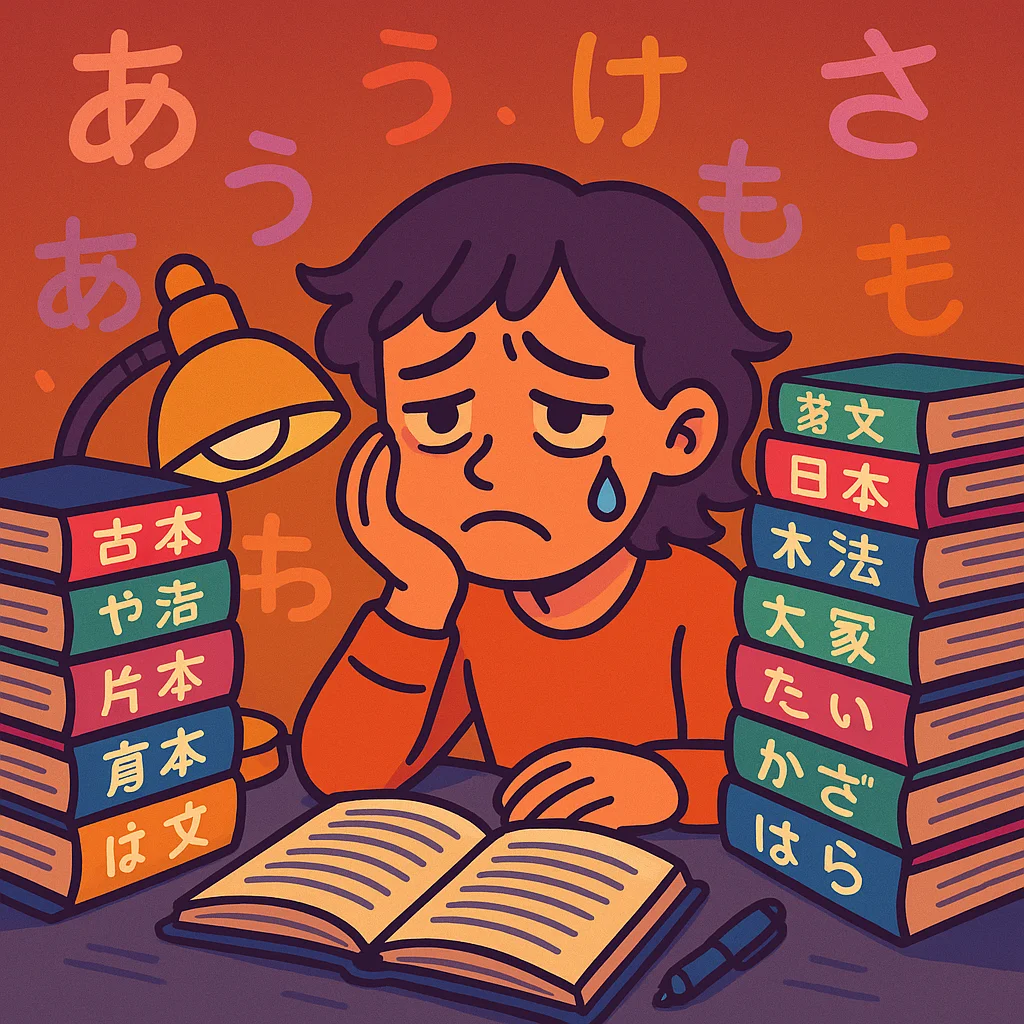
There is a story we tell ourselves about hard work. If it hurts, it must be working. If you are not suffering, you are not serious. Athletes push through pain. Surgeons train for a decade. Why should language be different?
Because language is not weightlifting. Pain is not proof.
If five years of any other hobby left you in tears and unable to do the basic version of it, you would have quit by year two and tried something else. Nobody plays piano for five years, fails their first recital twice, and decides the solution is to play the same scales again for another year. They would change teachers. Change books. Change the whole approach.
But with Japanese, people grit their teeth and reopen the same Genki page they hated last Tuesday. Then they cry. Then they call themselves lazy.
You are not lazy. You are following a broken script.
Here is the trap. Most self-studiers spend ninety percent of their time consuming Japanese. Textbooks. Anki decks. Grammar videos. YouTube channels with cheerful presenters explaining particles.
This feels like studying. It also looks like studying. It is not studying a language. It is studying about a language.
Input without output is a dead end. You can read every page of Genki I and II, finish every Bunpro deck, watch every Cure Dolly video, and still freeze the first time a convenience store cashier asks if you want a bag. Why? Because you have never practiced producing Japanese under the gentle pressure of a real human waiting for your reply.
Your brain treats reading and speaking as different sports. Going to the gym does not teach you to swim. Reading Japanese does not teach you to speak Japanese. The crossover is real but small, and it is nowhere near as big as the textbook industry has trained you to believe.
I watched a friend grind through grammar drills for two years, then have her first real conversation with a Japanese coworker. She could not remember how to say her own job. She knew the vocabulary. She had drilled the grammar. But under the live pressure of a waiting human, her brain went blank because that exact pattern had never been rehearsed.
This is the part that hurts to hear. You were not learning Japanese. You were memorizing Japanese. And memorization without retrieval practice fades faster than you think. Going through a textbook a second time does not double your retention. It often just confirms how little stuck the first time, which is exactly the feeling that makes people cry at their desks.
The cure is not more textbook. The cure is using what you already half-know on a real person, badly, today.
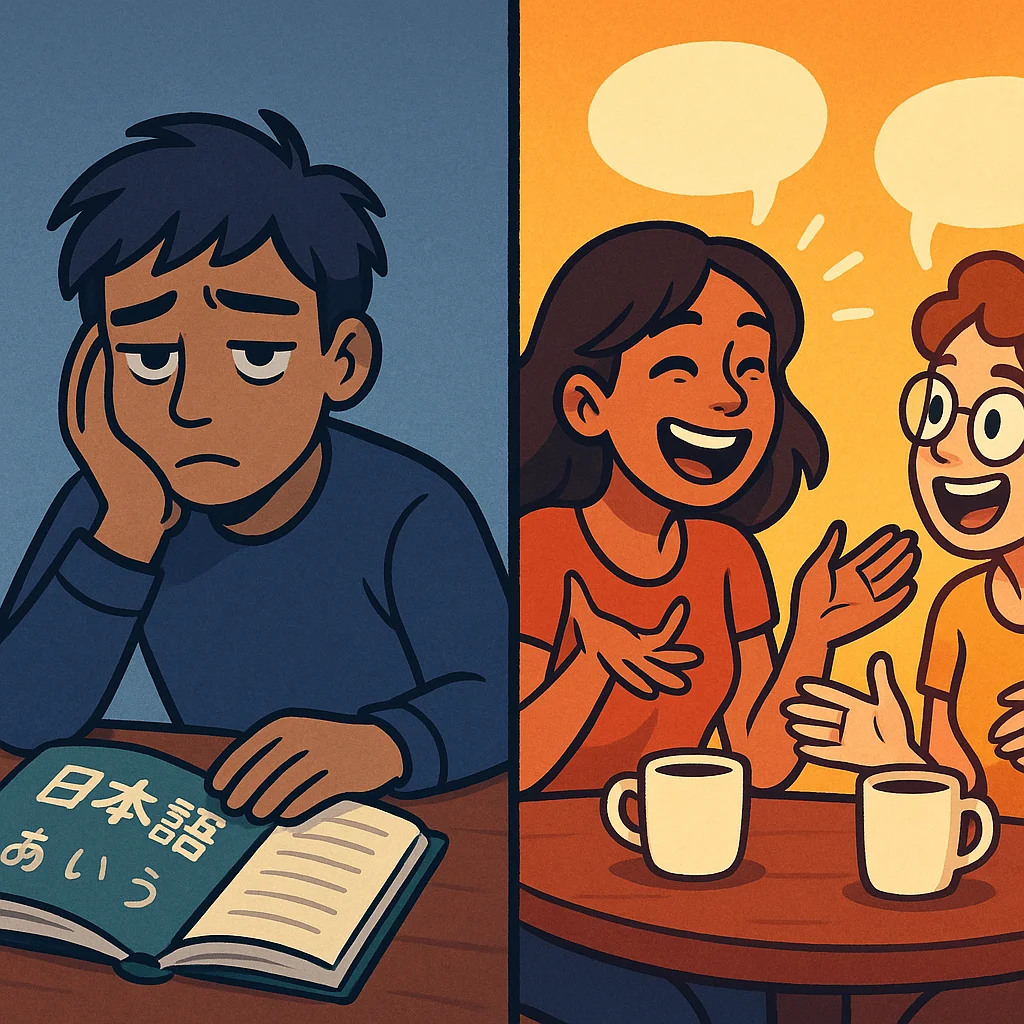
Here is something nobody warns you about. There are people walking around with JLPT N2 certificates who cannot order a coffee. I am not exaggerating. Search any Japanese learning forum and you will find them, often confessing the same shame the N4 failer felt.
How is this possible? Because JLPT scores measure JLPT scores. They measure how well you recognize kanji in multiple-choice format, how fast you can scan a passage for the right particle, how well you parse formal listening audio designed to be parsed.
They do not measure whether you can ask a stranger for directions. They do not measure whether you can keep a chat going with a Japanese friend over beer. They do not measure whether you can recover when someone uses a word you do not know.
If you optimize your study life around passing the test, you will get good at the test. You will not necessarily get good at Japanese. This is a real and humbling distinction that the test industry has every incentive to blur.
This is not an argument against the JLPT. It is a useful checkpoint for some people. It is an argument against letting the JLPT be your only definition of progress. Because if you pass and still cannot talk, you will feel like a fraud. And if you fail, you will feel like a failure. Both feelings are the test pulling rank on your actual ability.
If any of this is hitting too close to home, here is what to do this week. Not next month. This week.
Close the textbook for a few days. Not forever. Just long enough to break the habit loop that has been making you miserable. Then find one Japanese person who is willing to chat with you for fifteen minutes about absolutely nothing. The weather. Their cat. Your terrible cooking. Anything.
You will be bad. You will forget words you have known for two years. You will say things that make no sense. The Japanese person will be patient, because most Japanese people are absurdly patient with foreign learners. And something will click that has not clicked in five years of textbooks.
The thing that clicks is this. The language stops being a wall you bang your head against and becomes a thing two humans use to talk to each other. The pressure changes. The fun comes back. The crying stops.
Talk to one person today. Not a tutor on the clock, not a teacher running a lesson plan. A peer who happens to speak Japanese and would not mind chatting with you about nothing in particular.
Teachers are wonderful. They are also expensive, time-bound, and structured in ways that recreate the textbook problem in human form. You sit at attention, they correct you, you take notes, you go home and feel like you studied.
A peer is different. A peer does not correct your particles. They wait for you to finish your sentence, then reply with whatever they would have said anyway. You learn by exposure, by repair, by laughing at your own mistakes. You learn the way kids learn, which is the way humans actually learn languages.
Peers are also free. The currency is reciprocity. You teach them your language. They teach you theirs. Nobody is on the clock.
This is the part of language learning that the textbook era has almost completely erased from people's mental model. They think learning means paying someone or grinding alone. It does not. For most of human history, languages were learned by talking to neighbors. The neighbors were the curriculum.

If you are five years in and stuck, here is the unglamorous truth. The next five years do not need to look anything like the last five.
You do not need to find a magic textbook. You do not need to retake your placement test. You do not need a new app full of streaks and notifications. You need a small, regular dose of real Japanese with a real human who has no agenda other than chatting with you.
Twenty minutes, three times a week, with a willing peer will outperform two hours a day with a textbook over any meaningful horizon. I would bet a year's coffee on it.
And the tears stop. Because there is no test to fail in a casual chat. There is only the next sentence, and the one after that, and the slow accumulation of evidence that you can actually do this.
Make Japanese Friends On a Live World Map
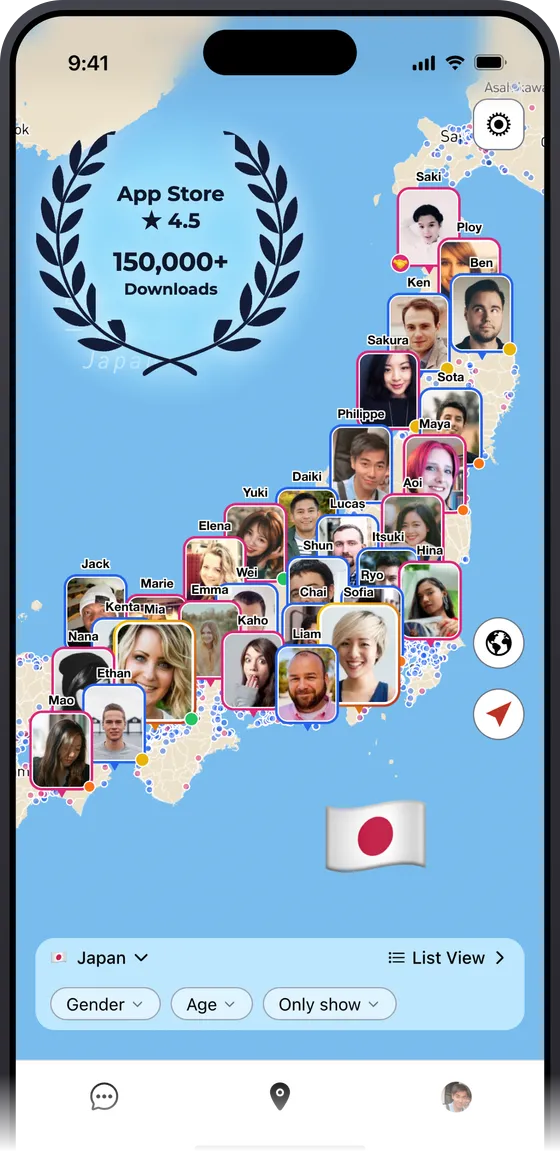
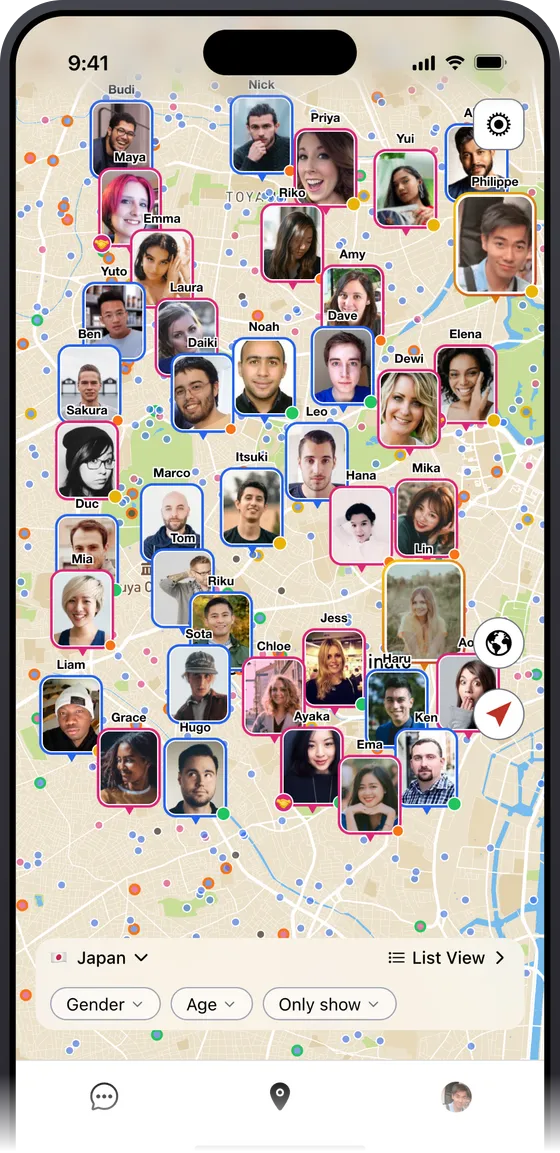
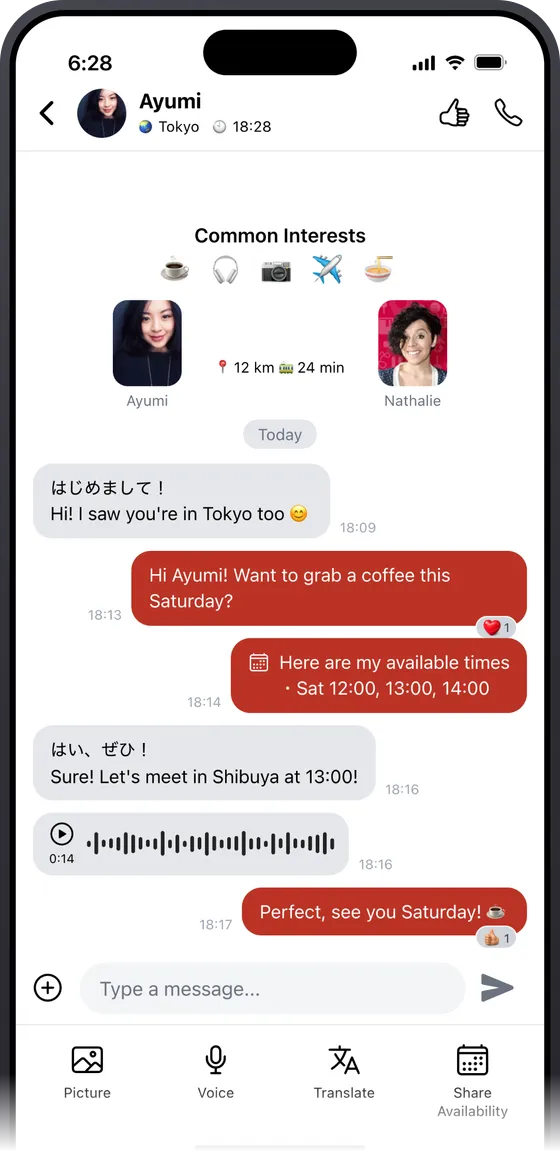


SewaYou is a map-based app that helps you find Japanese peers near you who want to chat in exchange for helping you with your English or whatever language you can offer. No teachers. No lessons. Just real people, on a map, ready to meet for coffee or chat from the couch. If the textbook is the thing that has been making you cry, this is the thing on the other side of closing it.


