

There's a moment in language learning nobody really prepares you for. It isn't a test score. It isn't a certificate. It's just sitting somewhere, half-listening to a song you've heard a hundred times, when the words quietly stop being sounds and start being meaning. The line you were just mouthing along to suddenly resolves into something a real person wrote about a real feeling, and you sit there for a second wondering if it always meant that.
That moment is one of the best things that ever happens to a language learner. And almost no app, textbook, or class is set up to give it to you.
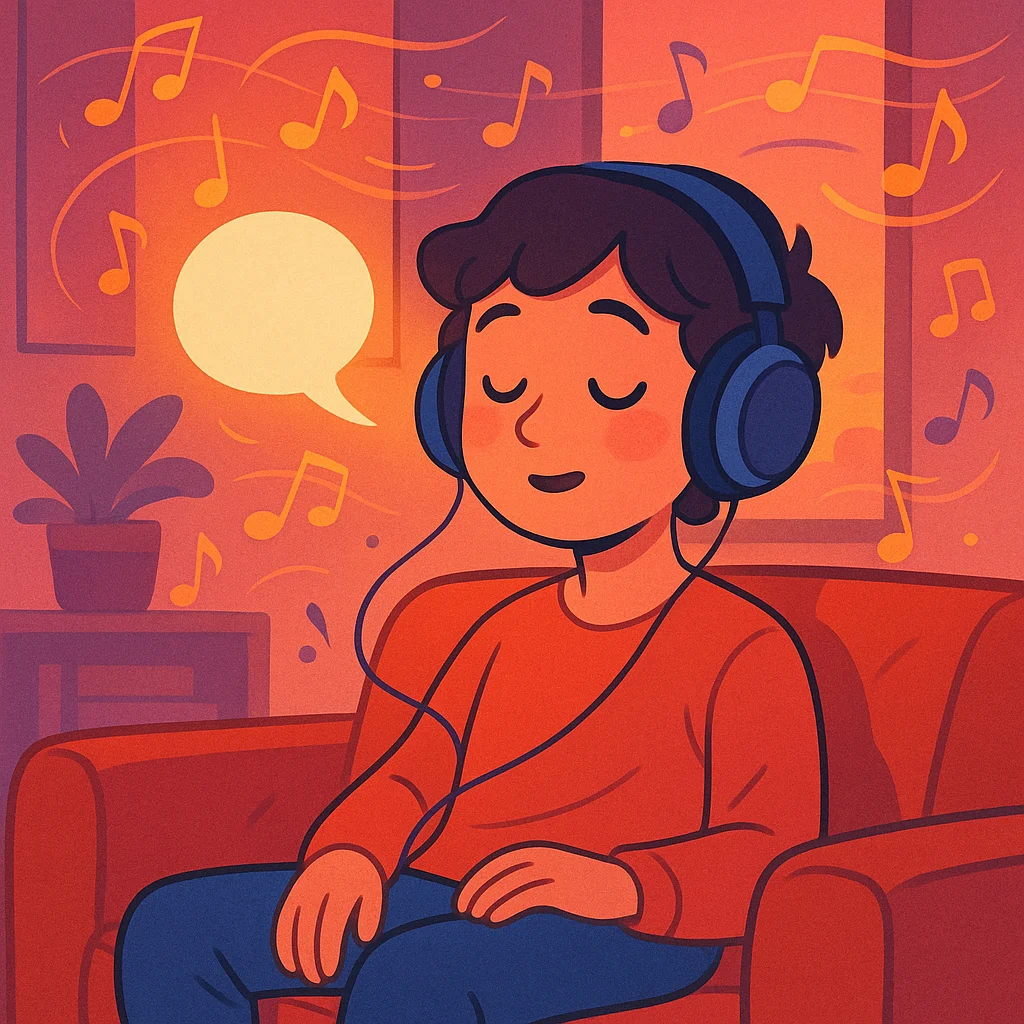
There's a reason this milestone keeps showing up in Japanese learner circles. Songs are unfiltered. The lyricist isn't slowing down for a textbook audience. The melody doesn't pause for you to look up that one kanji. The grammar gets bent for rhythm, verbs get truncated, metaphors stack up. It is the language doing its actual job, which is carrying feelings between humans.
For years you understand the song the way you understand a flavor you don't have a word for. You know it. You can't say what it is. Then one day the wall just isn't there anymore. The lyrics walk through and land.
That experience is more revealing than any N3 result. Tests measure recognition under polite conditions. Songs ambush you when you're tired or zoning out on a train. If you can still understand them in that state, your brain has actually absorbed the language, not just memorized it.
Here's a quieter milestone that arrives around the same time. Romaji starts to feel wrong. Words you can read instantly in kana suddenly look strange in Latin letters. You hit a romaji caption under a Japanese song and you almost have to translate backward to figure out what it says.
This is not a bug. This is your brain promoting Japanese from "code I decode" to "language I read." When you first started, romaji was a friendly handrail. By the time you can feel a lyric land, the handrail is in the way. Your eyes are no longer hunting for sounds. They're hunting for shapes that carry meaning.
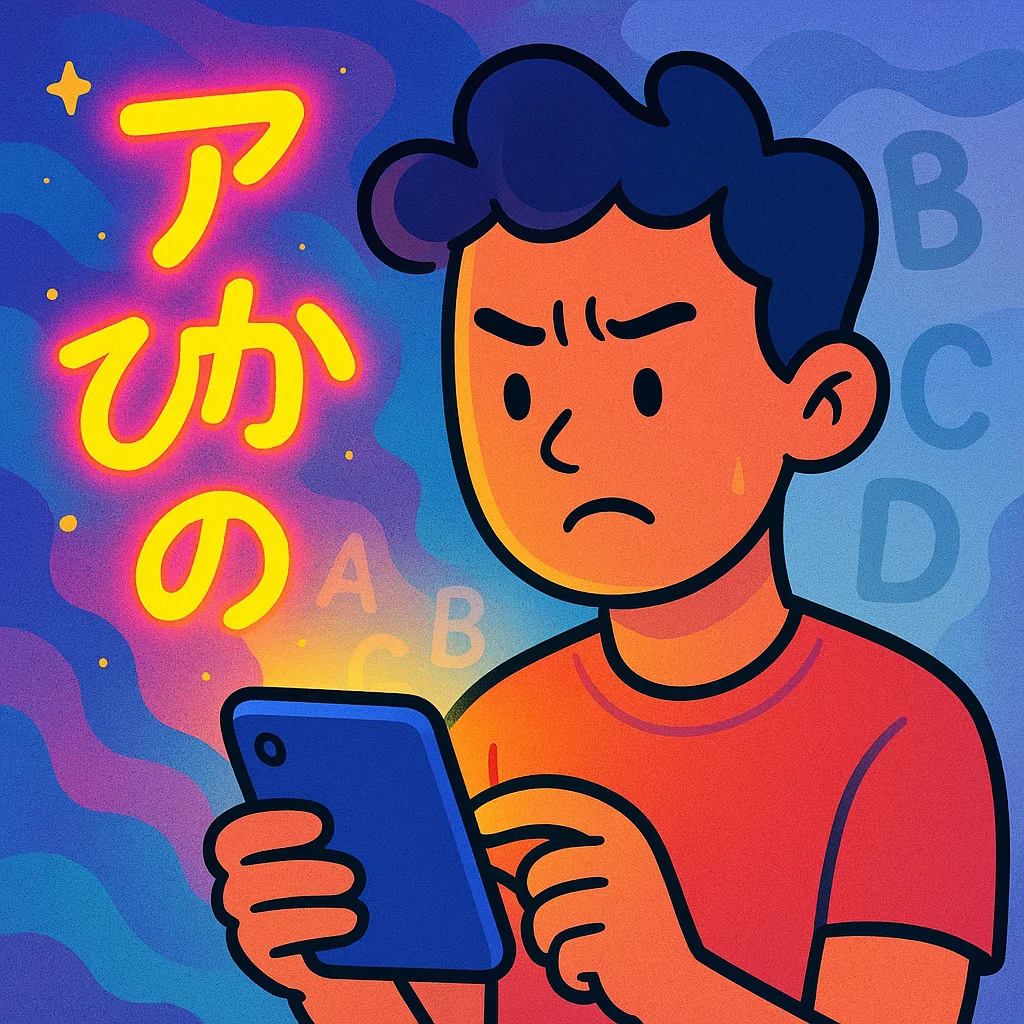
If you ever feel a little annoyed by romaji, congratulations. You crossed a fence you can't uncross. Your relationship with the language has changed. The training wheels physically don't fit anymore.
Here's the part we care about at SewaYou. The song-lyric click isn't unique to music. The same thing happens in conversation, except it sneaks up on you in real time and at higher stakes.
You'll be talking to someone, half-listening because you're still mentally drafting your reply, when a phrase they say lands not as Japanese but as the actual thing they meant. You don't translate it. You don't parse it. You feel what they were trying to communicate, the same way you'd feel it in your first language. The reply comes out without you assembling it.
It is the same neurological event as the song moment. You stopped decoding and started listening. And just like with songs, you only get there through volume of contact with native speakers using the language to mean things, not to teach you things.
Textbooks, sadly, can't generate this. Textbooks are trying to be understood. Songs and real people aren't.
If the lyric moment was a peak you stumbled into, the conversation moment is one you can actually farm. A few patterns I've watched work on SewaYou users who break through:
They stop pre-translating their replies. They sit in the awkwardness of not knowing what to say in Japanese rather than mentally writing the sentence in English first. The brain rewires faster when it isn't given a shortcut.
They chase emotional content over informational content. A friend venting about their boss creates more click-moments than a podcast about politics. Feelings carry harder. Your brain wants to remember them.
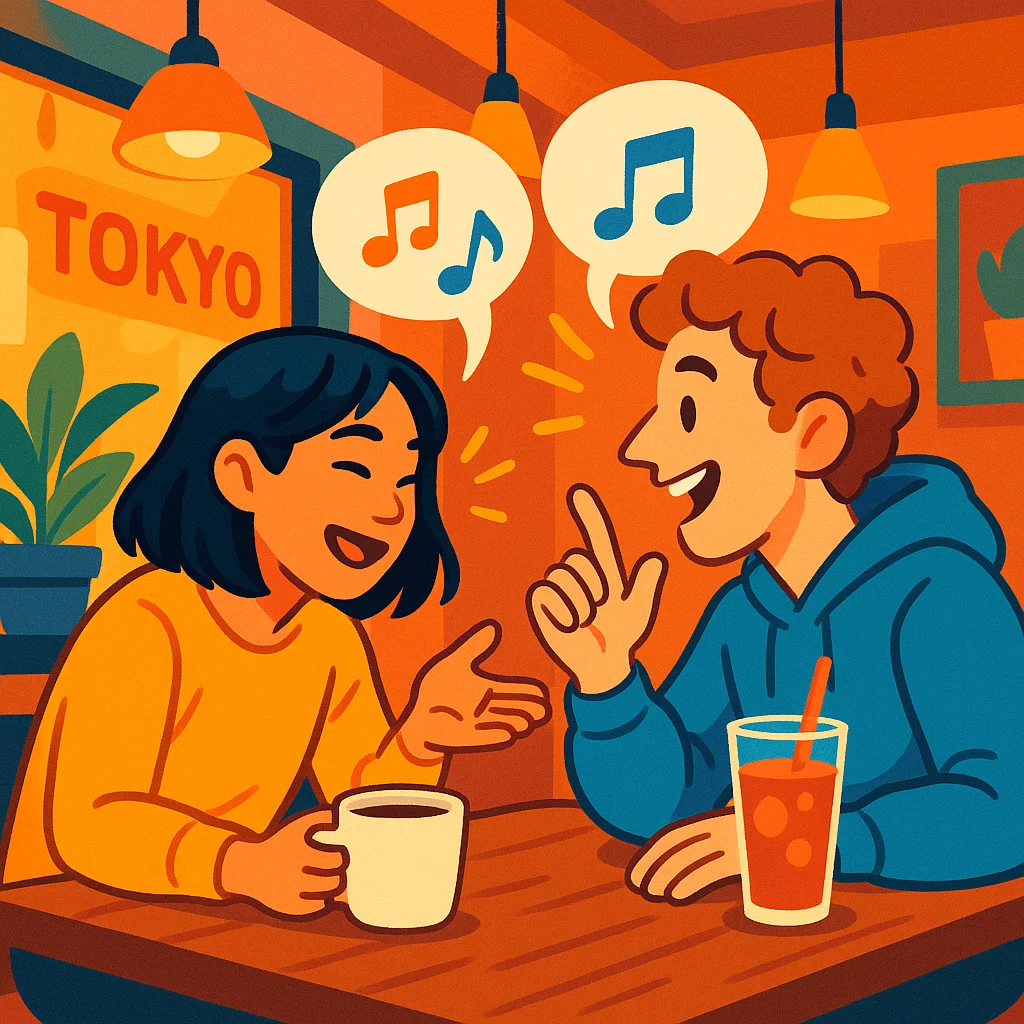
They let songs into their conversations. Quoting a lyric, asking what a phrase in a song means, talking about why that one ballad wrecks them. Songs are the bridge between passive listening and active speaking, because the lyrics are already memorized.
And they pick partners who don't switch to English the moment things get hard. English is comfort food for both sides. It quietly cancels the entire reason you both showed up.
The lyric moment doesn't come with a certificate. There's no celebratory push notification. You can't put it on LinkedIn. It just happens, quietly, often on a night you weren't paying attention, and after that the language is a slightly different thing to you forever.
That's the whole reward. Japanese stops being a project. It becomes a thing you do.
Make Japanese Friends On a Live World Map
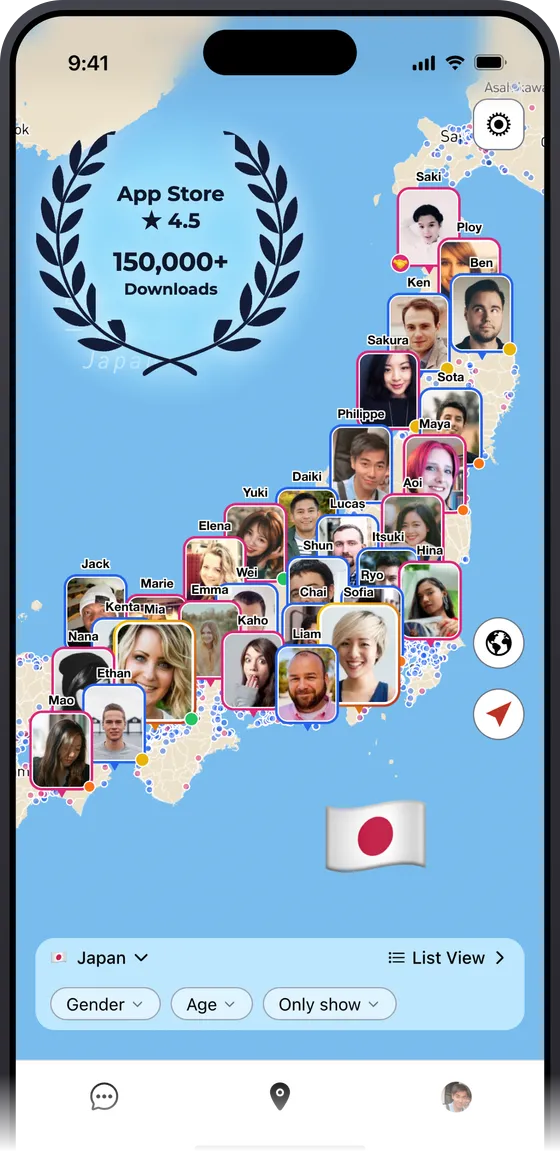
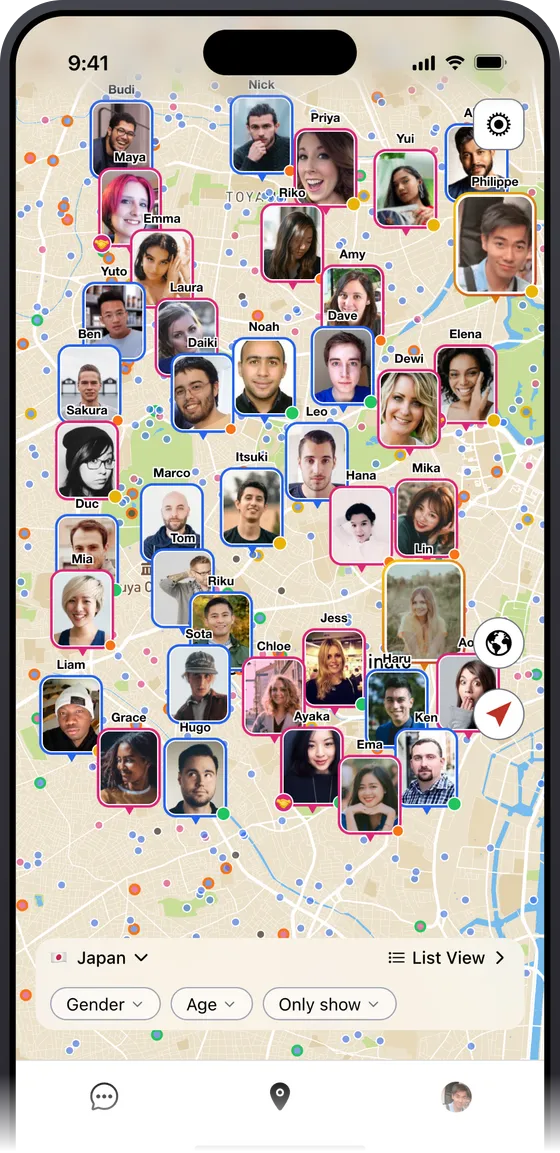
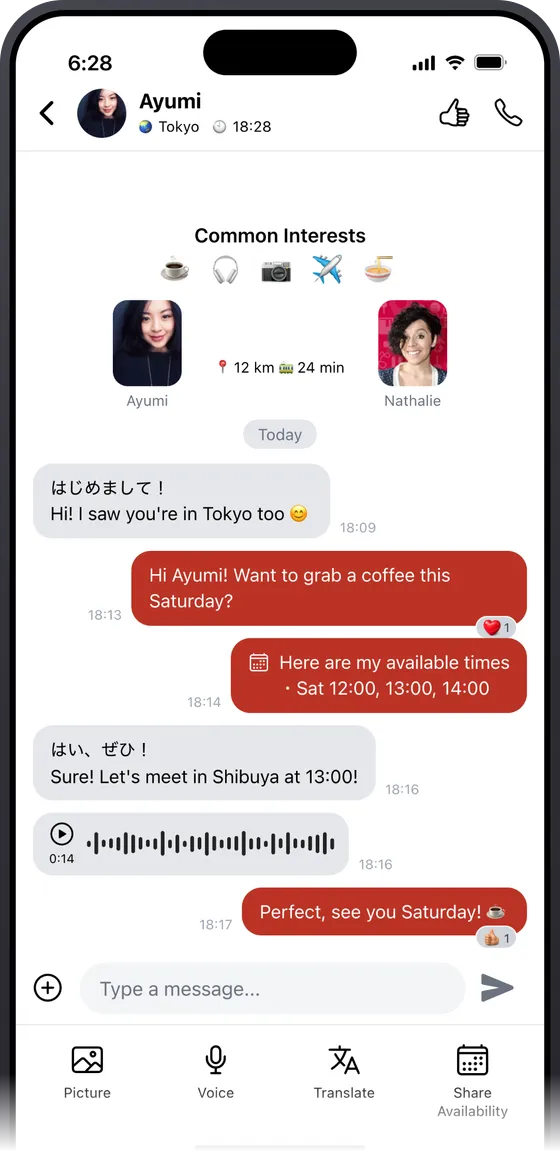


SewaYou is a map-based app for finding real people in Japan to talk to, in Japanese or in whatever language you both want to practice. The lyric moment is what we're quietly hoping every user has on the other side of enough conversations. We give you the partners. The click is on you.


