

I watched a Japanese administrator, a 40-something guy in a clean suit, tell a brand new foreign grad student, in fluent-sounding English, "That's not our problem." Then, "Read the document again." Then, "We don't recommend that."
He wasn't trying to be cruel. I'm pretty sure he thought he was being clear and professional. The student left in tears anyway.
If that exchange had happened in Japanese, the same man would have apologized five times, sucked his teeth, said 申し訳ございませんが three times, and softened every refusal with まことに恐縮ですが. In English, all of that politeness machinery vanished.

Japanese English education spent a whole generation teaching that English is "casual" and "direct." That line shows up in junior high. Nobody corrects it later.
So a salaryman who learned "I want a coffee" in 8th grade walks into an international meeting at 45 and uses the same construction with a client. He thinks he's being efficient. The client thinks he's being a jerk.
The truth: English has an enormous politeness layer. We just don't call it keigo, so the textbooks skipped it.
English moves politeness into grammar. Watch what happens between these pairs:
Same information, completely different temperature. The polite versions all use the same five moves:
Stack three or four of them and you've built the English equivalent of 申し訳ございませんが、もしよろしければ. It's not shorter. English hides keigo in grammar, not in suffixes.
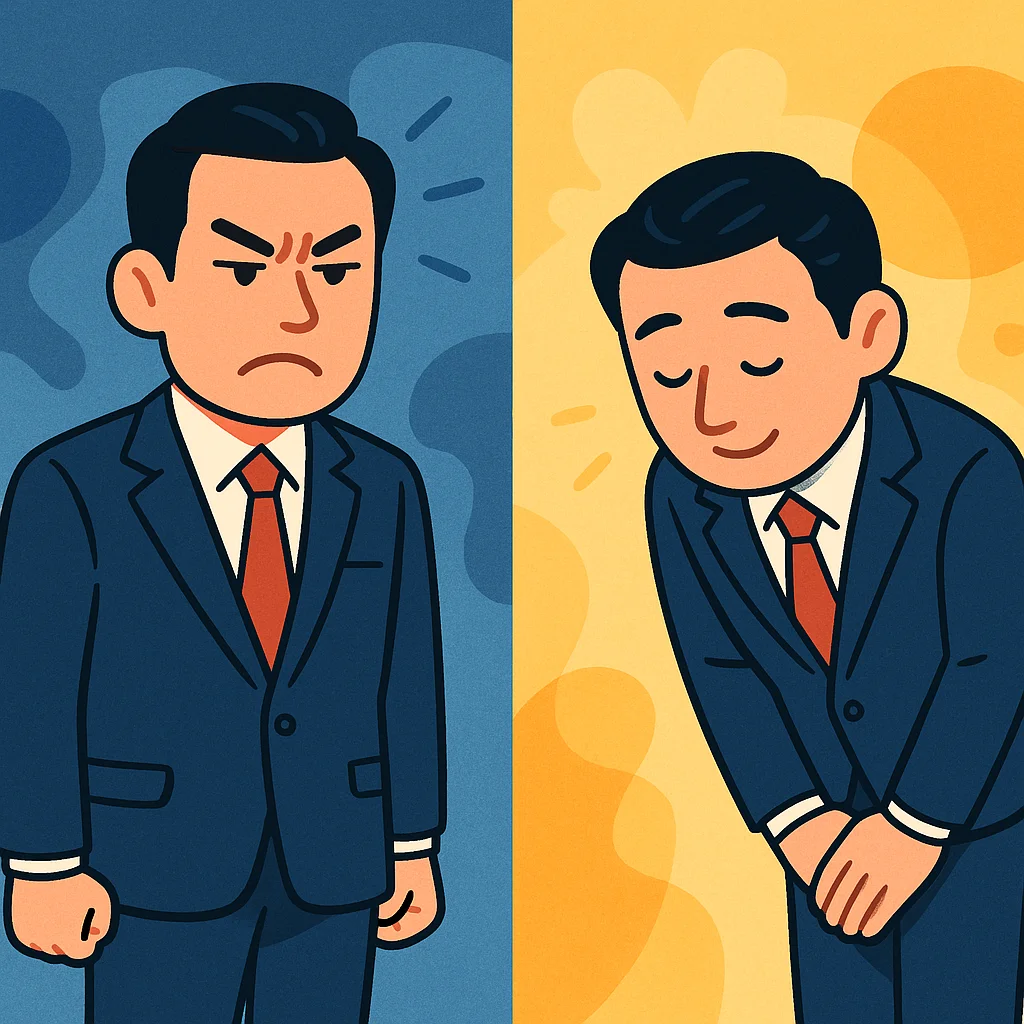
The guy at the desk wasn't bad at English. He'd memorized maybe twenty business-English flashcards: "That's not our problem." "Read the document." "We don't recommend that."
Every one of those phrases is grammatically correct. Every one of those phrases would sound rude at a DMV in Cleveland. Nobody ever told him.
This is what happens when you learn English as a vocabulary list instead of as a relationship system. Phrases without context are loaded weapons you can't hear yourself firing.
Stop translating Japanese sentences word-for-word. Start translating Japanese politeness levels into English structures.
When you'd say desu/masu, use a modal. When you'd reach for keigo, stack two or three of the five moves above. When you're at sonkeigo/kenjougo level, you're now in "I was wondering if it might be possible to..." territory.
Then test it on a real human. Politeness only ever lives in someone else's face. No textbook, no app menu, no AI chatbot can tell you whether your sentence sounded warm or cold. You need a native speaker who'll wince at the right moment and explain why.

If you're a foreign resident in Japan and a Japanese counterpart just hit you with "We don't recommend that," remember: the same person, two minutes later in Japanese, would be physically bowing.
It's not that they don't respect you. The English they were taught is a stripped-down version with the padding removed. They probably learned it from a textbook designed by someone who'd never lived abroad, who took "English is direct" at face value and built a whole curriculum around the wrong premise.
The fast hack is to switch into Japanese, even broken Japanese, and watch the warmth come back instantly. The administrator in my opening story was answering questions in Japanese with a completely different person inside of him.
You can't pattern-match your way out of this. Politeness is friction with a real person, in real time, watching their face react.

Make Japanese Friends On a Live World Map
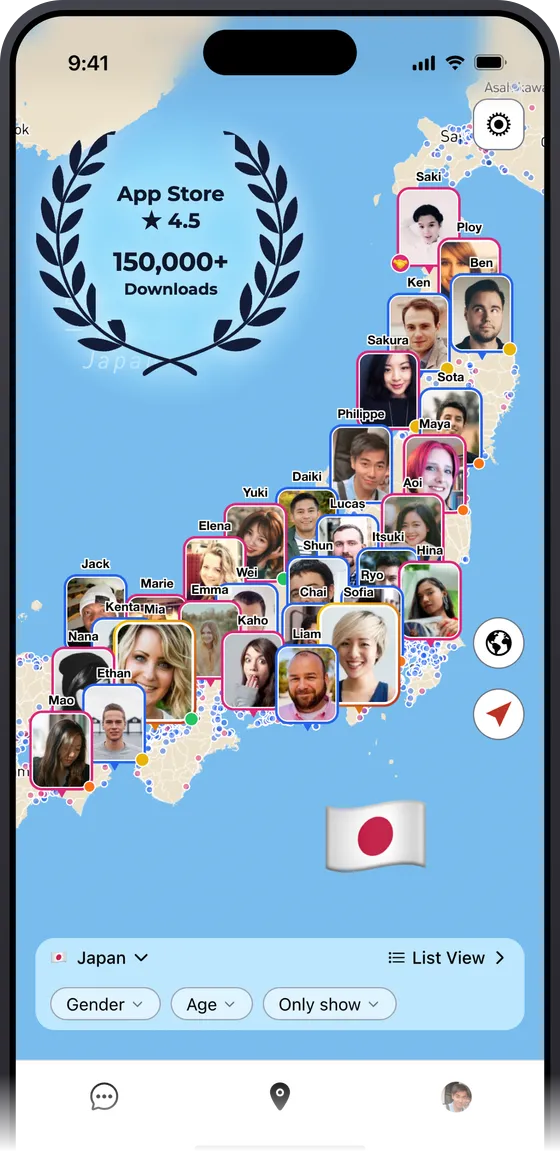
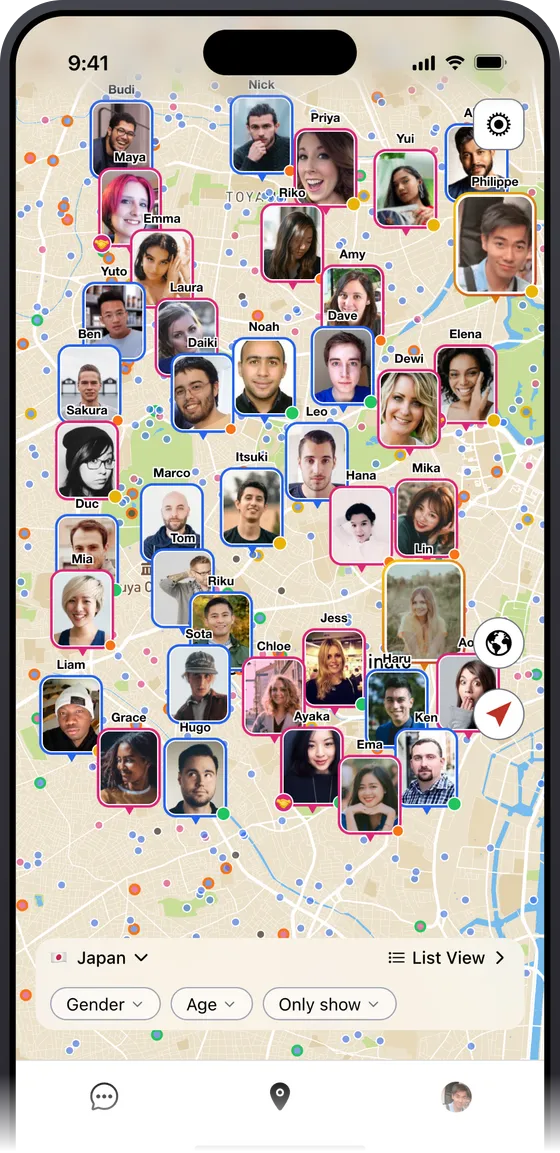
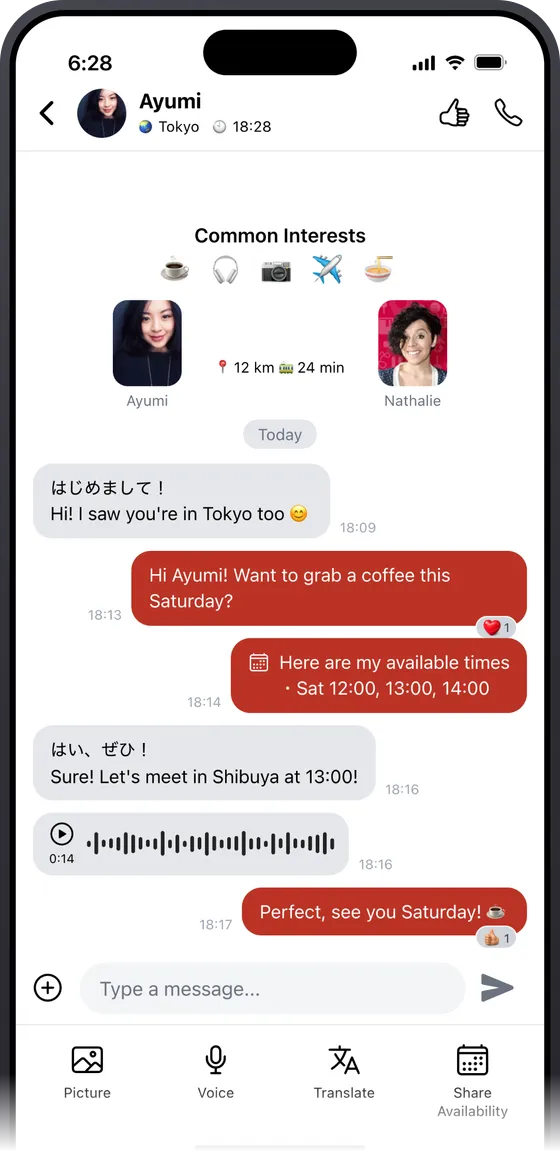


SewaYou is a map-based friend-finding app for finding people near you who speak the language you're learning, in person. If you're Japanese and you want your English to stop accidentally sounding cold, you need a native speaker who'll cringe at the right moment and tell you why. If you're learning Japanese, same thing in reverse.
Read fewer cheat sheets. Sit across from one human and get the politeness wrong out loud. That's the only way the layer actually installs.


