Classes are expensive. So a lot of people end up doing what I did for my first two years in Japan: teaching themselves, alone, off a stack of apps and textbooks and a vague sense of guilt that they should be doing more.
And the question that haunts every solo learner is always the same. How should I break down my time? An hour of Anki, then grammar? Listening on the commute, kanji at night? People build color-coded study calendars that would make a project manager proud, follow them for three weeks, fall off, rebuild them, and quietly wonder why they still freeze the moment a real Japanese person talks to them.
I want to save you the three weeks. The way you split your hours matters far less than you think. More hours was never the problem. What is missing from almost every self-study schedule is a single block, and it happens to be the one that actually moves you.
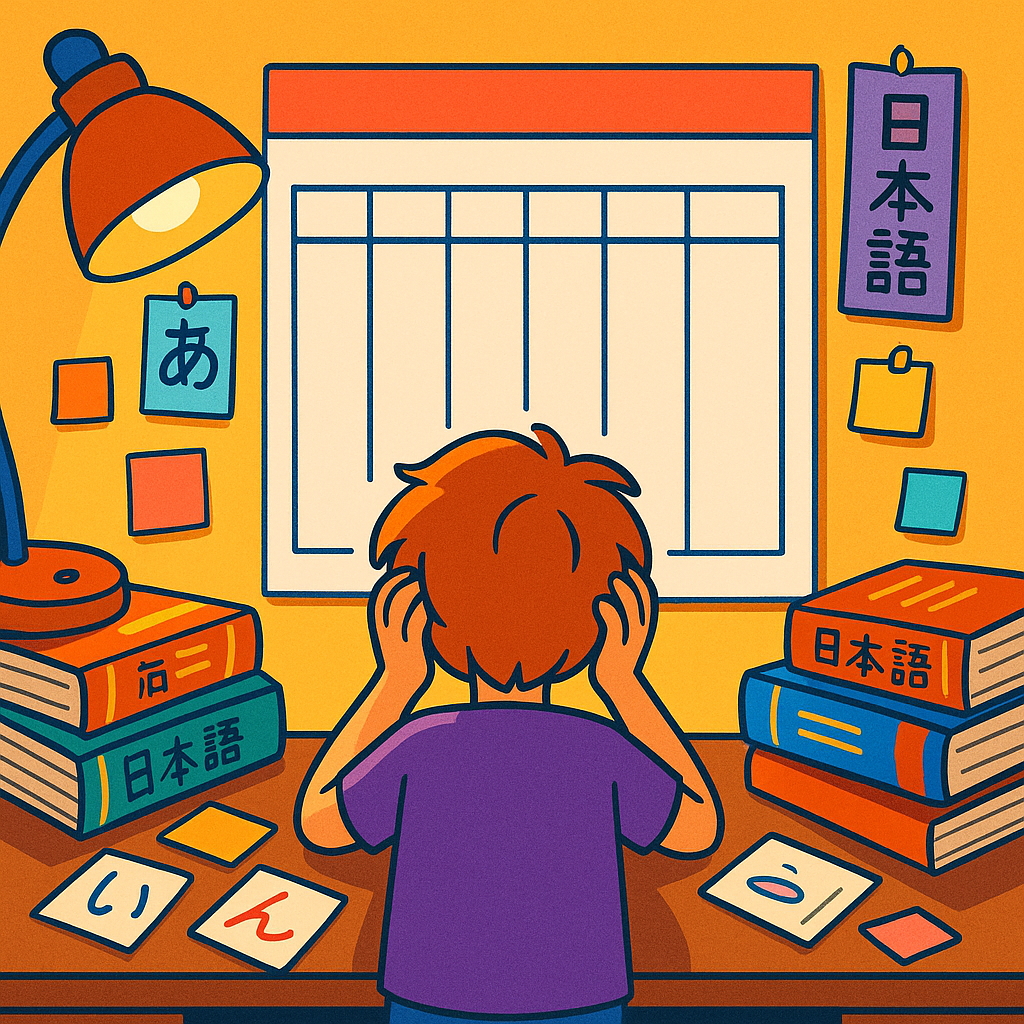
Here is what happens when you sit down to design a study routine from scratch. You open a blank week and you fill it with the things you can measure. Flashcards have a number. Grammar points have a checklist. Textbook chapters have an end. These feel like progress because they are countable, so they get all the squares on your calendar.
Notice what every one of those activities has in common. You do them alone, at your desk, with no one talking back. A self-study schedule built this way is not a study schedule at all. It is an input schedule. Output gets zero minutes.
You can run that calendar perfectly for a year and end up exactly where the Shibuya guy I keep meeting ends up: able to read a novel, unable to order a coffee without rehearsing it first.
So let me give you the boring, useful version. If you have, say, eight hours a week to spend on Japanese, here is a split that beats almost any color-coded fantasy:
That last number shocks people. Forty percent of your week, talking. Not consuming, talking. Structure beats motivation, and the structure that works is the one that forces the scary part onto the calendar instead of leaving it for "when I'm ready."
The exact percentages do not matter. What matters is that the third category exists at all, because in most self-study plans it simply does not.
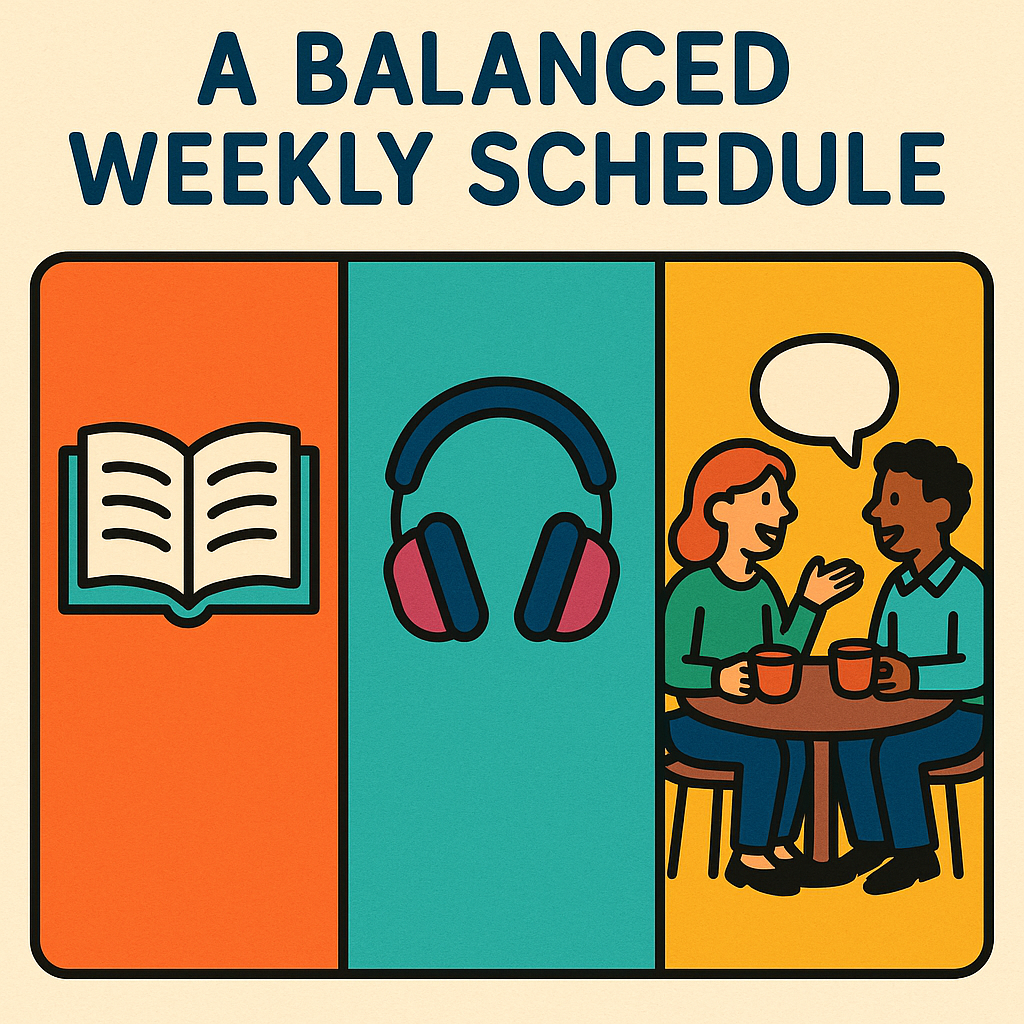
Reading and listening build the part of your brain that understands Japanese. They do almost nothing for the part that produces it. Those are two different muscles, and the second one only grows under live conditions.
Think about what a real conversation forces you to do that no app ever will. You have to retrieve a word in under a second, not recognize it on a flashcard. You have to recover when you say the wrong thing. You have to sit through a silence without panicking, hear the 「えっと」 and 「なんか」 that smooth out natural speech, and notice the polite 「あー、そうなんだ」 that quietly means they did not understand you at all.
None of that is in your textbook. Talking is the lab where it all gets tested. You can have the cleanest grammar notes in Tokyo and still fall apart the first time the data is live, because you scheduled every hour except the one that runs the experiment.
The deepest mistake in the self-study mindset is this: people treat speaking as something you earn. First I'll finish N3, then I'll be ready to talk. First a few hundred more words, then I'll find a partner. So conversation gets pushed to the end of a line that never ends.
Flip it. Conversation is a scheduled block, not a reward. It goes on the calendar at the same time as your flashcards, not after you feel worthy of it. The learners who improve fastest are not the ones with the prettiest grammar. They are the ones who started talking while they were still bad and let the rest catch up.
The good news is the cringe tax is smaller than you fear. A patient Japanese friend does not need your sentences to be perfect. They need you to show up and try, in exchange for you being curious about them. That is a fair trade, and it is the oldest one in language learning.

If the missing 40% is conversation, then the missing piece is a person, and that is the part no schedule can manufacture for you. You cannot Anki your way to a friend.
This is the exact gap we built SewaYou to close.
Make Japanese Friends On a Live World Map
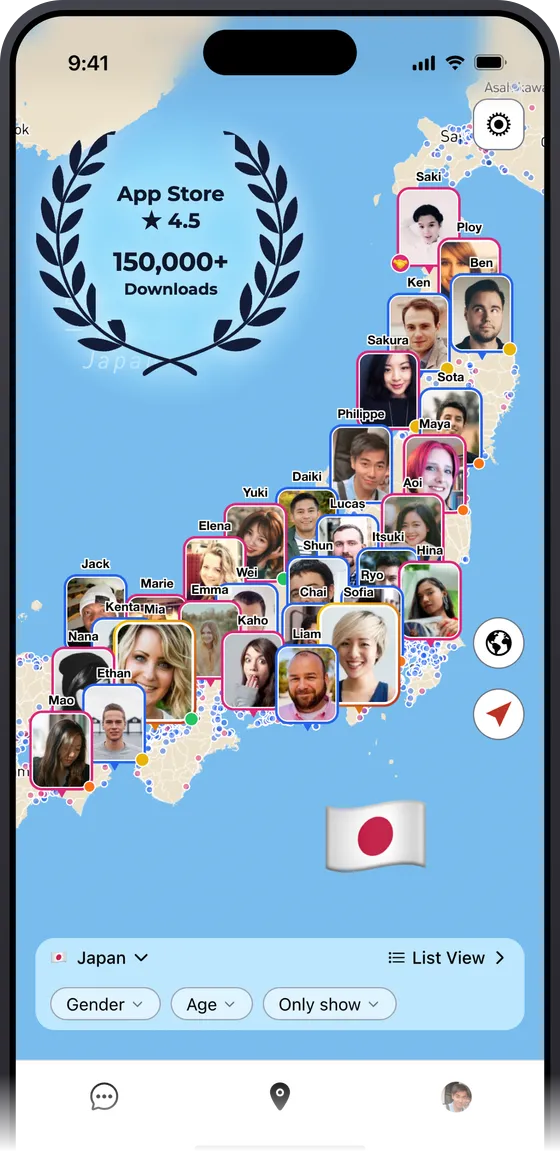
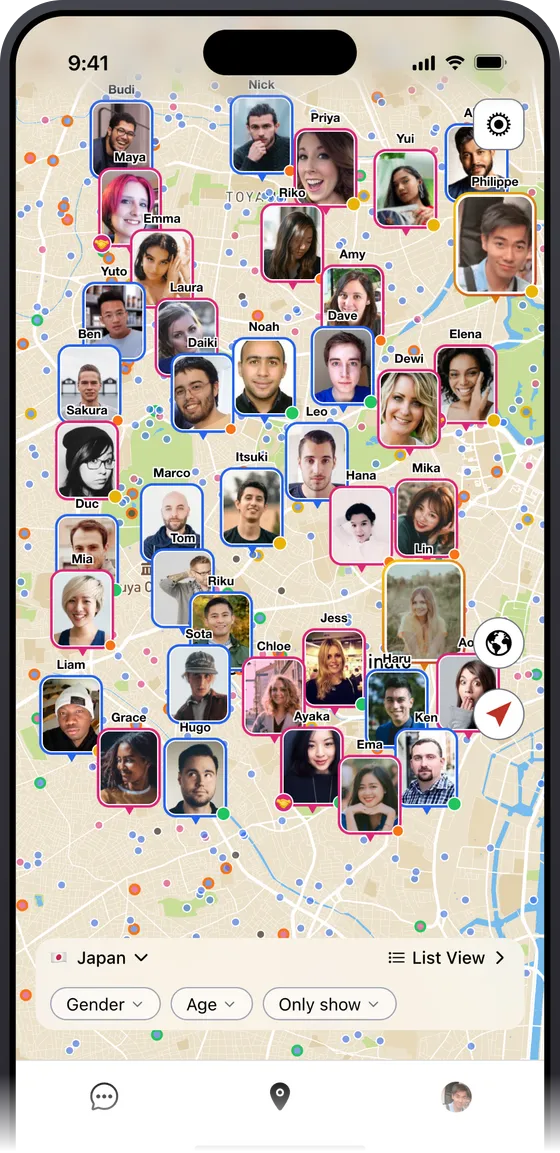
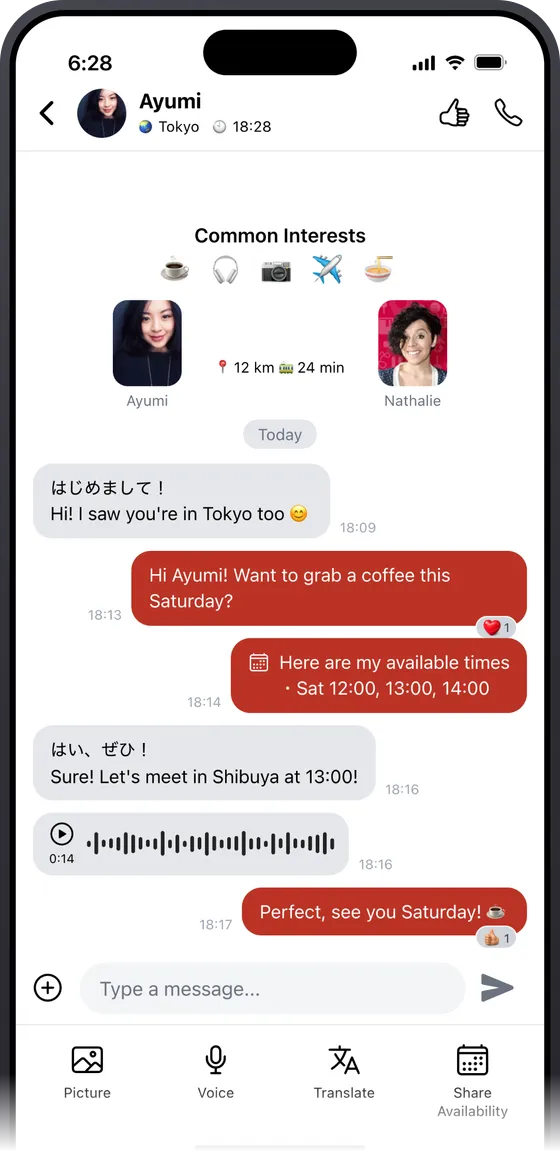


SewaYou is a map-based app for finding people near you who actually want to meet up in person. Locals curious about a foreign friend, foreigners learning Japanese, everyone opting in upfront. You can explore anywhere on the world map, or focus on your neighborhood to find someone you could meet at a cafe a few stops away and practice Japanese together.
Build the schedule. Keep the flashcards. But put the talking on the calendar first, because that is the block that turns five years of studying alone into Japanese you can actually speak.