

There is a specific loop a lot of foreigners in Japan get stuck in, and it usually shows up a few months into a new job. Your manager says something that stings, and instead of shaking it off, you spend the rest of the day running it in circles. Was that harsh? Is that just how feedback works here? Or is the problem actually me?
You know the flavor of it. He compares you to a coworker who "could finish this in 30 minutes," even when you are doing completely different work and the comparison barely makes sense. Speed seems to be the only thing that counts, so someone who rushes with AI gets the nod while you, trying to make the thing accurate, get the sigh. And then there is the question that has no right answer. "Why do you think they charge an annual fee instead of a monthly one?" You start reasoning out loud, because that is what "why do you think" invites, and he cuts in with "Are you lying? Why are you lying?" until you finally say you do not know, and he snaps back, "Then why didn't you just say that from the start?"
You leave those days second-guessing every sentence you say. Not because you are fragile, but because you genuinely cannot tell whether you just met normal Japanese work culture or a difficult person hiding inside it.

Here is the honest part most advice skips. Some of what feels wrong really is a cultural gap, and it is worth learning to read. Feedback in a lot of Japanese workplaces leans heavy on what went wrong and light on praise, because doing the job well is treated as the baseline, not the achievement. Communication is often indirect, so a question can be a test of whether you will admit uncertainty rather than an invitation to brainstorm. Group harmony can make the room go quiet and tense in ways that feel colder than they are meant to.
So yes, part of your confusion is real culture, and adjusting to it will genuinely help you. But do not let that swallow the whole picture. Being rude to external partners, keeping a floor so tense everyone is scared to speak, building questions you cannot possibly answer correctly, never once acknowledging effort. None of that is a national trait. A bad manager is not a culture. Both things can be true at the same time, and pretending it is all "just Japan" is how you end up blaming yourself for someone else's behavior.
The reason this question eats at you is not that you lack judgment. It is that you are working with a sample size of one.
When you are new to Japan, this manager might be the only Japanese boss you have ever had. You have no baseline to compare against, no second data point, no quiet colleague you trust enough to ask, "Is he like this with everyone, or is it me?" So your brain does what brains do with missing information. It fills the gap with the worst available answer, which is usually some version of I must be the problem. Isolation does not just feel bad. It quietly removes the one thing you need to judge your situation clearly, which is other people's perspective.

The fastest way out of that loop is almost embarrassingly simple. You talk to someone who has been here.
A foreigner who has already survived a few Japanese companies can hear your story and tell you, in one sentence, whether the "why are you lying" thing is a known style or a red flag. A Japanese friend who works outside your bubble can decode the cultural layer for you, "that indirect question is normal, here is how you are supposed to answer it," and just as easily say, "no, that part is over the line, that is closer to power harassment than management." That is calibration you cannot manufacture alone. One coffee with the right person can do what three weeks of lying awake cannot.
The catch is that most people in this exact situation have no one to ask. Their whole social world is the same office that is stressing them out, so the only voices they hear are the ones already inside the pressure.

There is a second thing that isolation does, and it is quieter but just as damaging. When the job is your entire life, every jab from your manager lands at full force, because there is nothing else holding your weight. The comparison to the fast coworker is not just annoying, it becomes your whole mood for the week.
Build a life outside the building and the job shrinks back to its real size. You get perspective, and you also get options. When you know people, when you have somewhere else you belong, you stop feeling like this one manager holds your entire future in his hands. You stop feeling trapped. And the moment you stop feeling trapped, the anxiety loosens its grip, because a hard boss is a lot easier to handle when he is not the only structure in your life.

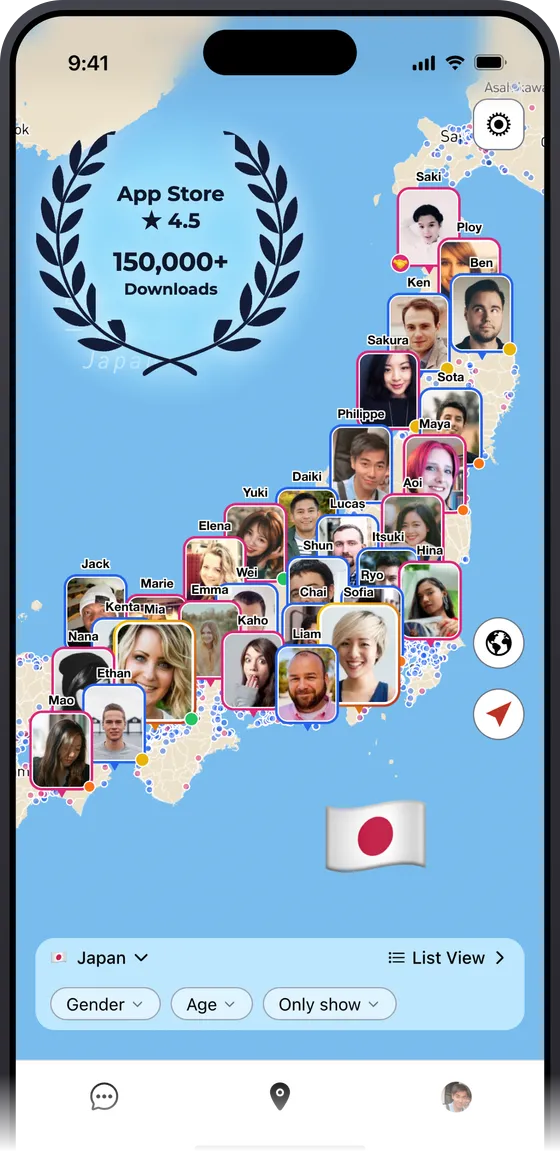
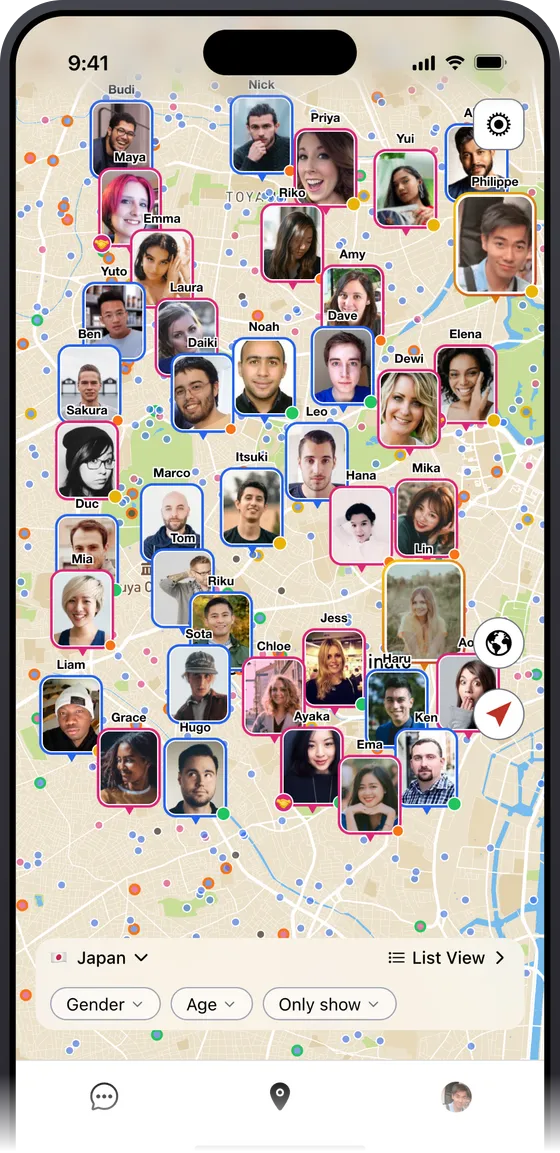
This is the part where the reassurance has to turn into something you can use, because "just talk to someone who gets it" is useless if you do not know a single person like that. That is the exact gap SewaYou is built to close. It is a map-based app that shows you real people near you, other foreigners who have worked inside Japanese companies and know the feeling, and locals who are genuinely open to meeting someone new. You can explore anywhere on the world map; for a coffee and a reality check in person, focus on people in your own city.
Make Japanese Friends On a Live World Map
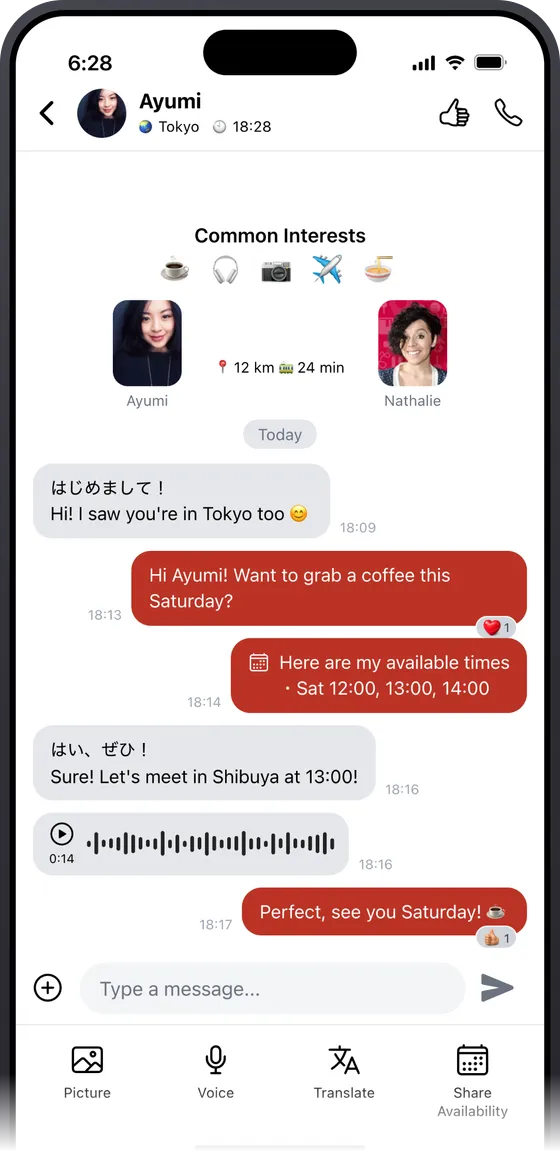


You do not have to decide whether your boss is toxic or normal while you are alone in your apartment at midnight. Get one or two people in your corner who understand both the culture and the workplace, and the question stops being this heavy unanswerable thing you carry by yourself. SewaYou is where you start building that circle, one honest conversation at a time.


