

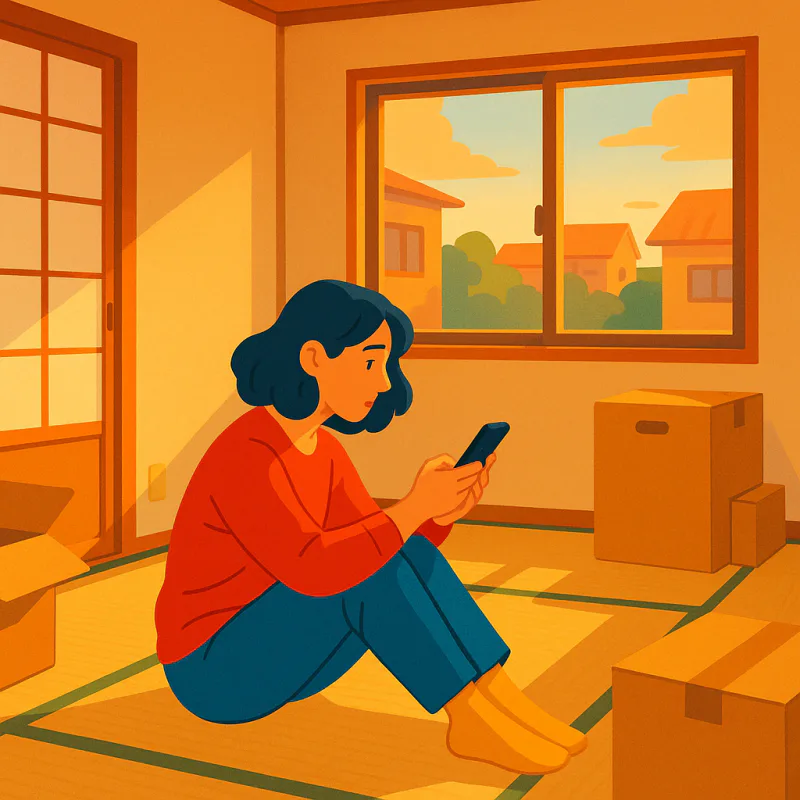
Your partner had a job to walk into. You had a suitcase and a residence card. He left for the office on day three, slotted straight into a team, a schedule, a reason to be here. You stayed behind in an apartment you do not have the words to describe yet, in a city where you do not know a single soul who is not him.
Nobody warns you how loud the quiet gets. The first few months as a trailing spouse in Japan have no structure at all. No coworkers, no commute, no one expecting you anywhere. Just long flat days, a phone that only buzzes with messages from twelve time zones away, and the slow realization that you have to build an entire life from zero while your partner already has half of one handed to him.
If that is where you are right now, read this slowly. The friendlessness is the situation, not you.
Back home, friendship was ambient. You did not "make" friends, you accumulated them, from school, from work, from the gym, from the friend of a friend at someone birthday. The structure made the friends for you. You never had to do it on purpose.
Move countries for a partner job and all of that scaffolding vanishes at once. There is no office to absorb you, often no language yet, and your one built-in person comes home tired and is, understandably, not a whole social life. So you wait. You tell yourself it will happen naturally, the way it always did. Then a month passes, then three, and it has not, because the conditions that used to make it natural are simply gone.
This is the part that catches expat wives off guard. You were never bad at friendship. You just always had a system doing the work. Now you have to be the system, on purpose, for the first time in your adult life. You have to build the structure friendship came from.
You do not have to invent connection from nothing. The fastest shortcut is to walk into a place that already has rhythm, repetition, and other people who show up regularly. Repetition is the secret ingredient. One coffee with a stranger is awkward. The same faces three weeks running is a friendship starting to form.
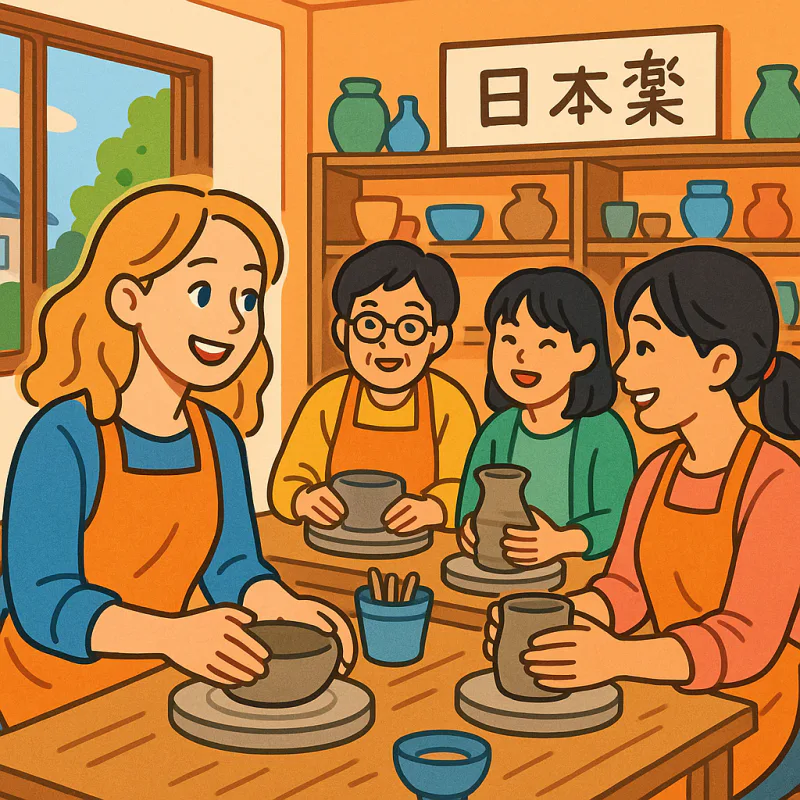
A few that work especially well for trailing spouses:
The goal of any of these is not to find your best friend on the first visit. It is to become a regular somewhere. Regulars get adopted.
If you have kids, you have an instant doorway, and you may not have noticed it yet. The school gate, the hoikuen pickup line, the park at 10am on a weekday. Other parents are a captive, repeating, geographically-close group, which is exactly the recipe. A simple "how old is yours?" in broken Japanese has started a thousand friendships. Nobody at the park expects you to be fluent.
No kids? Your neighborhood is still a circle. The same konbini staff, the same dog walkers, the bakery where the owner starts to recognize you. Say good morning. Learn ten words. Be a friendly regular face on your own street before you are anyone friend. Belonging often starts with familiarity, and familiarity starts with just being seen in the same places.
And do not write off your partner colleagues and their partners. Other couples who moved here for work are living your exact situation. That whole pool exists, and a lot of it is lonely in precisely the way you are.
Here is the honest catch with classes, kids circles, and the neighborhood. They are slow, and they are luck-dependent. You can attend the same yoga class for two months and never quite cross the line from "the woman who is also there" to "someone I text." It works, but it works on a timeline that does not care how lonely this particular Tuesday is.
That is the gap worth closing on purpose. When the homesickness hits hardest, you do not need a hundred acquaintances. You need one local friend within walking distance. One person in your actual neighborhood you could text "coffee?" on a grey afternoon and see twenty minutes later. That single nearby friend changes a city from a place you are stuck in to a place you live.
The trouble is that the usual apps are built to do the opposite. They hand you endless messaging with people three trains away, a language partner who flakes, a feed of strangers who exist mostly on a screen. That is not what an expat wife in a quiet new city actually needs.
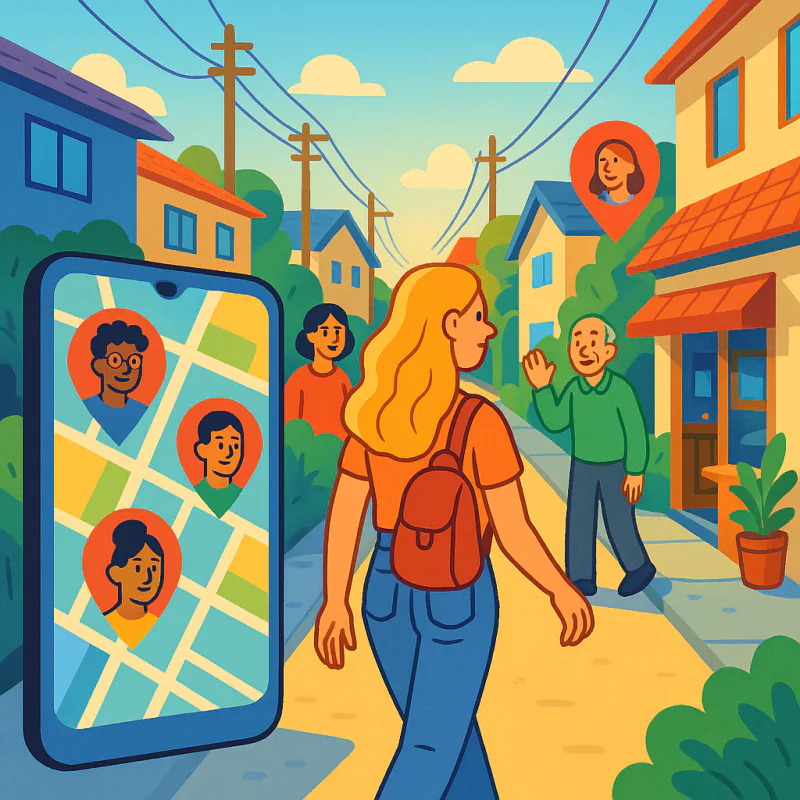
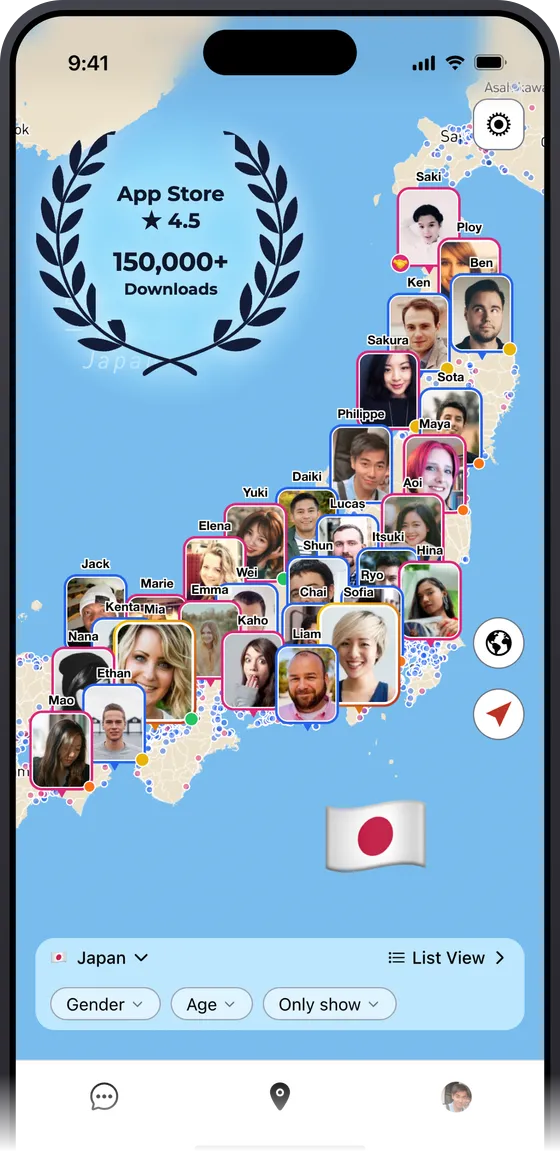
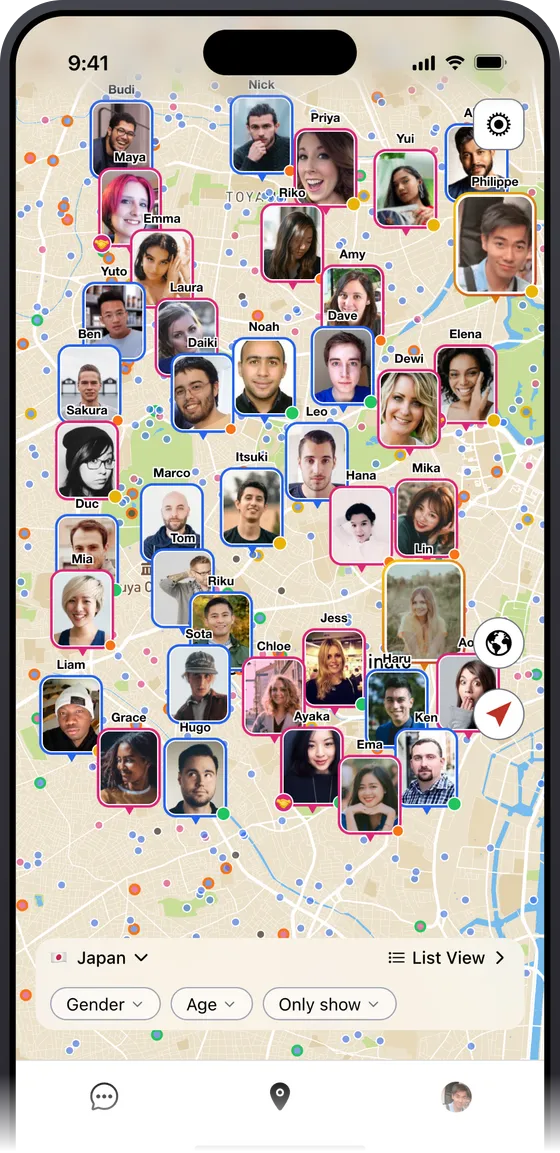
SewaYou is a map-based app that shows you real people near you, in your Japanese city, who want to meet new friends too. You set the map to your own neighborhood and discover locals and fellow residents who are genuinely close by, not a list of usernames somewhere across the metro.
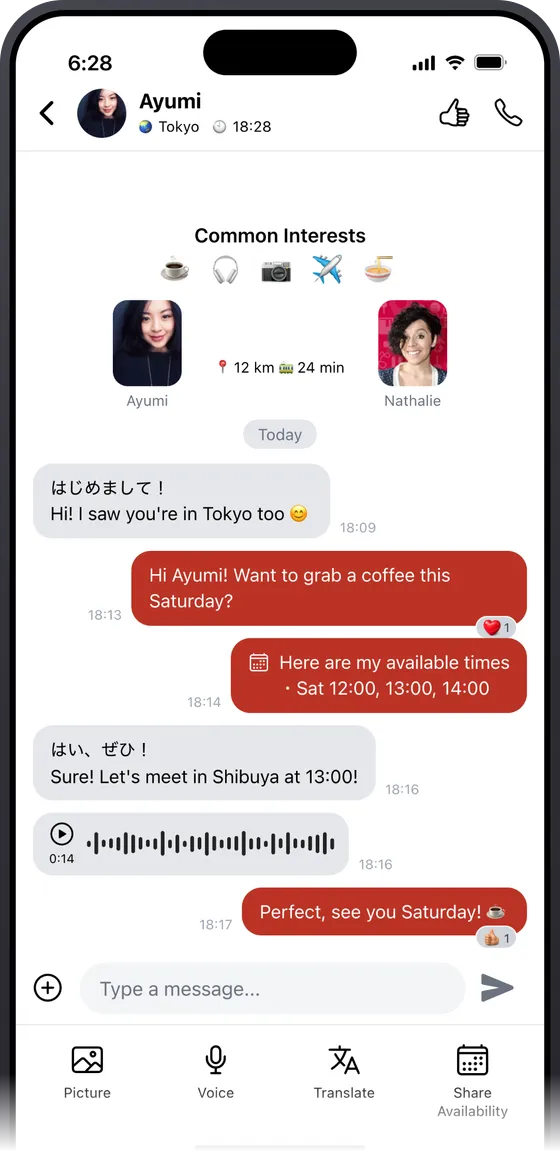
It is built for exactly your problem. You are not swiping or chasing a language partner who never shows. You open the map, see who is nearby and open to meeting, read a few honest profiles, and message someone you could actually meet for a coffee or a walk this weekend. You can also explore anywhere on the world map. When you focus on your own area, the people you find are people you could realistically see again, which is the whole point of a first friend.
Discovering one person ten minutes from your door is so much lower stakes than trying to manufacture a whole social circle. You are not rebuilding your entire life tonight. You are finding one local friend within walking distance, and letting the rest grow from there.
Make Japanese Friends On a Live World Map


So do the small version. Sign up for the weekly class. Say good morning on your street. And tonight, set the map to your neighborhood, read a couple of profiles, and send two honest messages. You did the hard part already. You crossed an ocean for someone you love. Finding one friend in your own city is a much smaller, much kinder leap, and you do not have to make it alone.
For arriving with people already in your corner, How to Have Friends Waiting When You Land in Tokyo.
For the apps worth installing before the move, The 5 Apps You Should Actually Download Before You Move to Tokyo.


