You are almost 40, single, and you finally decide to fix your conversational Japanese. You write a detailed profile, keep the photos PG, and go active on HelloTalk for the first time in years. Within a week you learn two things. The kanji for hotel, and a whole vocabulary of meeting spots that no language school ever taught you.
I have watched this exact loop happen enough times to stop calling it bad luck. You show up for practice. The app hands you an offer instead. And the more you just wanted to talk, the more confusing it gets, because you came for actual vocabulary and ended up with a dating profile's worth of attention.
HelloTalk is not becoming a hookup app by accident.
The mechanics are not mysterious. On a chat-first language app, the people who get the most messages back are the ones whose DMs are the least about language. A flirty opener gets a response almost every time. A sincere "can you explain the て form to me?" gets one maybe once. So the feed quietly organizes itself around the people who flirt, because flirting is what keeps the conversations alive.
Attention follows the flirting.
I am not moralizing here, because I genuinely get it. If you are a woman on that app, you are not confused about what a quick "want to practice English over drinks?" means. You have seen it forty times. If you are a man chasing pure practice, you watch people with gym photos get instant replies while your genuinely useful correction sits unread for a week. The incentive is visible from both sides of the room. And it is doing the same thing to everyone.

Here is the part most people miss. When the flirters win the feed, the people who actually wanted to study stop opening the app. I know several former heavy users who described the same exit. They used it daily for months, the offers got too frequent, and one day they just closed it and never came back.
That means the app is not becoming a hookup spot because everyone on it wants a hookup. It is becoming one because the people who wanted language quietly left, and the ones who stayed are the ones the feed was rewarding all along.
The learners left. The algorithm kept the rest.
Think about what that means for your search. You are not trying to practice with everyone on the app. You are trying to find the small stubborn group who are still there precisely because they ignore the feed's worst habits.

The practical part. These four rules are what I actually use, borrowed freely from friends who survived the loop.
Filter for goals, not pictures.
On a chat-first app, the most useful skill is refusing the groove. You are not missing out by ignoring a message that has nothing to do with language. You are protecting your one scarce resource, your evening, for the messages that do.

Now the part I want you to sit with. You can run those filters beautifully and the core problem stays. You are standing in a room where most conversations are not about language, and it costs you real time to find the few that are.
This is why I keep coming back to meeting people who are near you. When the person on the other side is a fifteen minute train ride away and their profile says they are trying to learn languages too, the whole "free tutor while they flirt" dynamic collapses. You grab a coffee. You stumble through half an hour of imperfect Japanese. You go home knowing three more words than you came in with. That is the practice you logged on for, and it did not require picking through a feed of hotel invites.
The best filter for the hookup crowd is a coffee table.
That is exactly the shape of SewaYou. It is not another chat-first feed. It is a map of people near you who want real friends, and who usually like the idea of practicing a language together over coffee instead of trading innuendo with a stranger at midnight. The intent is written into the design, which means you spend your evening with actual practice partners instead of triaging offers.
Make Japanese Friends On a Live World Map
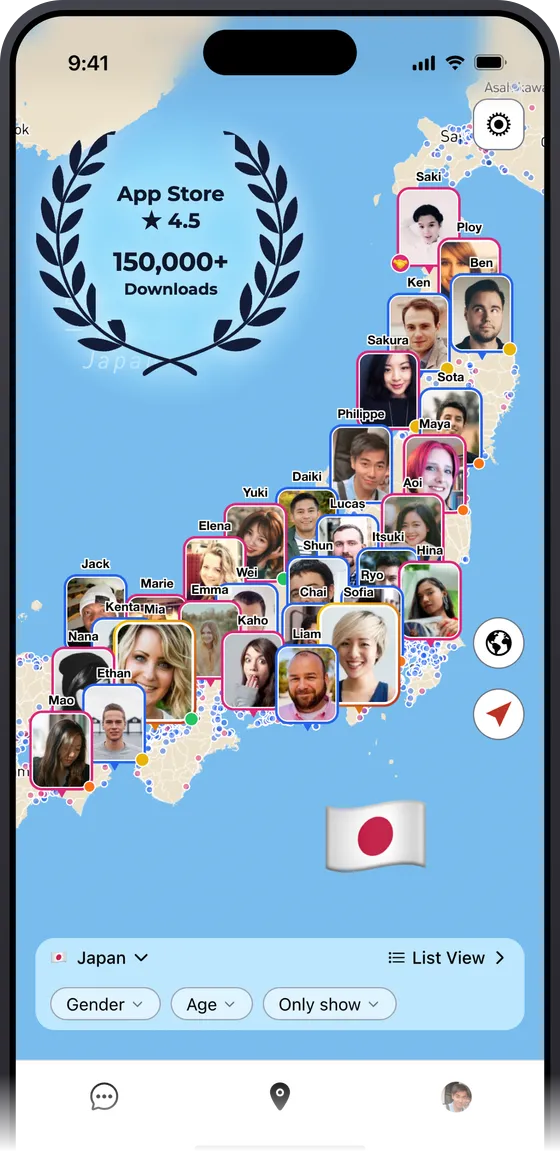
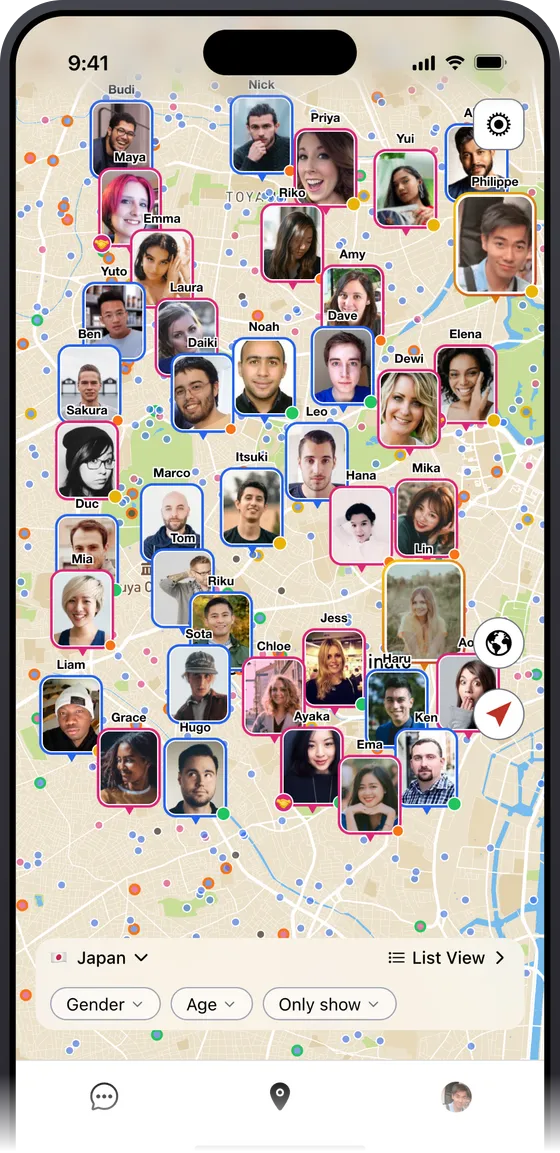
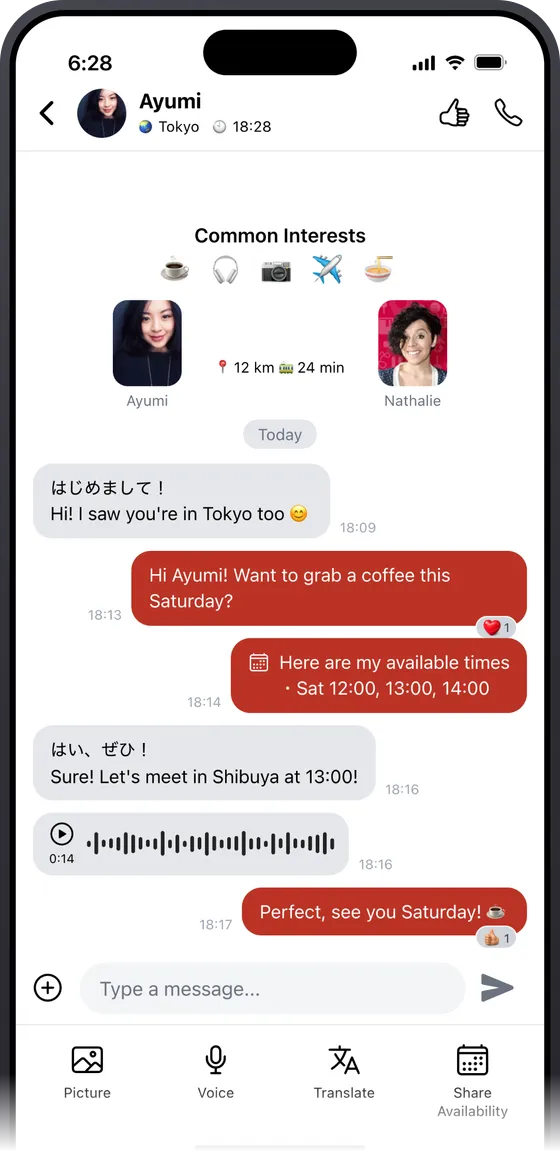


You do not have to delete HelloTalk. I still keep it around for corrections and quick text reps, the correction tools genuinely are excellent. Just stop expecting it to be the place where your Japanese actually grows.
The growth happens with people who are real, nearby, and on the same page as you. Find that. Keep the chat app for what it is good at, and let the listening, the stumbling, and the real repetition happen across the table from a person you will actually see again.
Download SewaYou, open the map, find someone two train stops away who also wants to practice, and tell them about your week in your best broken Japanese. Someone will correct you, gently or not. That is called practicing, and it is exactly what you signed up for.