

You are in an elevator in Tokyo. Someone has a problem they clearly cannot see. Their shirt is inside out, their bag is open, or their skirt is caught in the back of their waistband. Everyone notices. Nobody says a word.
The doors stay closed. The silence gets heavier. You start wondering whether speaking up would be kind, rude, or somehow much worse than letting the person walk into the next room like that.
I used to read moments like this as proof that people in Japan did not want to get involved. Sometimes that is part of it. But the more useful explanation is less personal. Silence is a social shield.
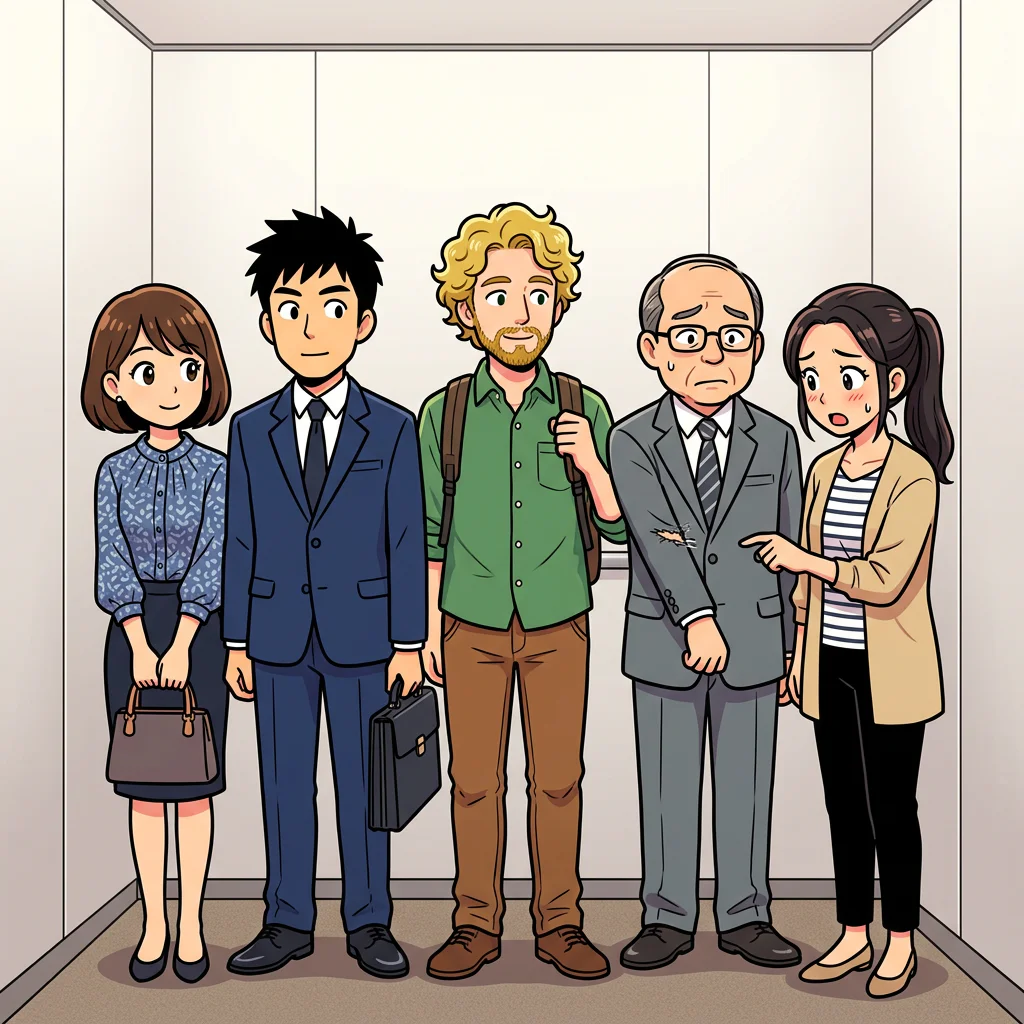
In a crowded elevator, nobody has been invited into a relationship with anybody else. People are sharing a small box for a short time, and the safest way to behave is often to make yourself socially invisible. Eye contact is limited. Conversation is rare. Everyone is trying to keep the ride smooth.
Pointing out another person's clothing problem breaks that invisible agreement. Even if your intention is generous, you have made the person the center of the room. You have also made yourself responsible for how the correction lands.
That risk feels bigger when the person is older, when you do not share a strong language, or when you cannot tell how familiar the other passengers are with each other. A local passenger may notice the same thing and still decide that a stranger speaking up would create more embarrassment than help.
This does not mean there is a formal Japanese rule that says, "Never tell someone." It means people are making a fast judgment about privacy, status, timing, and their own place in the group. From the outside, that judgment looks like indifference. From the inside, it can look like avoiding public embarrassment.
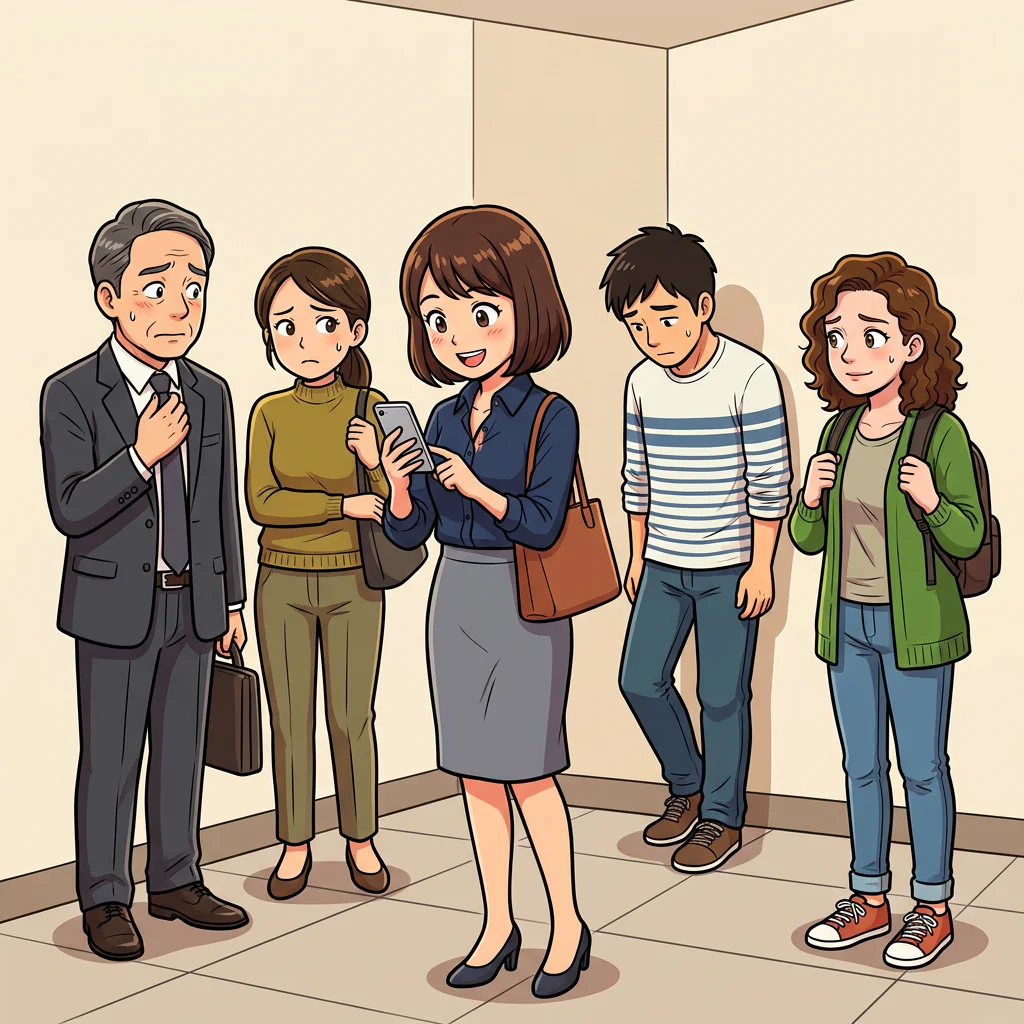
There is also a very ordinary human problem hiding inside the cultural one. When five people notice something, each person can imagine that one of the other four will handle it. The longer nobody moves, the more awkward it feels to be the first person who does.
In Japan, that hesitation can wear a particularly polished costume. Everyone looks forward. Nobody wants to force a stranger into a public exchange. The group remains calm, but the person with the open bag or tucked skirt remains unaware.
You may experience the same pattern in smaller ways. A colleague sees that you misunderstood an instruction but waits for your manager to correct it. A friend notices that you are struggling in Japanese but does not interrupt because they do not want to expose you. A station employee watches you search the wrong platform until you ask directly.
It is easy to turn every quiet moment into a verdict about your welcome. Please be careful with that. Sometimes the silence says, "I do not know if I have permission to enter this situation," not, "I do not care what happens to you."
That distinction matters because assuming rejection can make you withdraw first. Then other people read your distance as a wish to be left alone, and the little misunderstanding feeds itself.
You do not need perfect Japanese to be useful. You need a calm voice, a private angle, and an exit that lets the other person recover their dignity.
If the problem is minor and the person is about to leave, a short warning is usually better than a dramatic explanation. Move close enough that you do not have to announce it to the whole elevator. Get their attention gently. Point only if that helps. Use simple language.
"Excuse me, your bag is open."
"Sorry, your shirt is caught at the back."
"Excuse me, I think something is tucked into your waistband."
Then stop talking. Do not explain how long you noticed. Do not make a joke to relieve your own nerves. Do not wait for gratitude. Let the person fix the problem and return the room to normal.
Help quietly, then leave.
If the situation could be dangerous, the calculation changes. A child separated from a parent, a person about to step into traffic, or someone who appears unwell deserves a more direct response. Ask for help from staff or another passenger if your Japanese is limited. Politeness is valuable, but it is not a reason to watch preventable harm happen in silence.

There is a trap for foreigners here. You notice that direct comments can make a room tense, so you decide the answer is to become permanently quiet. You stop correcting misunderstandings. You stop asking questions. You stop telling people when you need help.
That is not cultural understanding. It is fear wearing a respectful outfit.
The goal is not to copy every local hesitation or to behave as if your natural warmth is a problem. The goal is to learn the difference between a public performance and a private kindness. A loud announcement in front of ten strangers is one thing. A soft, one-sentence warning at close range is another.
You can also make it easier for people to approach you. When a Japanese coworker corrects your phrasing, thank them instead of looking embarrassed. When someone offers a small piece of help, receive it warmly. When a friend looks uncertain, tell them directly that you would rather know than be protected from a little awkwardness.
Do not become smaller to fit the room. Become easier to read.
That is how trust starts. People learn that you can handle a correction, a question, or an honest reaction without turning it into a public crisis. You learn that their indirectness is not always a wall. Sometimes it is an invitation for you to show what kind of exchange feels comfortable.
The hardest part of these moments is often not the sentence you say. It is the uncertainty after you say it. Did I help? Did I embarrass them? Was that normal here? Would a Japanese person have done it differently?
One etiquette guide cannot answer those questions for every elevator, office, friendship, and neighborhood. You need actual people who know your personality and can explain both sides without turning the conversation into a lecture about "Japanese culture."

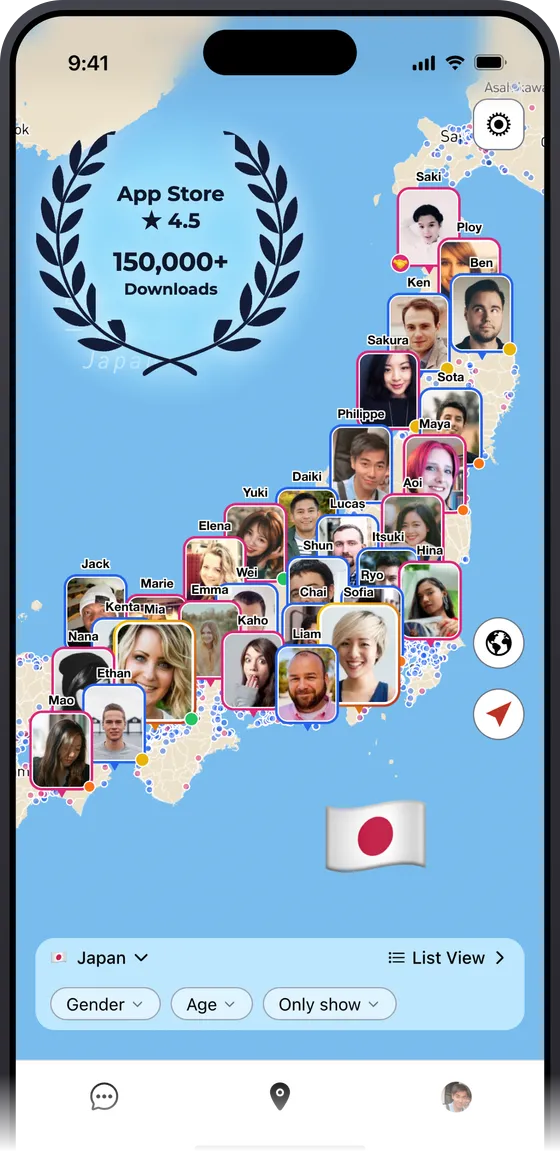
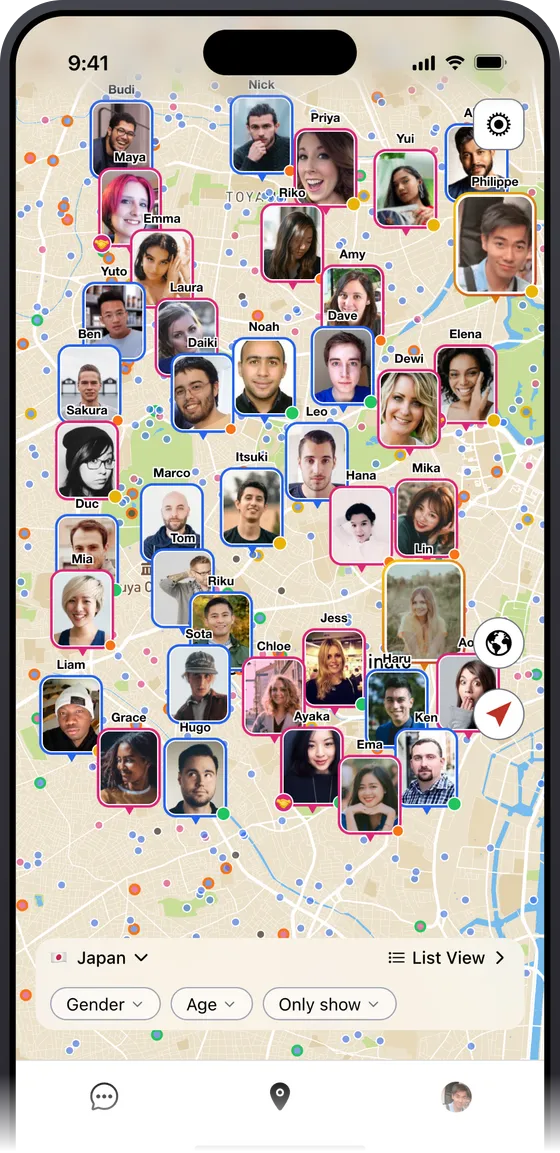
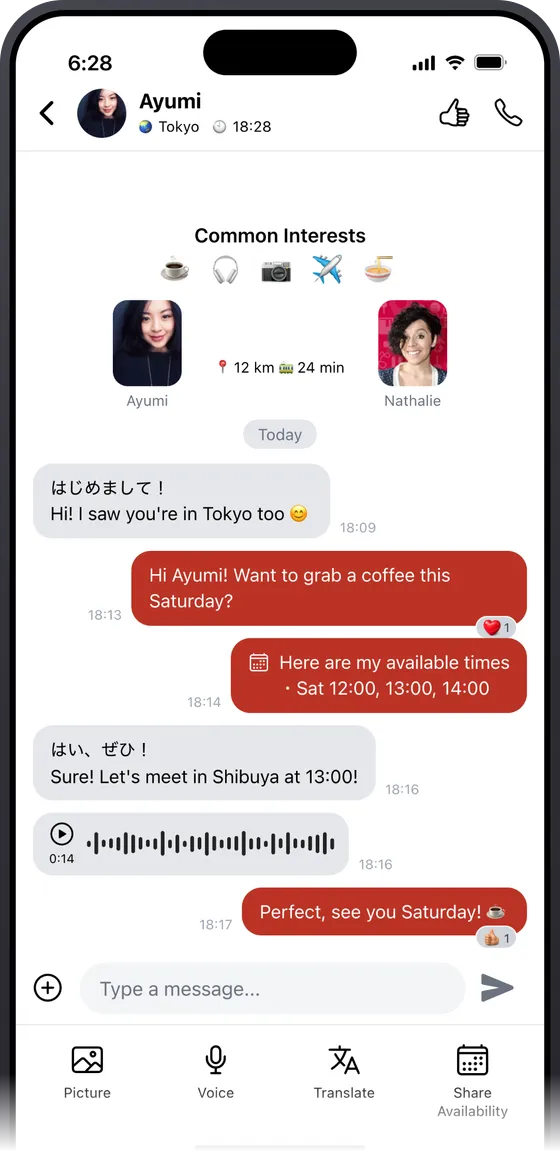
SewaYou helps you find those people nearby. It is a map-based app for meeting locals and fellow residents who are open to friendship and language exchange. Instead of trying to decode every quiet room alone, you can build a small circle where it is normal to ask, "Was that a cultural thing, or was everyone just nervous?"
Small bridges beat perfect fluency.
Make Japanese Friends On a Live World Map


You may still choose to say nothing in the next elevator. That is fine. You may also be the only person who quietly says, "Excuse me, I think your bag is open." That is fine too. The important thing is knowing that one awkward silence does not tell you how an entire country feels about you.
Find a few people who will help you read the room, and who will let you remain yourself while you learn. SewaYou is a simple place to start building that circle in your area.


