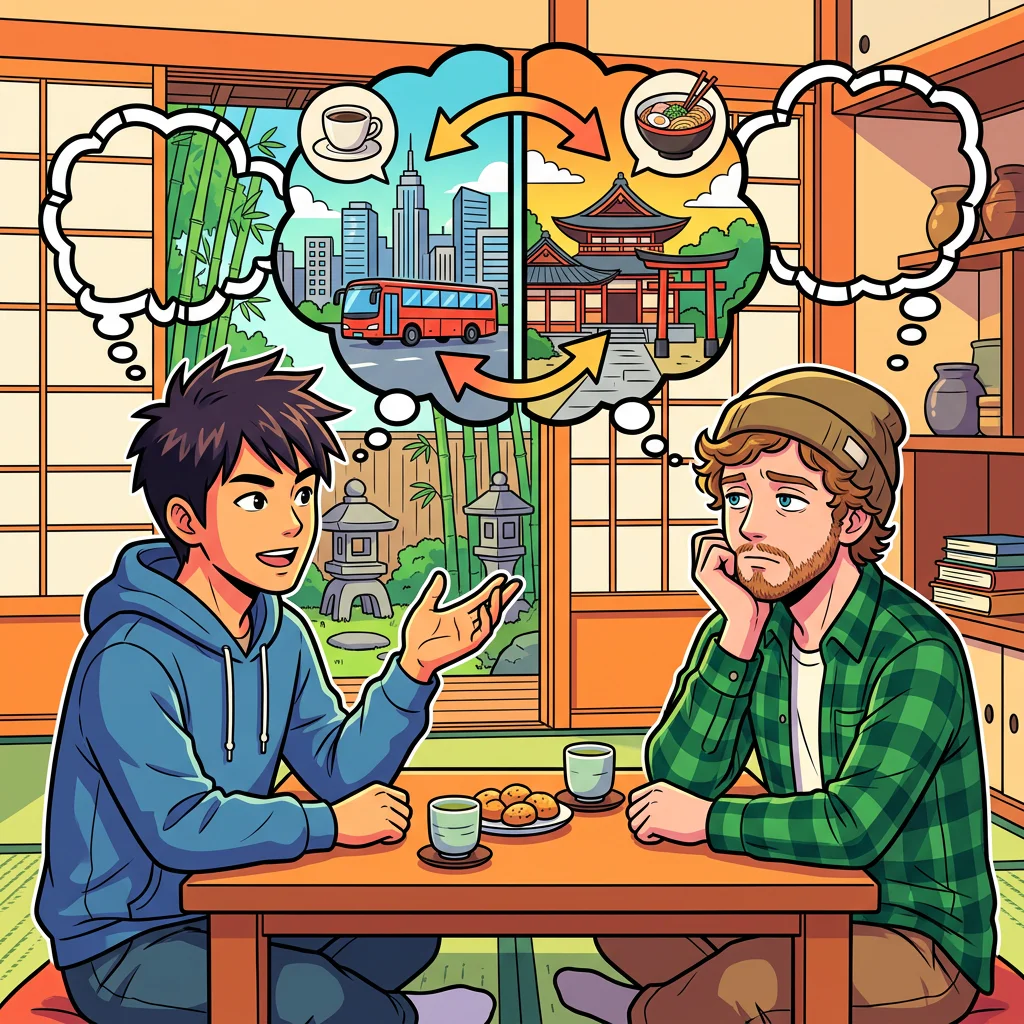
You live in rural Shimane. You speak Japanese. You joined the community clubs. And your conversations still die at the same place every time, at the polite wall of "in your country, how is it different over there?" You answer it a hundred times. The comparison eats the whole evening. And after a year you still have no one your age to text on a Friday.
I know exactly what that room feels like. Nice people, real smiles, zero traction. But here is the uncomfortable truth hiding in your question. The age gap is not the only thing standing between you and friends. The comparison loop is.
The comparison loop is a one-way street.
It is not that rural folks do not like you. It is that the question flattens you. When you are the "foreigner from the Home Country", you stop being a person with a job, a bad habit, and a favorite snack. You become a representative of a place. And representatives are not friends. They are exhibits.
Every time you explain your country, you spend the conversation talking about somewhere you are not. Your hometown, your family, your old life. All of it is invisible to the people across the table. They get a lecture about a place they have never seen, and you get nothing back that you can build on.
I stopped answering the question about my country first. I answer the question about my year first instead.
Here is the trick that finally started working for me. When someone asks about your country, answer briefly, then immediately turn the question around onto their local life. Ask which shrine they visit for new year. Ask what the town festival is actually like, not the guidebook version. Ask where they run in the morning.
The goal is to leave their familiar loop and enter their ordinary days. Ordinary life is where friendship lives. A question about their real week is worth more than any explanation of your home country.
Ask about the year, not the country.
That one habit changed my conversations more than any vocabulary list ever did. It does not matter that your answers are short. What matters is that the conversation stops being a comparison and starts being a life.
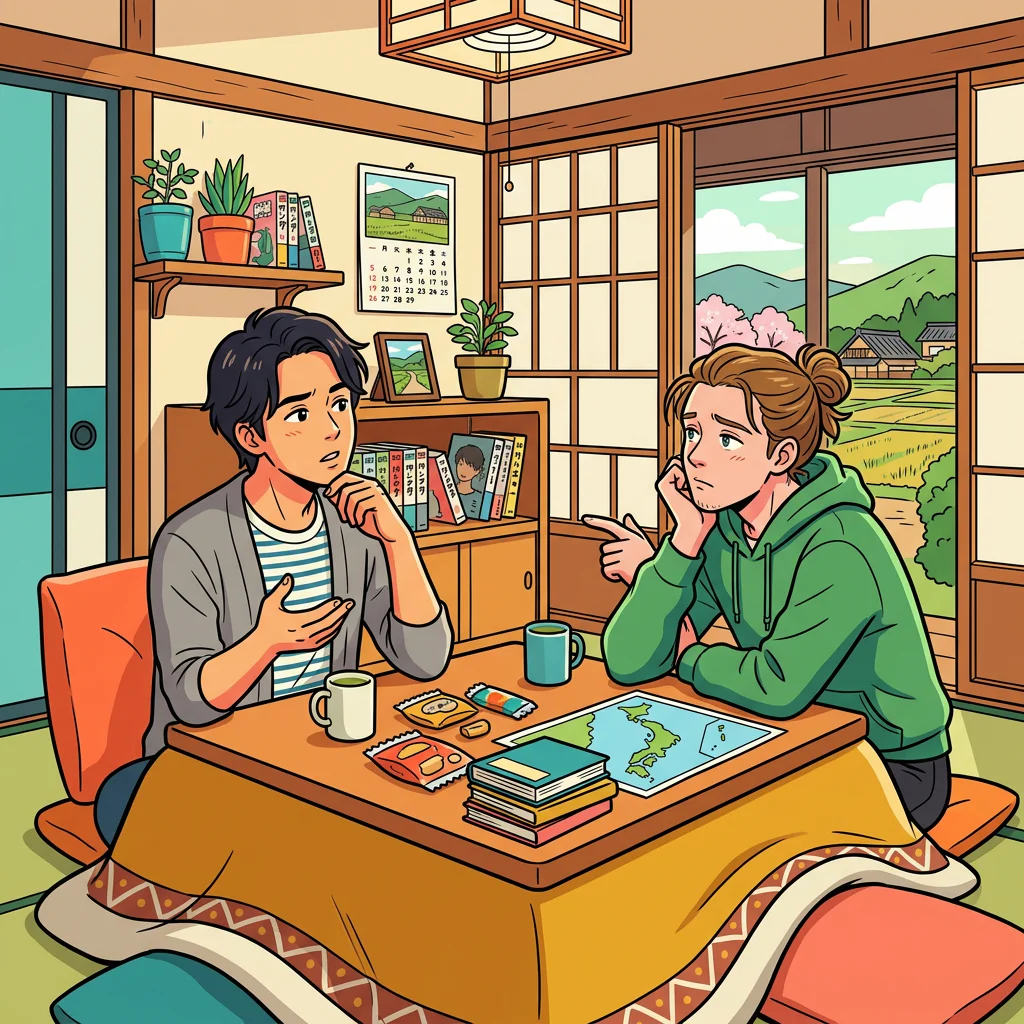
You already noticed the hard part of small towns. The official clubs skew toward retirees. If your only friend-making strategy is "attend every club", you will keep talking to people old enough to be your grandparents. That is lovely, but it is not the peer group you want.
Here is what nobody told me early. In rural Japan, the younger crowd does not do the official routes. They skip the town community center. They cluster in narrower, specific places. The gym. The badminton group. The board game bar in the next town over. The local university's open events. The cycling shop.
Young people cluster in specific rooms.
I spent six months in the wrong rooms before I figured this out. Once I stopped treating the official clubs as my only option and started asking the retirees where the younger ones actually went, the map got a lot clearer. The grandmothers will tell you. They know everyone.
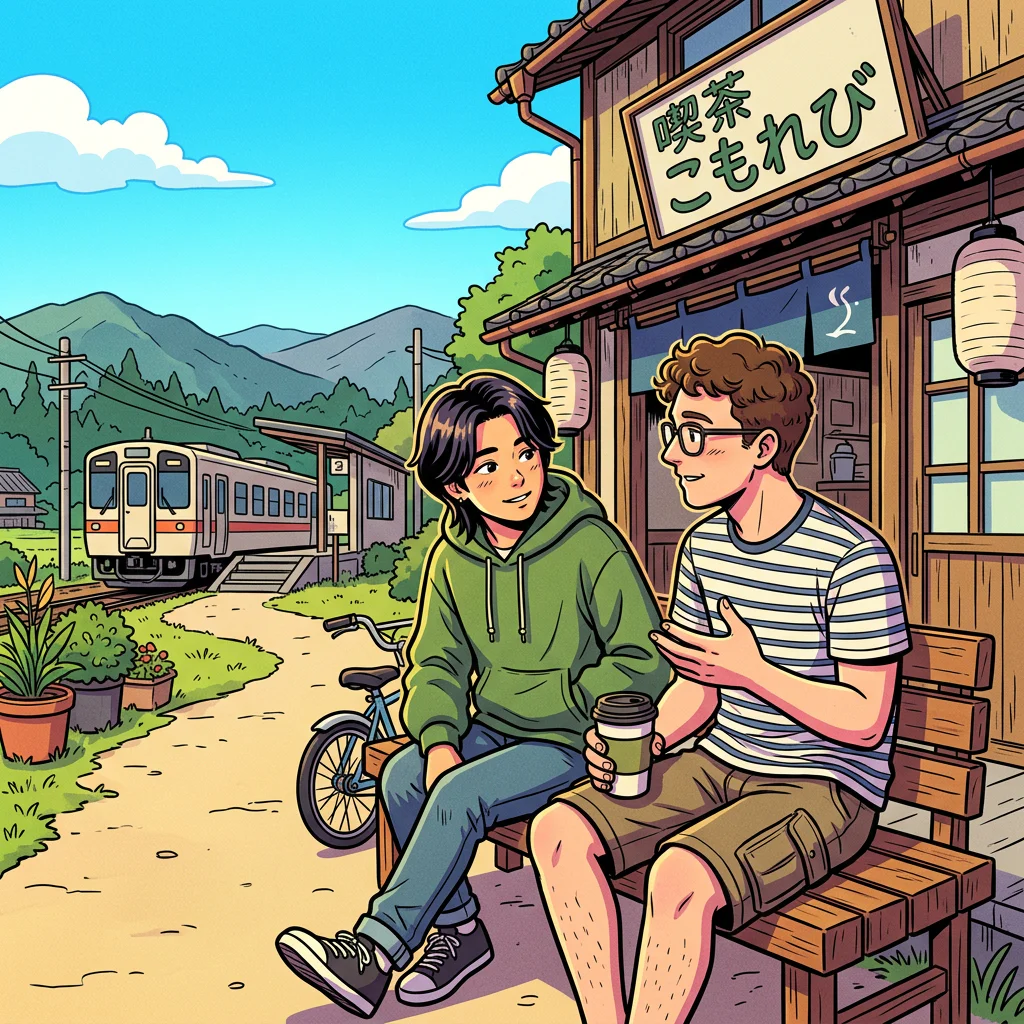
Even after you find your age group, the transition from polite to personal can stall. You meet someone nice at the gym. You exchange pleasantries twice. Then nothing. I used to read that as me failing. Now I read it the way rural pace actually works. Reserved people do not open up in one conversation. They open up in increments.
Reserved people open up in sides.
The bridge is repetition. Show up to the same badminton game every week. Sit at the same counter. Walk the same loop after work. The third or fourth time you see a face, the politeness level drops by itself. The small talk stops being small because you now share a context, a routine, a thing that happened last week.
Jackie asked me, early on, what topic to bring up. The real answer is that almost no topic works on encounter one. On encounter four, almost any topic works. The topic matters less than the recurring presence.
One more rural-specific lever. In the city you can bond over a cafe table. In the countryside people tend to bond while doing something. Gardening. Making mochi. Folding the nets at a fishing club. Carving in a woodworking circle. The activity gives your conversation somewhere to hide when it gets awkward, and it gives you a shared thing to refer back to later.
Ask to help. Then help badly on purpose first, so they can teach you. Teaching is a friendship shortcut, because it makes the other person feel useful, and it gives the relationship a role. You are no longer a polite stranger. You are the person who helped pick the daikon.
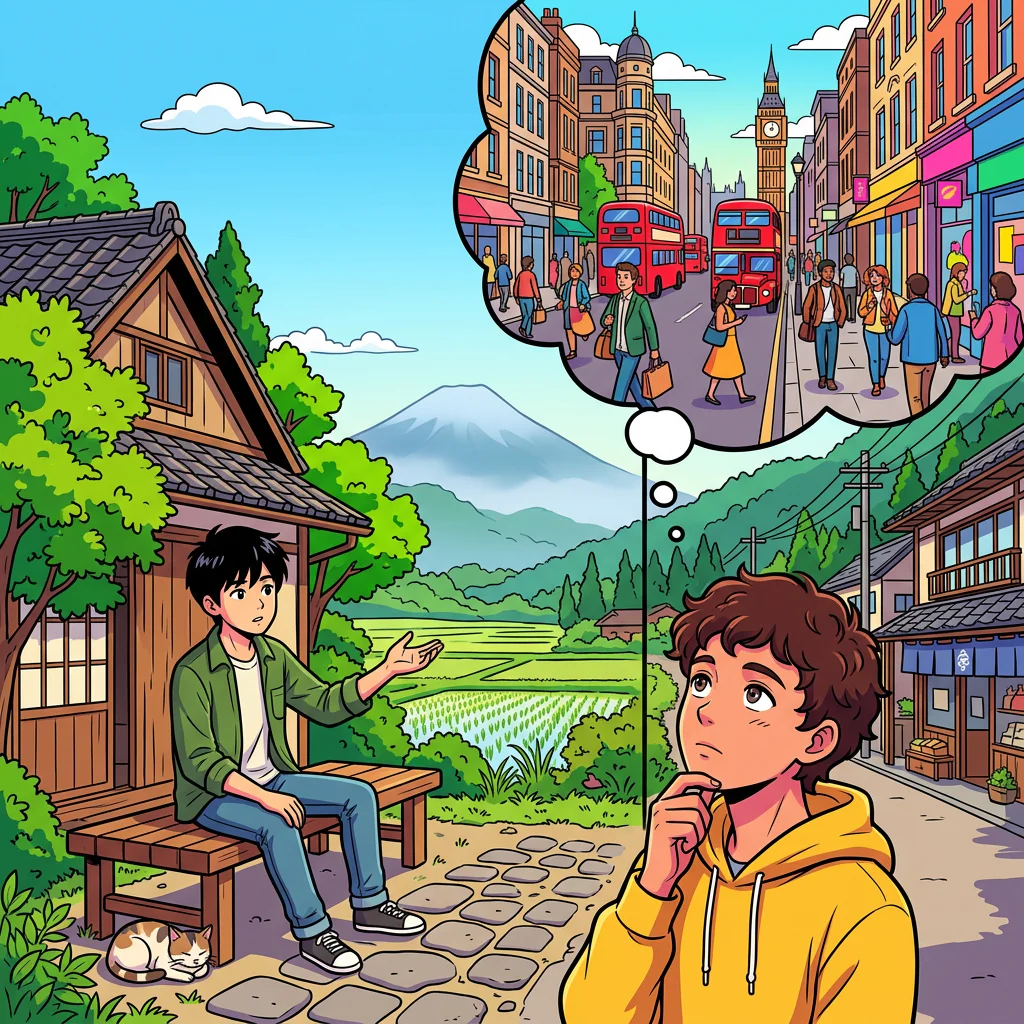
Teach me something and we are already friends.
That is the shift I keep coming back to. Rural friendship is built from small repeated useful moments, not from one impressive night out.
The one trap I really want to warn you about. You keep looking inside the borders of your own town. But your town might have three younger people who want to meet, and forty minutes away there are thirty. The bus, the drive, and the shinkansen gap make people forget to widen the circle. Do not forget.
When I widened mine, everything changed. A two-hour round trip for a real conversation beats a two-minute walk to a polite one. Remote area life is contact sport with your calendar. Word travels in small prefectures, and one friendship connects to four others faster than you would think.
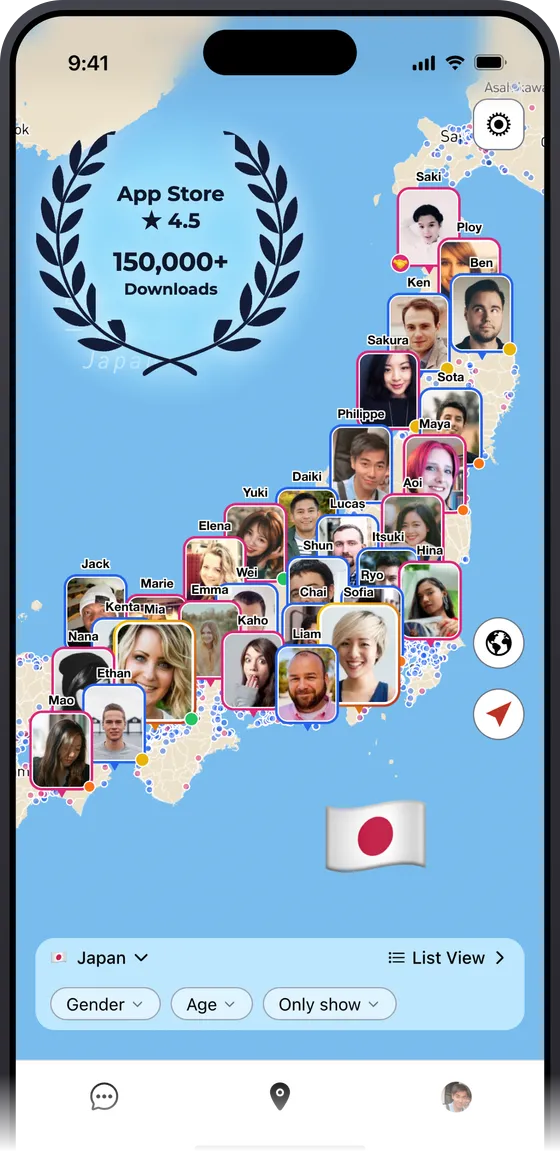
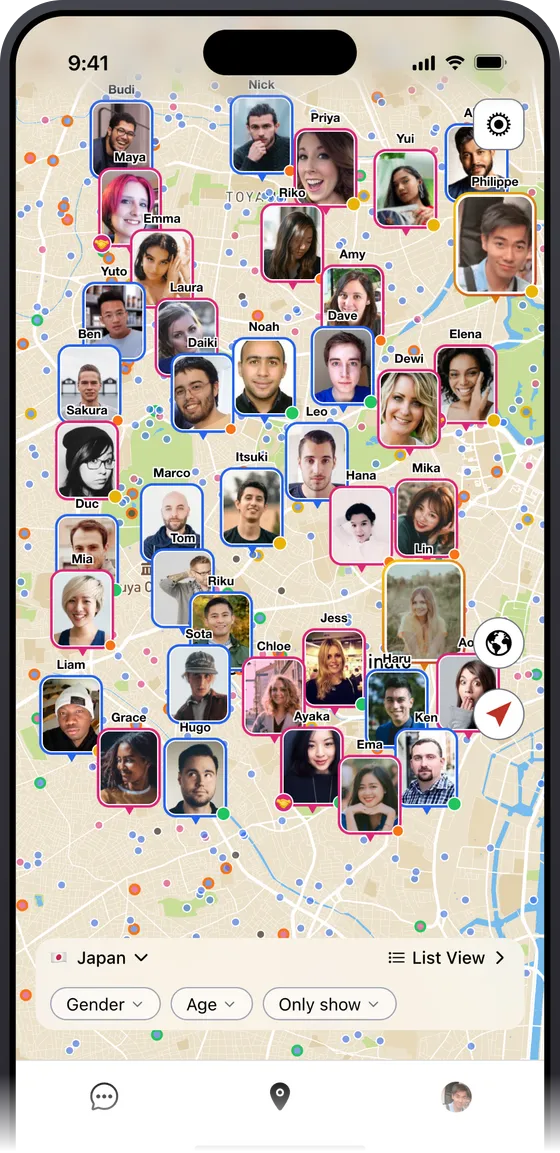
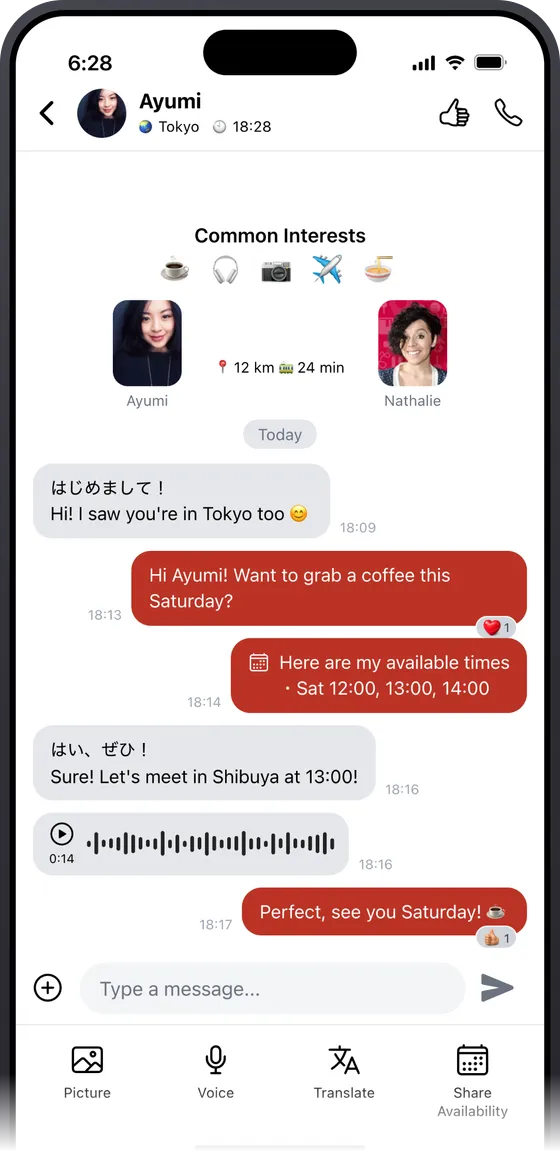
That is where SewaYou actually helps in a rural setting. It is not a feed of profiles from Tokyo you will never meet. It is a live map of people near you, right now, with "let's meet" somewhere in their profile. You set the radius to what you are honestly willing to travel, and you can see who is out there in your prefecture who also wants a real friend.
Make Japanese Friends On a Live World Map


Look back at the question you asked. How do I get past surface-level small talk in rural Japan? The honest answer, from someone who lived your exact year: stop debating where you came from and start living loudly where you are.
Answer the country question in one sentence, then ask about their year. Find the specific rooms where younger people hide, not just the official clubs. Show up the same place every week until reserved becomes regular. Do things with your hands so the conversation has somewhere to rest. And widen your radius to the whole prefecture, not just your town.
None of it is fast. Rural friendship is slow on purpose. But it is real, and it waits for people who keep showing up.
Download SewaYou, open the map, widen the radius to what you can actually drive, and find the person in your prefecture who is also tired of the home-country loop. You ask a better question. From there, it starts.