

I keep meeting foreigners in Japan who are stuck in a job they desperately want to leave, and can't.
Not because of a contract. Not because of money. They're stuck because their boss has spent months quietly convincing them that nowhere else will take them, that leaving would be shameful, that the company is doing them a favor by keeping them around. And by the time they try to walk out the door, they half believe it.
One story stays with me. A guy working in the game industry here, talented, hungry, finally lands an offer at a studio he'd dreamed about. He tells his current company he's leaving. Within a day, his boss has called the new studio, leaned on an old business contact, and the offer evaporates. Then the same boss sits him down and explains, calmly, that someone with his experience could never make it at a better place anyway. Best to stay. They'll even help him get permanent residency someday. Maybe.
He recorded the meetings. He's exhausted. And the thing he kept circling back to wasn't the lost job. It was that he had no idea who to turn to.
That's the part worth talking about.

When people hear "black company" they picture 80-hour weeks and screaming managers. Sometimes, sure. But the most effective bad employers I've seen in Japan aren't the loudest ones.
They're the ones who make themselves your entire world.
Your job becomes your only social life. You're too tired to see anyone else, so the only humans you talk to all week are the people profiting from your exhaustion. Slowly, their version of reality becomes the only version you hear.
A boss who controls your work, your visa sponsorship, your references, and your sense of what you're worth has enormous power over you. But that power only holds if there's no one else in your life offering a second opinion. Isolation is the lever. Everything else is just weight on the end of it.
The gaslighting follows a pattern once you've seen it a few times.
First, they shrink your sense of your own value. "Less than two years of experience, you're still a newbie." "Even if a big company hired you, they'd fire you in a month." Said often enough, by the only authority figure you talk to, it sinks in.
Then they reframe leaving as a moral failure. In Japan this gets dressed up in the language of 筋 (doing things "the proper way") and 迷惑 (causing trouble for others). Suddenly wanting a better life for yourself feels selfish, rude, dishonorable.
Then they make the outside world sound dangerous. "That studio almost went bankrupt." "They only hired you because of the agent's sales pitch." Every alternative gets quietly poisoned.
None of it survives contact with a second opinion. That's the whole point of keeping you from getting one.

If you're a foreign resident, the walls are taller, and bad employers know it.
Your visa is often tied to the company. That alone creates a fear that a Japanese colleague simply doesn't carry: "If I push too hard, could they sabotage my status?" Sometimes that fear is exaggerated, sometimes it's not, but it keeps you compliant either way.
The language barrier means you may not fully know your rights, or even how to ask. The labor laws here protect employees far more than most newcomers realize, but that protection is invisible if no one ever tells you it exists.
And the social barrier is the quietest one. You came here without a built-in network. No university friends down the street, no cousin who knows a recruiter, no old colleague to text "is this normal?" at 11pm. The people who could give you perspective are scattered across time zones or simply don't exist yet.
A company that's your visa, your income, AND your only real-world community isn't an employer anymore. It's a closed loop. And closed loops are where people get stuck for years.
The single thing that breaks the spell is having even one person outside the company who can look at your situation and say, plainly, "that's not normal, and you have options."
That's it. Not a lawyer, not a recruiter, not at first. Just a reality check from someone who isn't being paid by the people trapping you.
The foreigners I've watched escape bad situations here almost always had one thing in common. They had a few friends outside work, ideally other internationals who'd been through the local job market, who could go "wait, they did WHAT? No. Here's who you actually call."
An outside network is leverage. It's a recruiter referral you didn't have to cold-apply for. It's the friend who knows a free labor consultation office (there are real ones, run by the government, that handle exactly these cases). It's the person who reminds you that your skills are wanted, on the night your boss has spent an hour telling you they aren't.

Here's the hard truth. The time to build your outside community is not the week you're trying to escape. It's now, while things are merely tolerable, because the trap works precisely by waiting until you're too drained to reach out.
A few moves that actually help:
Keep one friend who has nothing to do with your job. Different industry, different company, ideally a fellow foreigner who's navigated Japan's work world. One honest outside voice is worth more than ten coworkers.
Learn where the free help is, before you're desperate. Every prefecture has labor consultation services (労働相談), often with English support or interpreters. Knowing they exist changes how trapped you feel.
Stay loosely connected to your industry. A casual meetup, a Discord, a former classmate. The studio that wants you next year is reached through people, not job boards.
Document quietly. If something already feels off, keep records. The guy in that story recorded his meetings, and whatever happens next, having proof beats having only your shaken memory of it.
Tell someone what's going on. Isolation thrives in silence. The moment you describe the situation out loud to a friend, it loses half its power over you.
The reason isolation works so well on foreigners in Japan is that building a real local network from scratch feels slow and intimidating. So most people just... don't. Until they need it, and by then it's too late.
Make Japanese Friends On a Live World Map
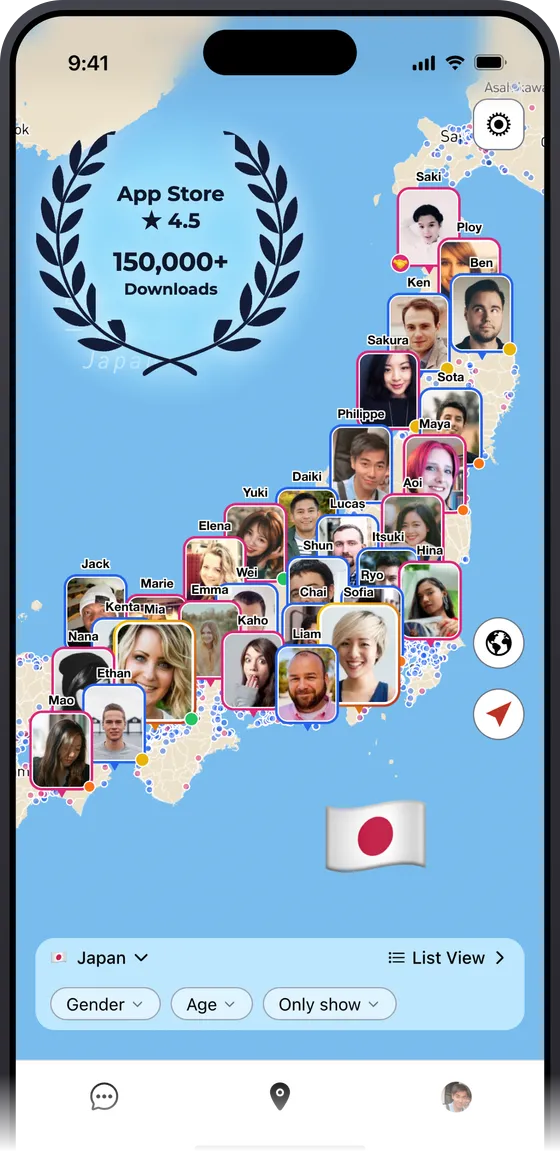
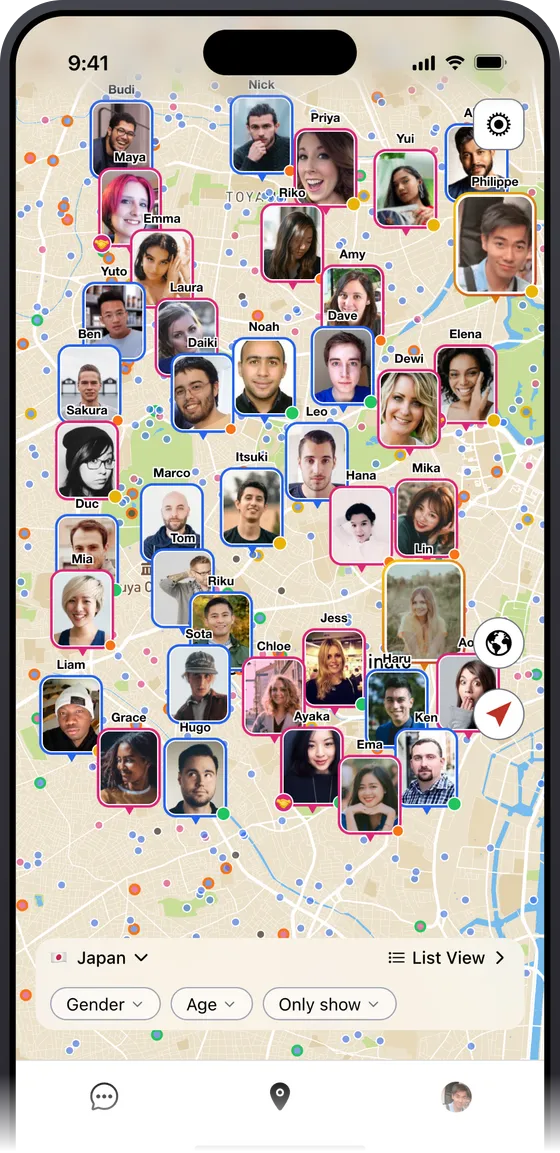
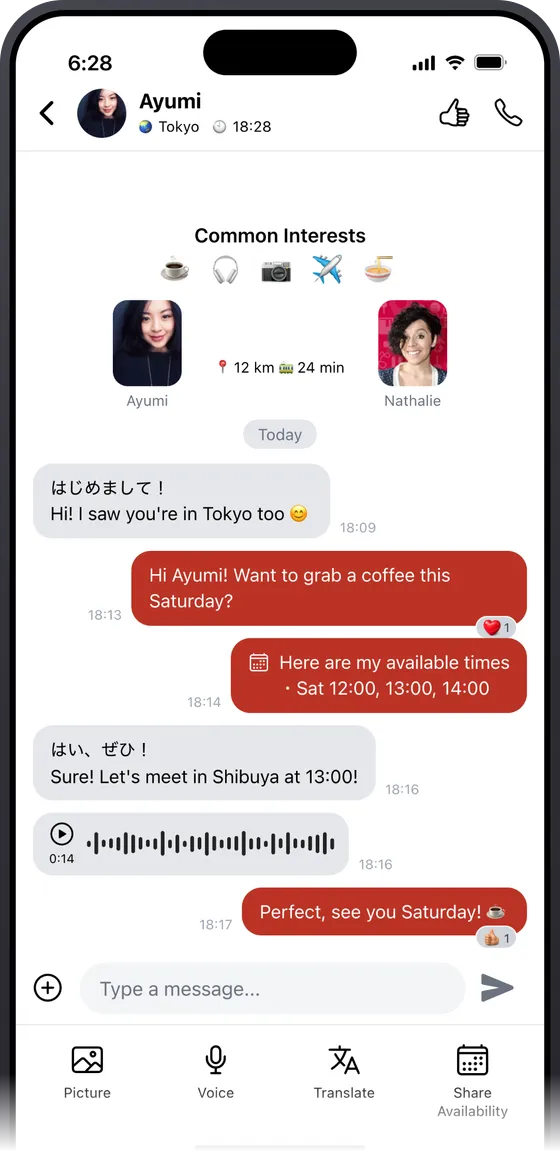


That's the gap SewaYou is built for. It's a map-based app that shows you who's nearby and actually open to meeting: other internationals living in your area, Japanese locals who want foreign friends, language exchange partners who get what life here is like. The people close enough to grab a coffee with, who can become the outside voice you'll be glad to have.
Nobody plans to end up trapped by an employer. But the foreigners who get out fastest are the ones who, long before trouble hit, made sure their boss was never the only person they knew.
Build that layer while you don't need it. So that the day someone tries to convince you that you have nowhere else to go, you can quietly think: actually, I do.


