

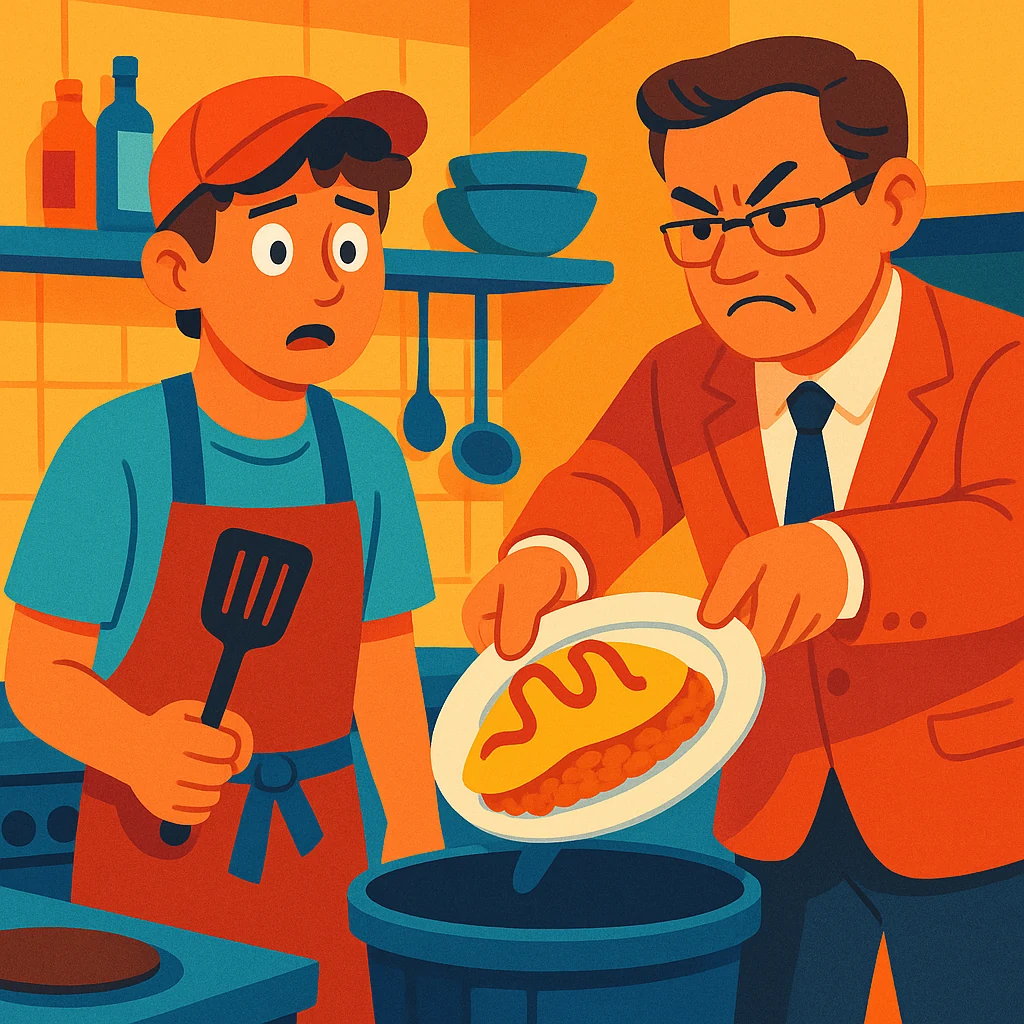
You plate the omurice. The onions are not burnt. Twenty minutes earlier a customer told you it was delicious. Then the owner walks past, looks at it, and dumps the whole thing in the trash in front of you.
"You did it wrong."
That is it. No explanation. You stand there holding a spatula, replaying the last hour in your head, trying to find the mistake nobody will name.
And then, at the end of the shift, the same owner slides a cold drink across the counter and adds extra food to your staff meal. Smiling. Like nothing happened.
If you have worked a part-time job in Japan, some version of this probably feels familiar. The whiplash is the part nobody warns you about.
Here is the thing that took me an embarrassingly long time to understand. The nitpicking is often not really about the food, the chopstick sleeves, or your "low energy."
A lot of Japanese workplaces run on a quiet idea that correction equals investment. If a manager ignores you, you are disposable. If they pick at every tiny thing, you are someone worth shaping. It is not warm, and it is not fair, but in their head it is a kind of attention.
The chopstick sleeves all facing the same way? That is not about chopsticks. It is about whether you notice details, whether you can be trusted with the part of the job nobody is watching. The standard is the message.
That does not make it pleasant. But once you see the logic, it stops feeling like a personal verdict on your worth. It is a system, not a referendum on you.
The drink, the extra rice, the sudden friendliness. It is tempting to read this as guilt, like they know they went too far and are trying to make up for it.
Usually it is simpler than that. In their mind, the harsh moment and the kind moment are not in conflict. The work was the work. After hours, you are a person again. They genuinely do not see a contradiction.
This is where it messes with foreigners the most. We tend to read tone as one continuous signal about the relationship. Many Japanese managers compartmentalize it completely. The criticism lives in one box, the warmth in another, and they switch boxes without friction.
So when you feel like you are being manipulated, it is worth asking: is this actually control, or is it two different modes you have not learned to separate yet? Sometimes it really is a toxic boss. Sometimes it is just a culture gap doing damage.

Back home, you would walk out of that shift, call a friend, and within five minutes someone would say "that guy sounds insane" or "honestly, he might have a point." You would get a reality check.
In Japan, alone, you do not get that. You carry the omurice moment around for days. You start doubting your own read on things. Was I actually unmotivated? Is my Japanese so bad I am missing something obvious? You become the only witness to your own life, and that is a heavy job.
The loneliness is not just missing people. It is missing the people who can tell you whether what you experienced was normal or not. Without that, every confusing moment grows teeth.
Two things, and you need both.
First, someone who has lived in Japan and gets the cultural machinery. They can tell you "yeah, the throwing-food thing is a known move, here is what he was probably doing." That context shrinks the moment back down to size.
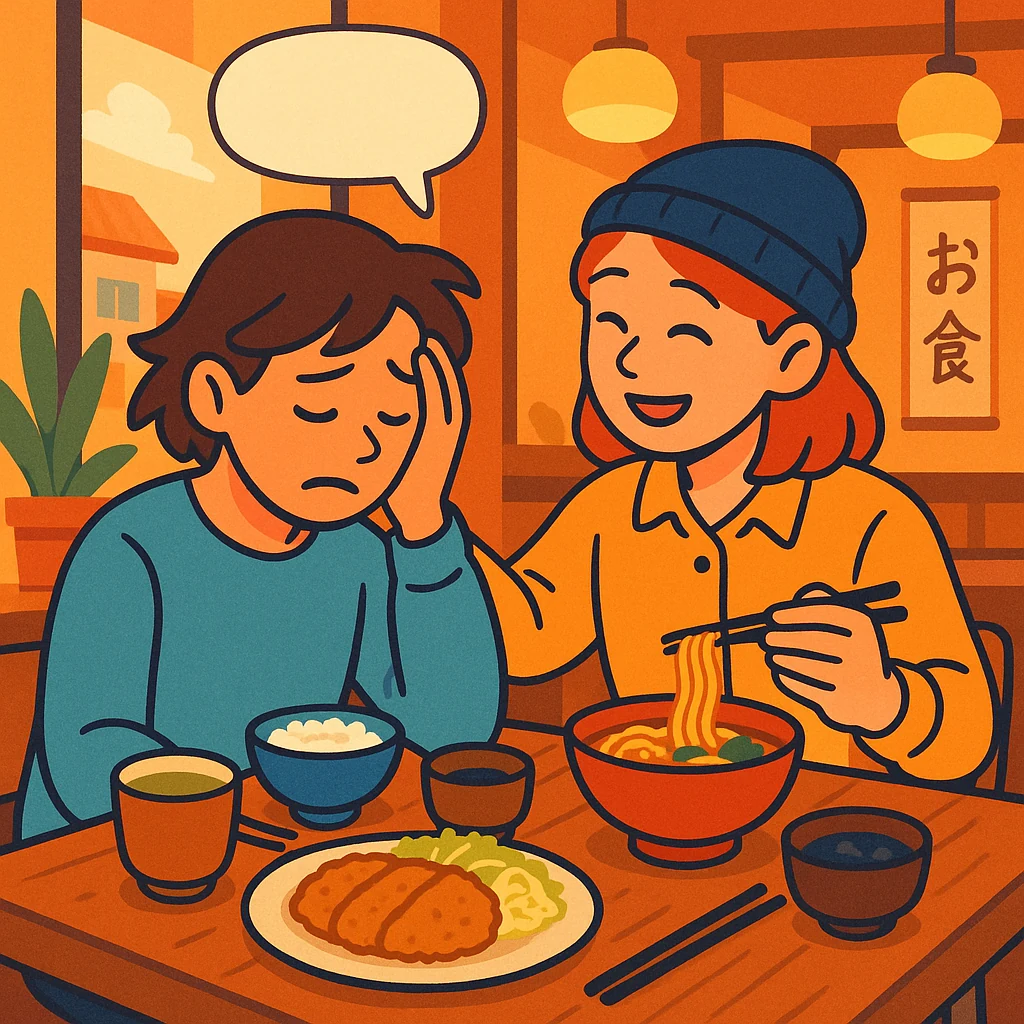
Second, someone who just listens like a friend, without turning it into a lecture on Japanese society. Sometimes you do not want analysis. You want a person who says "that sounded awful, do you want to get food."
The hard part is that these people do not magically appear. After a brutal shift, most of us go home and stew. The decoder ring is other people, and you have to go find them.
Almost everyone who stays in Japan long enough collects a few stories like the omurice. The ones who come out okay are not tougher or better at reading the room. They just had someone to compare notes with.
The confusion does not mean you are failing. It means you are decoding a new system without a manual, by yourself. Give yourself the people who can hand you the manual, and the same shift that wrecked you today becomes a story you tell over drinks next month.
Make Japanese Friends On a Live World Map
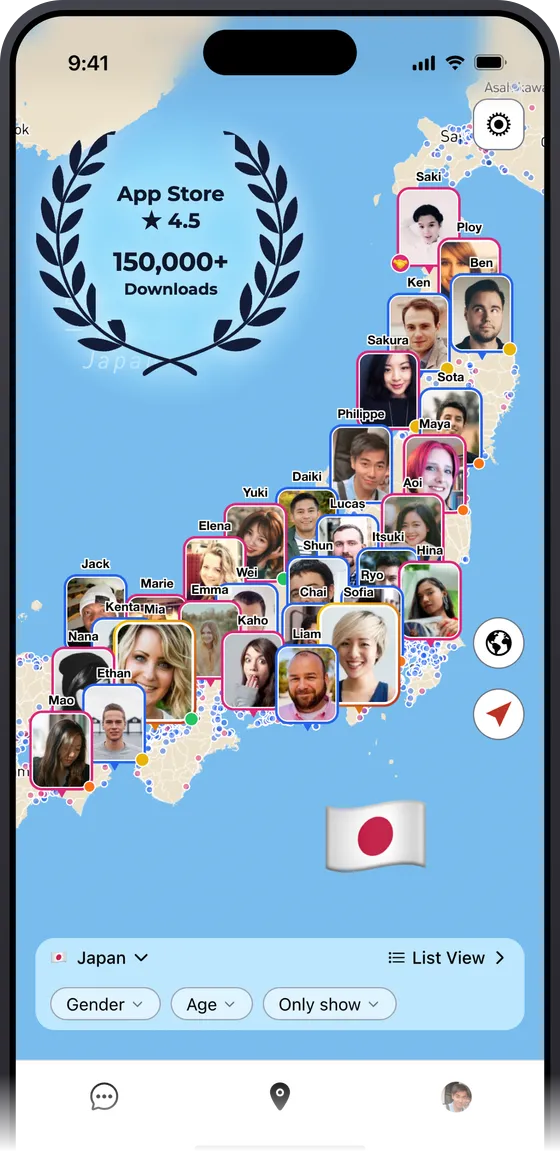
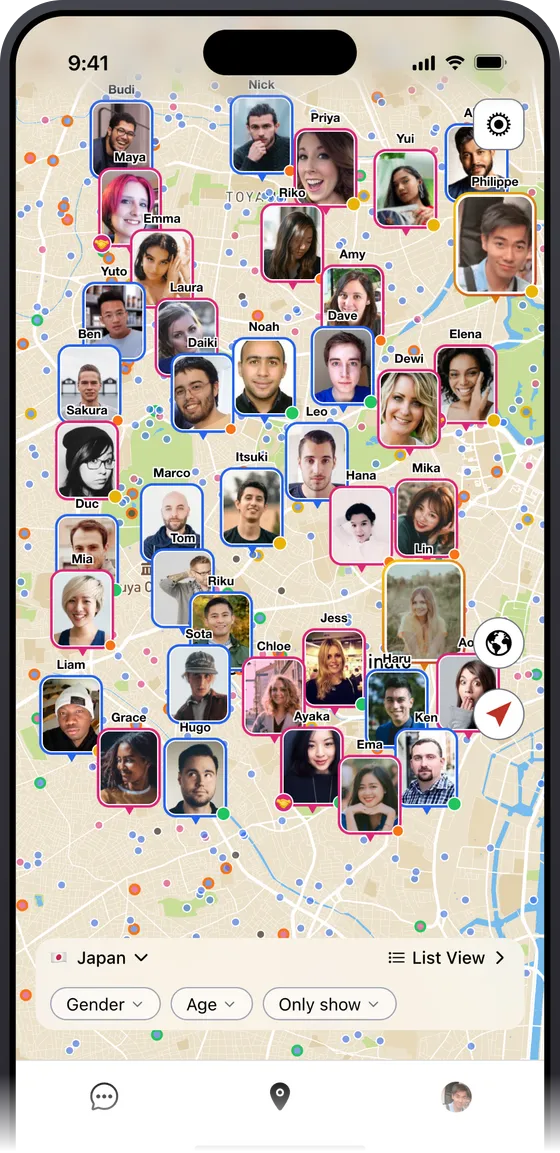
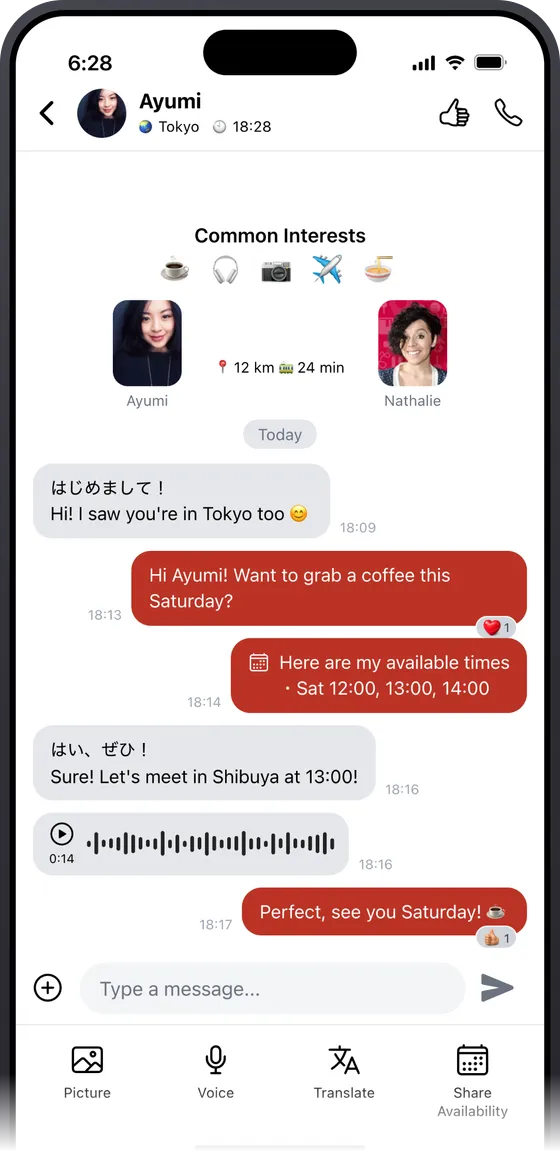


SewaYou is a map-based app that helps you find people near you in Japan, both locals who get the culture and other internationals who have survived the same confusing shifts. Open the map, see who is around, and start the conversation that turns a lonely day into a shared one. Because the thing you are carrying alone gets a lot lighter the moment someone says "oh, that happened to me too."


