

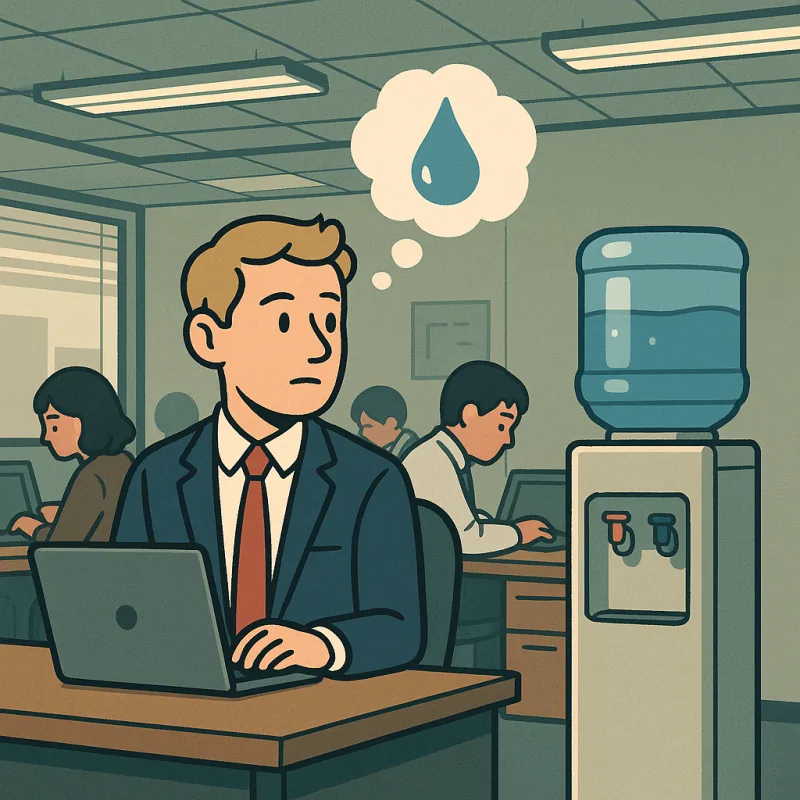
You were thirsty at your desk. You stood up to get water. Your senpai stopped you and told you to sit back down, because none of the other coworkers had gone to drink either, and it would look bad if you broke ranks for something as small as a sip of water.
So you sat down. And now, days later, you are still thinking about it. Not because of the thirst. Because the next time you get thirsty, you are going to hesitate. You are going to weigh whether asking for water is worth the risk of being told no again, in front of everyone, like a child asking to leave class.
That hesitation is the real damage. A workplace that makes you afraid to meet a basic physical need has already gotten into your head, and the worst part is you have no way to tell whether this is just how Japan works or whether your team is broken.
This is the question that actually keeps you up, and it is a fair one.
You have heard the stories. Japanese work culture has real norms that feel strict to outsiders. You do not leave before your boss. You read the air. You do not make yourself the nail that sticks up. Coming from another country, you arrived primed to assume that anything uncomfortable is probably just a cultural rule you have not learned yet, and that the polite thing is to absorb it quietly.
So when a senpai tells you that you cannot drink water because nobody else is drinking water, part of your brain files it under "Japanese culture, do not question." You override your own instinct that this is absurd, because you do not trust your instinct yet. You are too new to know where the line is. You cannot tell a custom from a cruelty.
Here is the thing nobody told you, so let me say it plainly. Drinking water at your desk is not against Japanese culture. There is no rule, written or unwritten, that staff must collectively dehydrate to show team spirit.
What you ran into was not Japan. It was one person, on one team, enforcing a petty little hierarchy of their own invention. Plenty of Japanese offices have water bottles on every desk and people sipping coffee all day long. Plenty of Japanese workers would be just as horrified as you are if they heard a senpai forbid a junior from hydrating. The behavior you experienced is dysfunction wearing the costume of culture, and the costume is what makes it so hard to call out.
This is the trap that catches so many newcomers. A toxic boss, a power-tripping senpai, an unreasonable rule, all of it gets quietly excused as "well, this is Japan" by the very person it is hurting. Toxic is not a culture. It is just toxic, and it exists in every country on earth.
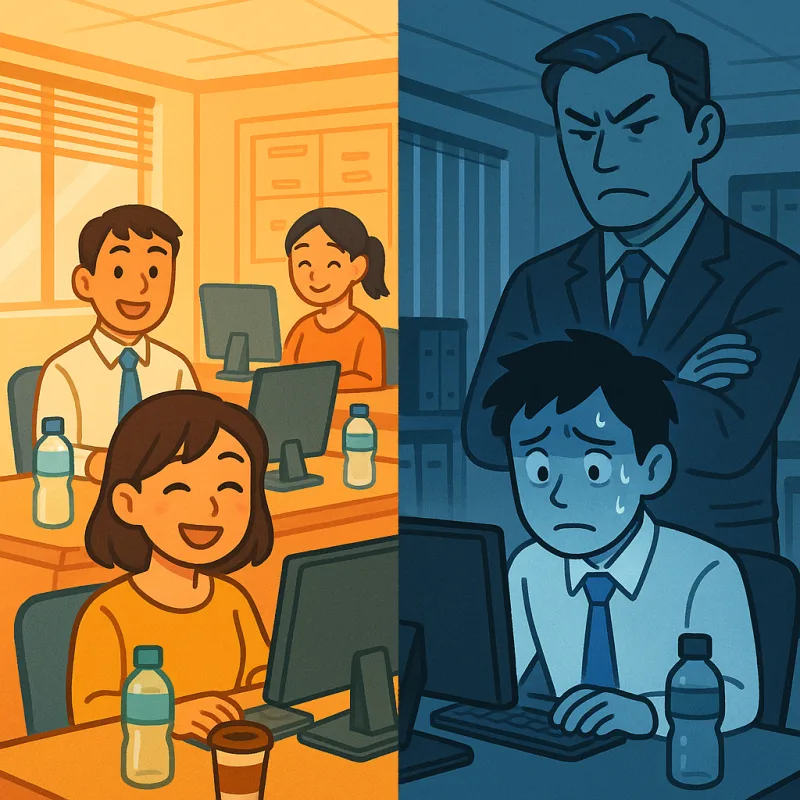
If the rule is fake and the behavior is just one bad senpai, why is it so hard to see that in the moment? Because calibration requires comparison, and you have nothing to compare against.
When you are new in a country, every workplace you experience is your entire sample size. If your one office dehydrates its juniors, then as far as your nervous system knows, that is what Japanese offices do. You have no second data point, no friend at another company who can say "what? no, that is bizarre, we drink water whenever we want." You are trying to map an entire country from a single dysfunctional room.
A local friend or a longtime resident solves this in one sentence. You describe what happened, and they react. If they wince and say "that is not normal, your team is rough," you instantly know it is the team and not the country. If they say "oh yeah, that is a strict old-school place, it happens," you also know, and you can plan accordingly. Either way you escape the fog. The fog only survives in isolation.
So the next time you are thirsty and the old hesitation creeps in, here is the practical version.
Keep a water bottle on your desk. A bottle that sits beside your keyboard removes the entire "asking permission" ritual, because you are not getting up, you are not making a show of it, you are just a person at a desk with water. Most petty rules are about the visible act of leaving, not the water itself, so quietly removing the visible act removes most of the conflict.
If the senpai escalates even about a bottle on your desk, that is no longer ambiguous. That is a clear sign you are dealing with a genuinely unhealthy environment, not a cultural quirk, and the right move shifts from "adapt" to "document it and protect yourself." Hydration is a basic need, and no employer in Japan has the legal right to deny it. The labor standards here are on your side, not your senpai's.
But before any of that, do the human thing. Tell someone outside that office what happened, out loud, and listen to how they react. Their reaction is the measurement you cannot take by yourself.

You can buy the water bottle. You can read up on your rights. Those help. But the thing that actually pulls you out of the spiral is not a tactic, it is a person who has been here longer than you and can tell you what is real.
The reason a single bad day at work can balloon into weeks of self-doubt is that you carry it alone. You replay it, you wonder if you overreacted, you slowly start to believe the problem might be you. One conversation with someone who knows this country collapses all of that. "No, that is not how it works here, your senpai is out of line" is a sentence that takes five seconds to say and rebuilds your entire sense of reality.
Make Japanese Friends On a Live World Map
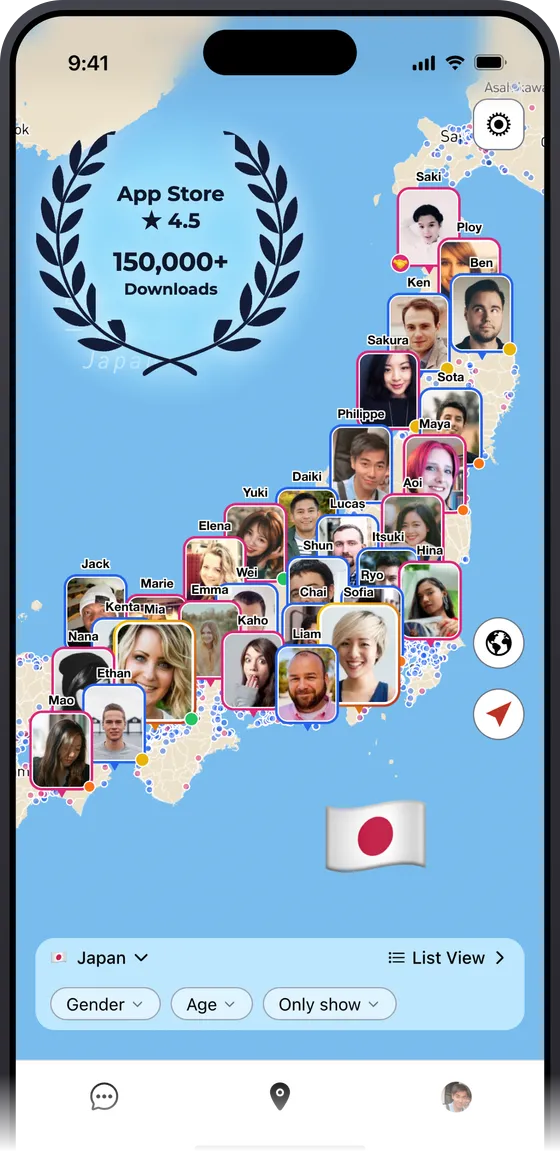
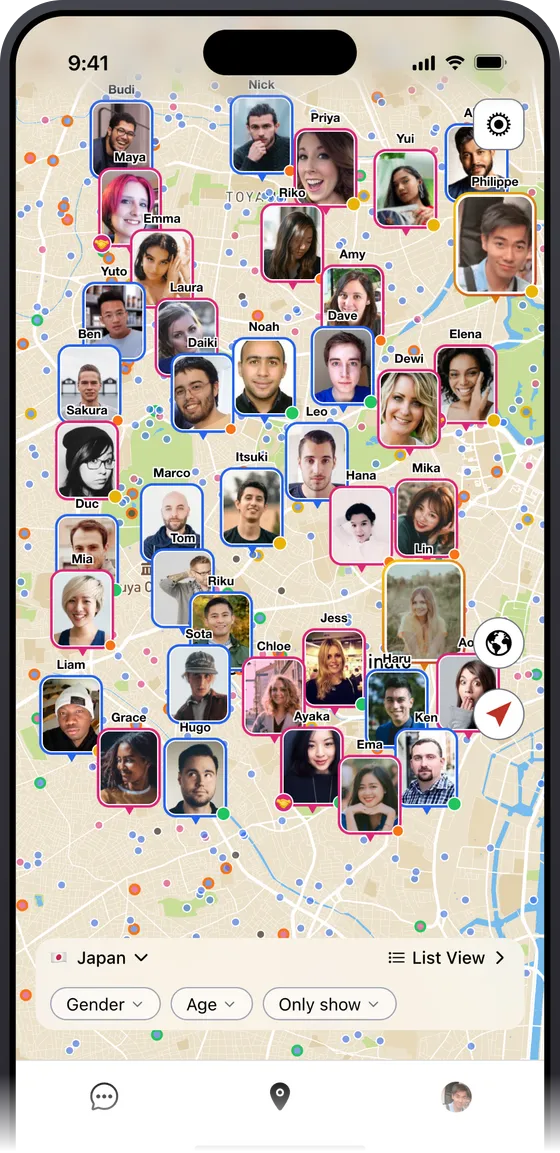
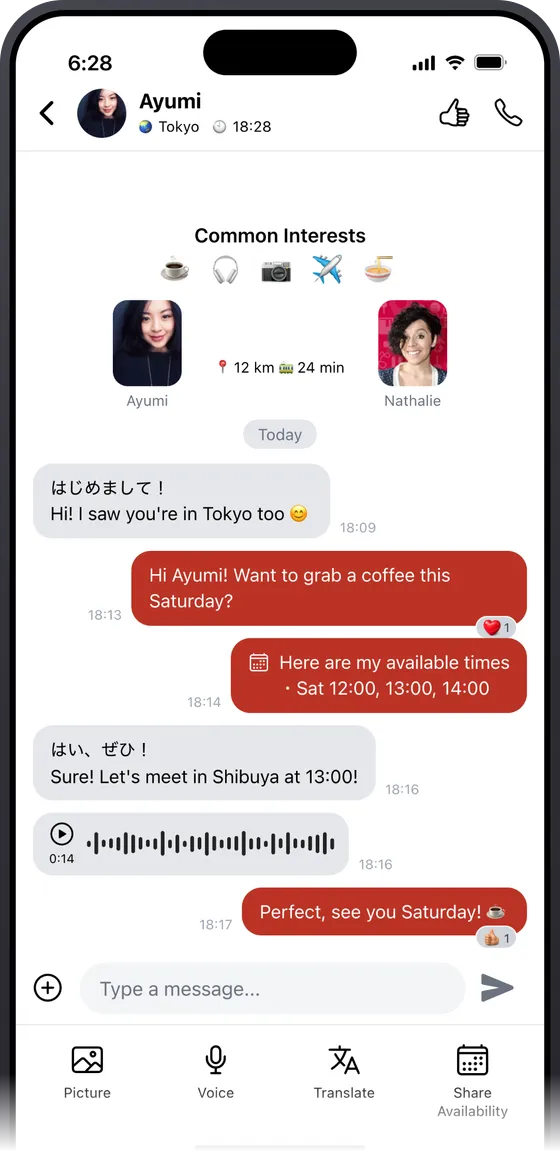


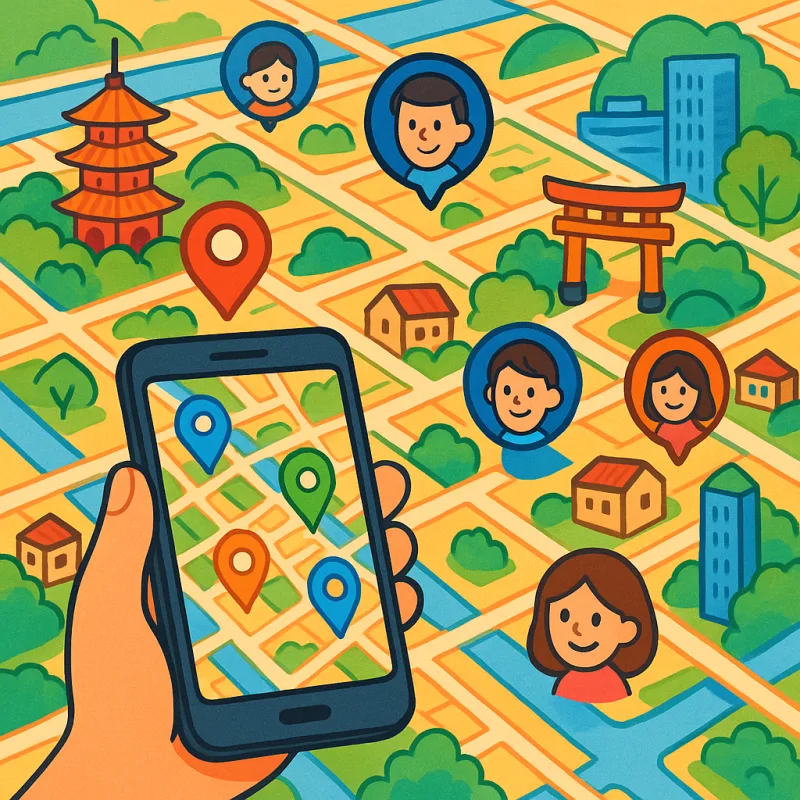
That is exactly the gap SewaYou was built to close. It is a map-based app that shows you the people around you in Japan, other foreigners who have survived their own absurd offices and locals who can tell you in plain terms what is normal and what is not. You set what you are looking for, whether that is a language exchange partner or just someone nearby to grab coffee with, and you find your people instead of waiting for them to appear.
The water was never the problem. Being alone with the question was. Build the network now, so the next time a senpai tries to convince you that something cruel is just "how Japan works," you already have someone who will look you in the eye and tell you the truth.
Download SewaYou and find the people who can tell you what is actually normal, before the next absurd Tuesday rolls around.


