

You move to Japan. You have studied a little, maybe a lot, and you walk into a convenience store feeling reasonably like a competent adult.
Then the clerk asks you something. You freeze. You point. You say one word you are sure of and hope it carries the rest of the sentence. You walk out with the wrong size, or no bag, or a receipt you did not want, and you feel about three years old.
If that is you right now, I want to say one thing clearly. This is the most normal feeling there is. Almost everyone who has ever lived here has stood in that exact spot, pointing and hoping.
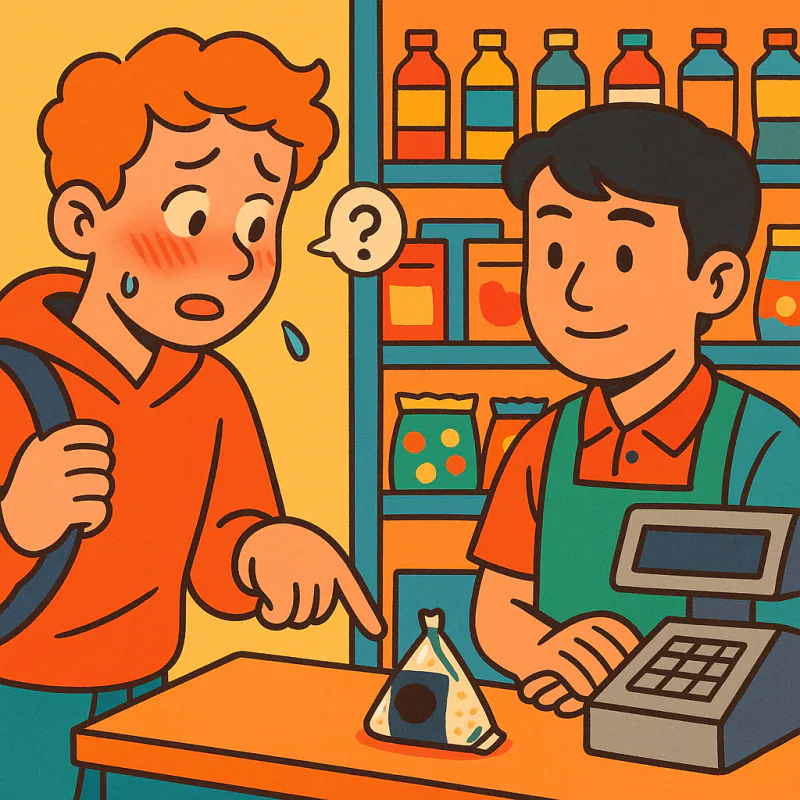
Here is the part nobody warns you about. The problem is not that your Japanese is bad. The problem is that your brain is not bad.
You are a full adult with opinions, jokes, a sense of humor, a whole inner world. And then you open your mouth and out comes the vocabulary of a slow two-year-old. The gap between who you are inside and what you can express is enormous, and your brain reads that gap as failure.
It is not failure. It is just a delay. Your personality is fine. Your toolkit is new.
A toddler does not feel stupid pointing at things, because a toddler has no adult self to compare against. You do. That comparison is the whole source of the sting, and it fades the moment your tools start catching up to your mind.
Here is the trap, and it is a quiet one.
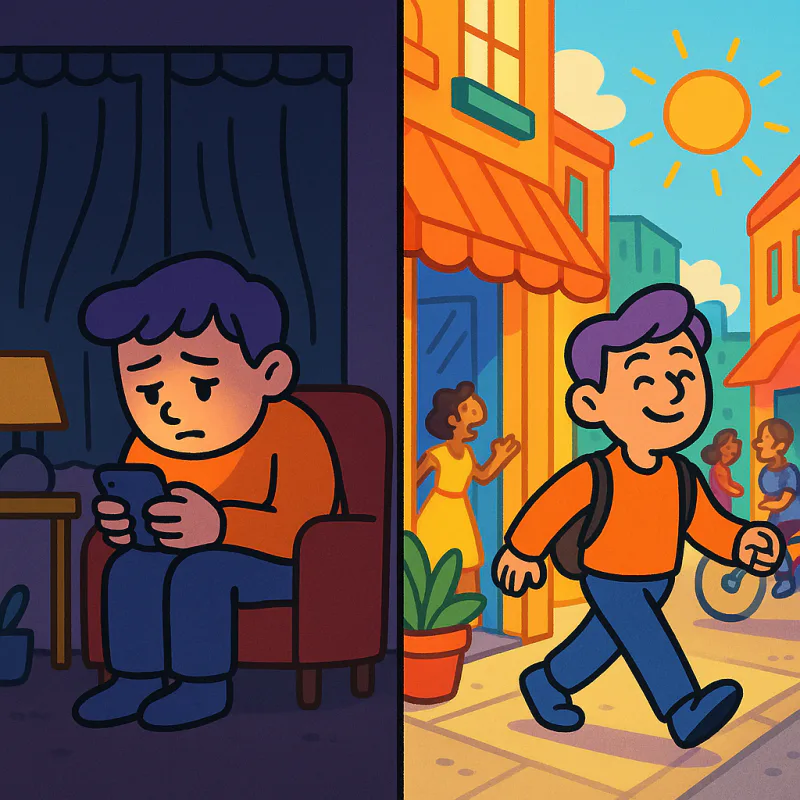
The embarrassment is harmless on its own. What it does to your behavior is not. Feeling like an idiot makes you want to disappear. You start rehearsing the convenience store sentence in your head before you go in. You pick the self-checkout. You order online instead of going out. You stop raising your hand.
And if you are naturally shy, this is doubly dangerous, because withdrawing already feels like relief. Comfortable now, lonely in three months.
The cruel irony is that the only thing that actually closes the gap is the exact thing the shame is telling you to avoid: talking to real people, badly, on purpose, over and over until it stops hurting.
You can grind Anki for a year and still freeze at the register. I have watched it happen to people with genuinely impressive vocabulary lists.
Studying builds the parts. Speaking assembles them in real time, under mild pressure, with a real human waiting for you. Those are two different muscles, and only one of them gets you out of the toddler phase.
The thing is, you do not learn to swim by reading about water. You learn the language by surviving conversations. Clumsy ones. Ones where you point. Ones where someone laughs kindly and helps you find the word. Each of those is a tiny rep, and the reps are the whole game.
So the move is not to study harder in your apartment. The move is to find people where being bad at Japanese is completely fine.
Not a job interview. Not a high-pressure social event where you feel watched. You want the opposite: someone who is also learning, or someone who is genuinely curious about you and patient with the gaps. A language partner. A neighbor who likes practicing English as much as you like attempting Japanese. A relaxed coffee where nobody is grading you.
In that setting, the pointing and the one-word sentences are not embarrassing. They are just how you start. And after twenty of those low-stakes conversations, you walk into the convenience store and realize you stopped rehearsing the sentence weeks ago.

You asked, more or less, does this feeling ever go away.
It does. Not because you wake up fluent one day, but because the gap narrows and the shame quietly runs out of fuel. One day you handle a small interaction without thinking, and a week later you handle a slightly bigger one, and at some point you notice you have not felt like a child in a while.
A couple of weeks in is far too early to judge yourself. You are not slow on the uptake. You are early, not stupid. Be patient with the version of you that is still pointing. He is doing fine.
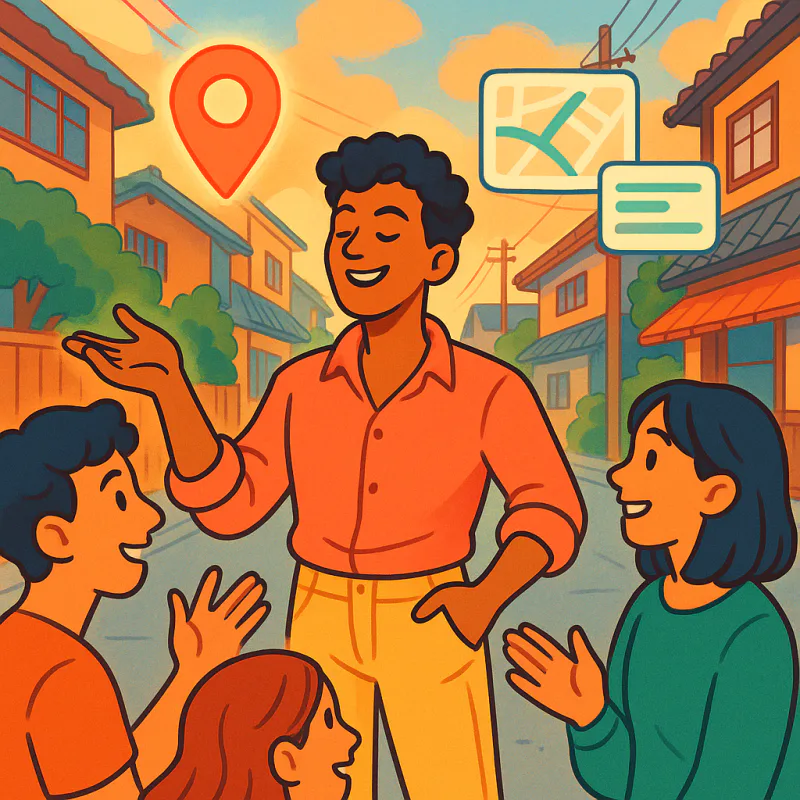
Make Japanese Friends On a Live World Map
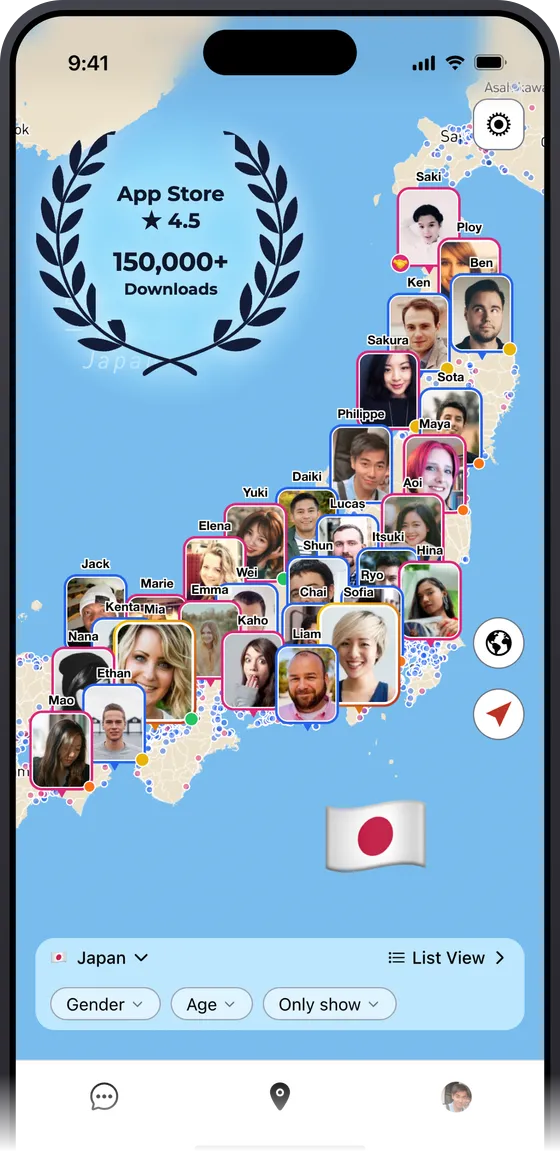
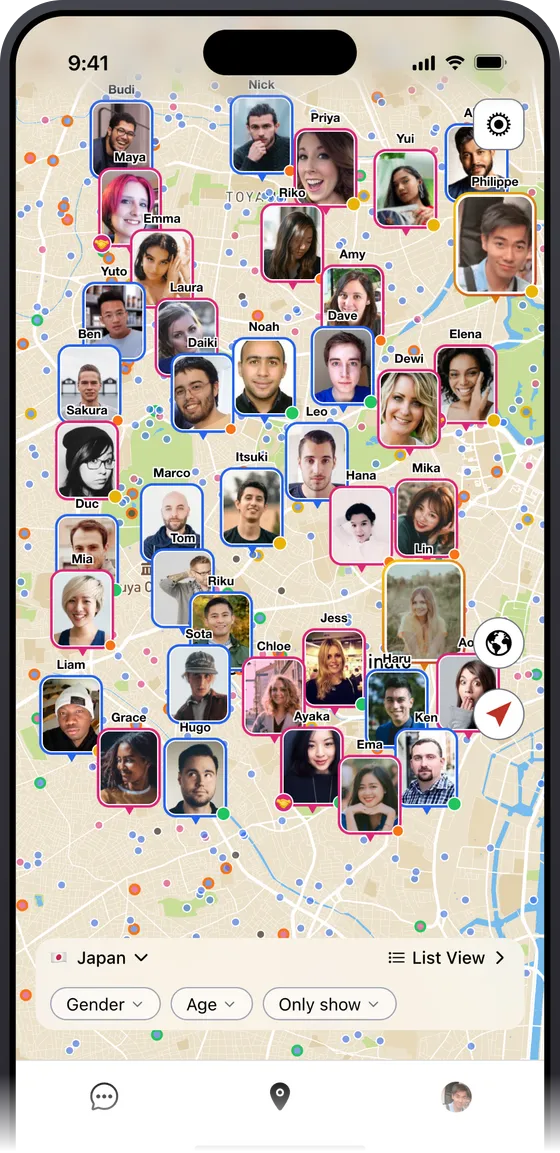
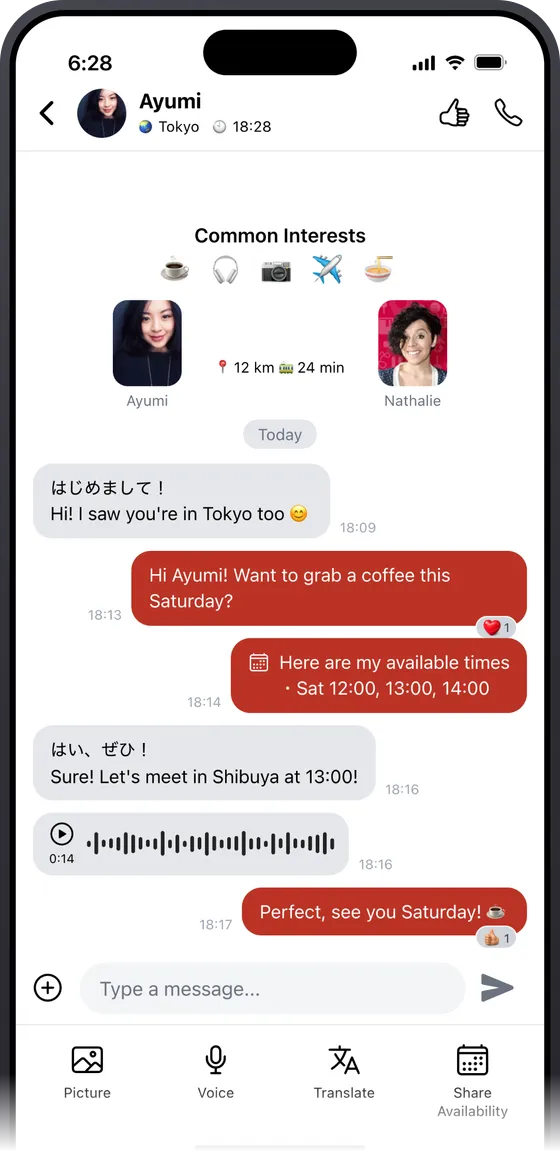


SewaYou is a map-based app for finding people near you who actually want to meet, language partners, locals who are up for English, and other newcomers going through the exact same toddler phase. It is built for low-stakes, real human conversations, which is the one thing that gets you out of the pointing-and-hoping stage faster than any flashcard ever will. If you are new in Japan and tired of feeling like an idiot at the register, that is exactly who it is for.


