

Your first real earthquake in Japan is strange in a way nobody quite prepares you for. The building moves, the glasses in the cupboard rattle, and then it stops. You look outside and everyone on the street is just walking to the station like nothing happened. So you shake it off and go back to your evening.
Then, a few days later, something odd starts. You are standing still in your kitchen and the floor seems to sway. You are sitting on the train and you could swear it lurched, except nobody else reacted. It comes and goes for a week, then two. For some people it even follows them abroad, a faint rocking that shows up when everything around them is perfectly still.
If that is happening to you right now, let me say the most reassuring thing first. You are not losing it, and there is very little chance anything is wrong with your body.

In Japan this sensation has a name. People call it jishin-yoi, which translates roughly to "earthquake sickness," using the same word as motion sickness. After a real quake, especially a decent-sized one, plenty of people walk around for days feeling phantom tremors that are not actually there.
The usual explanation is pretty simple. During the shaking, your inner ear and your brain scramble to adjust to a suddenly moving world. Once they have adapted, they do not switch it off cleanly. So your balance system keeps firing little "we are moving" signals even after the ground has gone completely still. It is your body being slightly too good at its job, not a sign of anything breaking.
And it fades. For most people it eases off within a couple of weeks, sometimes a lot sooner. It goes away on its own, and it passes on its own. Just knowing that takes most of the fear out of it.

Here is what I actually want to talk about, though. When I look back at moments like this, the sensation itself was never the hard part. The hard part was not having a single person nearby I could ask.
Picture how it actually goes. It is late, you feel the phantom sway again, and you open your phone. You type your symptoms into a search bar and get a wall of vague pages that do not quite describe your situation. So you end up posting into some anonymous forum at midnight, asking total strangers whether you are the only one, then refreshing to see if anyone bothered to reply.
Now picture the other version. You mention it to a friend who has lived here a few years, and before you even finish the sentence they go, "Oh, jishin-yoi, yeah, everyone gets that after a big one, it goes away." Five seconds, and the whole spiral never even starts. The cure was a person, not a search bar.

This is the pattern I keep noticing about moving somewhere new. It is rarely one big dramatic problem. It is a hundred small strange things, with no one around to tell you which ones are normal.
The locals are not going to flag any of it, because to them none of it is strange. The phantom shaking, the way a cold gets treated at the clinic, the unspoken rule you just broke, the form you were apparently supposed to already know about. To everyone who grew up here, this is just an ordinary Tuesday. So it never occurs to them to explain it, and you are left quietly deciding whether each new thing means you are broken or the country is simply like this.
Without someone to translate "normal" for you, every ordinary bump starts to feel like a personal malfunction. What you actually need is one person who has been here longer. Not a doctor, not a forum. Just someone a few steps ahead of you who can tell you what to shrug off.

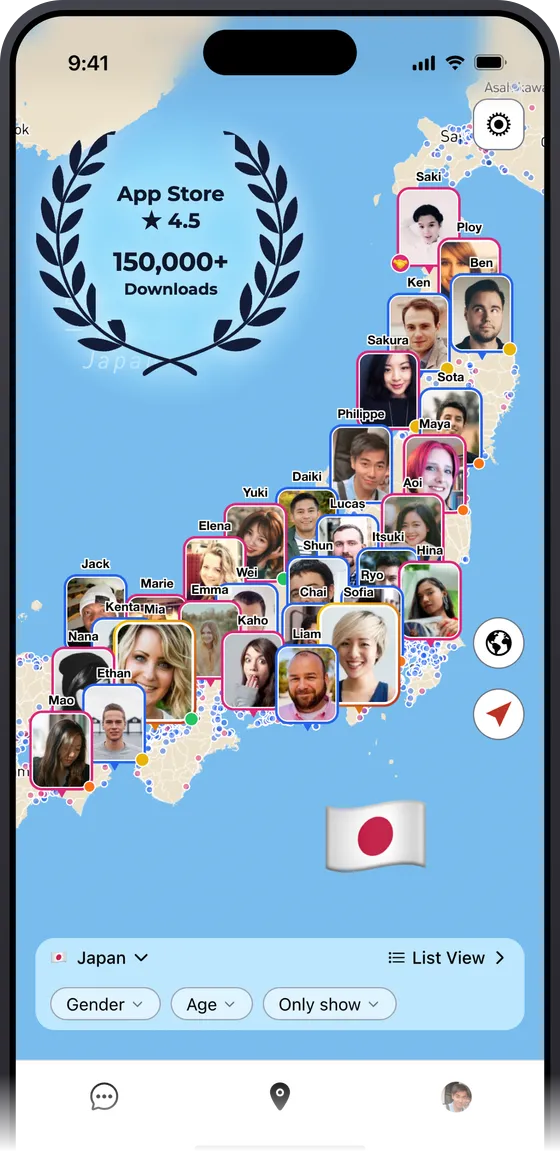
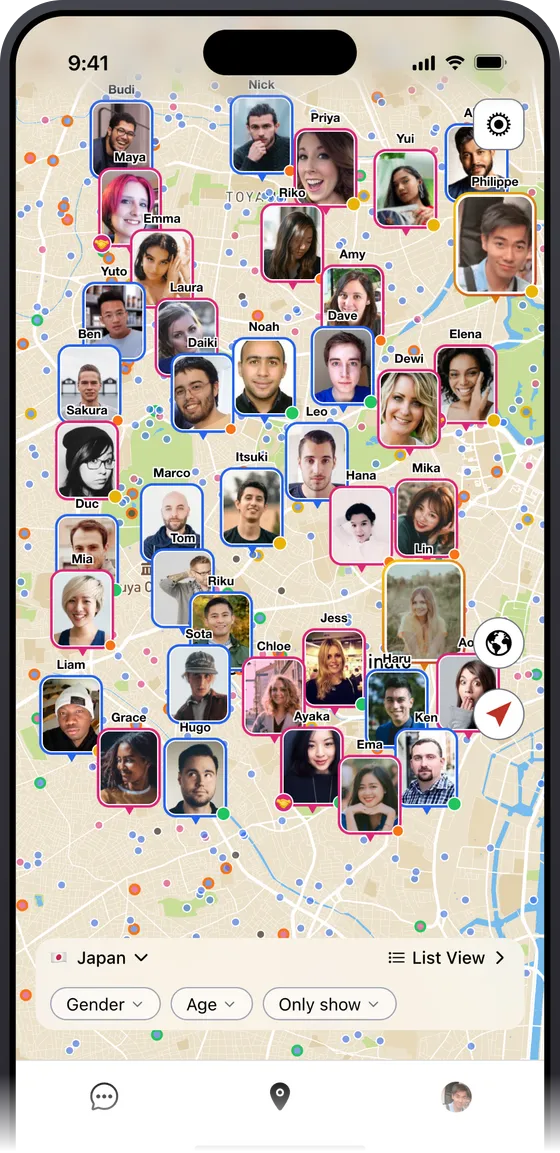
That is honestly the whole reason I point people toward SewaYou. It is a map-based app that shows you real people near you who are open to actually meeting, for friendship, not swiping. You open it, you see who is genuinely around you right now, and you say hi.
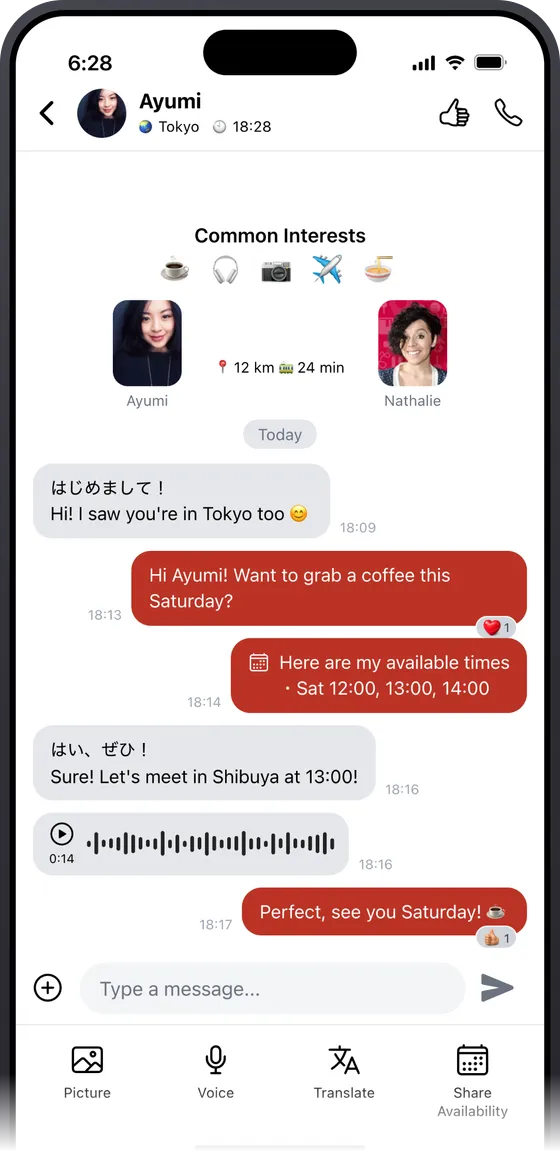
The value is not some huge friendship on day one. It is having someone close by you can send a slightly embarrassing "hey, is it normal that..." message to, and get a real answer from a human who has already been through it. That is the thing that makes a new place stop feeling like a string of tiny emergencies you have to solve alone at midnight.
Make Japanese Friends On a Live World Map


The phantom sway will fade whether or not you have anyone to talk to. That part your body handles by itself. But how heavy those two weeks feel has almost nothing to do with the shaking and almost everything to do with whether one person in your life can say "yeah, that happened to me too."
That is the real difference between a new country that quietly wears you down and one that slowly starts to feel like home. Not fewer weird moments. Just someone nearby to make sense of them with.
So if you are somewhere new and stuck googling your symptoms alone in the dark, try opening SewaYou instead and seeing who is actually around you. The ground will stop shaking soon enough. It is a lot easier to wait it out with company.


