There's a specific kind of foreigner I keep meeting in Japan. They're at their first real job, usually a small company, and they've quietly become the person who never leaves.
Not never leaves the office. Never takes a day.
I met one recently who could name every absence on her team like a timeline. The accountant, two weeks out. A coworker who'd been there just before her, gone for a month and a half on 体調不良 leave. Two new hires, one of whom disappeared after a month and hadn't come back, the other now out for two weeks because he "wasn't feeling well." A five-person team, and someone was always missing.
Through all of it, she kept showing up. She'd fallen down the stairs at work once, cried from the pain in front of everyone, and finished the day anyway. Got stranded overnight in a typhoon and still made it in by late morning. And the question she couldn't put down was this: how is everyone else getting these long, vague leaves so easily, when the internet is full of foreigners getting fired for calling in sick?
That question is worth pulling apart, because the answer isn't the one that's bothering her.
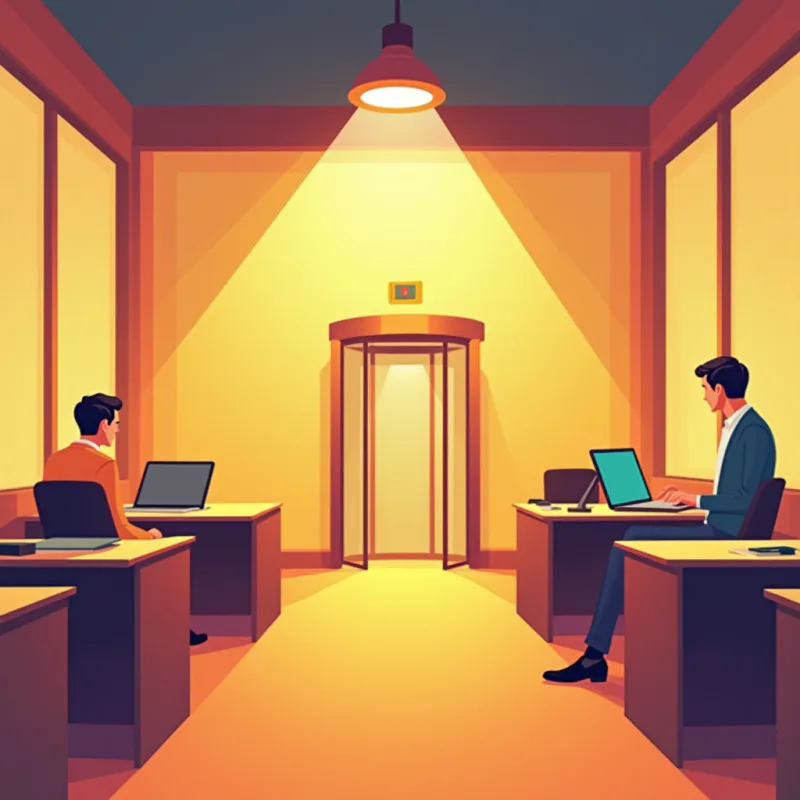
Here's the thing the expat forums undersell. Leave in Japan is often more available than the horror stories suggest.
Paid annual leave (有給休暇) is a legal entitlement, not a favor your boss grants you. 体調不良, "feeling unwell," is a completely ordinary reason to take a day, and nobody expects you to itemize your symptoms to justify it. Longer stretches for health, including mental health, exist too, usually under the umbrella of 休職. None of this is a loophole your coworkers discovered. It's just the system working the way it's supposed to.
Rest is not the weird part here.
So when someone takes a month and a half off, or steps back from late shifts after they return, they're not gaming anything broken. The genuinely unusual person in that office is the one who won't touch any of it. That was her. She just couldn't see it, because she had nothing to compare herself to.
In a team of five, every absence lands on whoever stays. That's real. When she got sick, she offered compromises, work from home, come in the afternoon, leave early, because she could see the burden falling directly on the people next to her. That instinct is decent. It's the instinct of someone who cares about her team.
It's also exactly how you get quietly loaded up.
The coworker who came back from long leave stopped taking late shifts entirely. Fair enough, that's a boundary. But the shifts didn't disappear. They rolled onto her and the newest hire. And when the newest hire went out too, all of it, every late night, every overflow task, landed on one set of shoulders.
You became the reliable one.
Being reliable feels like a virtue. In a small company under pressure, it's also a role people are happy to let you keep filling, for free, indefinitely. Nobody has to be cruel for this to happen. It happens on its own, one covered shift at a time.

If you'd asked her what was hardest, she'd have said the workload. I don't think that's true.
The workload is heavy, but it's legible. You can see it. What was actually eating at her was that she had no baseline. First job ever, first job in Japan, working all day in a language that isn't hers, carrying her own invisible weight on top of it, health stuff, a partner going through a hard stretch, a brain that runs on its own wiring. And in the middle of all that, she genuinely could not tell whether her situation was normal or insane.
Was this just how Japanese small companies run? Was she being taken advantage of? Was she the problem for not pushing back, or the only sane one for pushing through? She had no idea. And crucially, there was no one to ask.
Her coworkers were the wrong people to ask. They were inside it. Some of them, gently, benefited from her covering. Her boss wasn't going to tell her to take more time off. So the confusion just circled, with no outside voice to break it.
Being alone with the confusion is the injury.
Not a policy. A person.
The thing that would have changed her month wasn't a new HR handbook. It was one friend outside her company who'd lived a version of this and could say, plainly, "A month and a half of 体調不良 leave is normal here. So is taking your 有給. You're allowed to rest too, and covering everything doesn't make you a better employee, it makes you the cheapest one." That single sentence does more than any forum thread, because it comes from someone who knows you and knows the terrain.
That's the whole reason we built SewaYou. It's a map-based app for finding people near you, locals and other foreigners who actually get what living here is like, so the person you turn to at 11pm isn't your boss and isn't a stranger on the internet. It's someone who can hand you a baseline.
Make Japanese Friends On a Live World Map
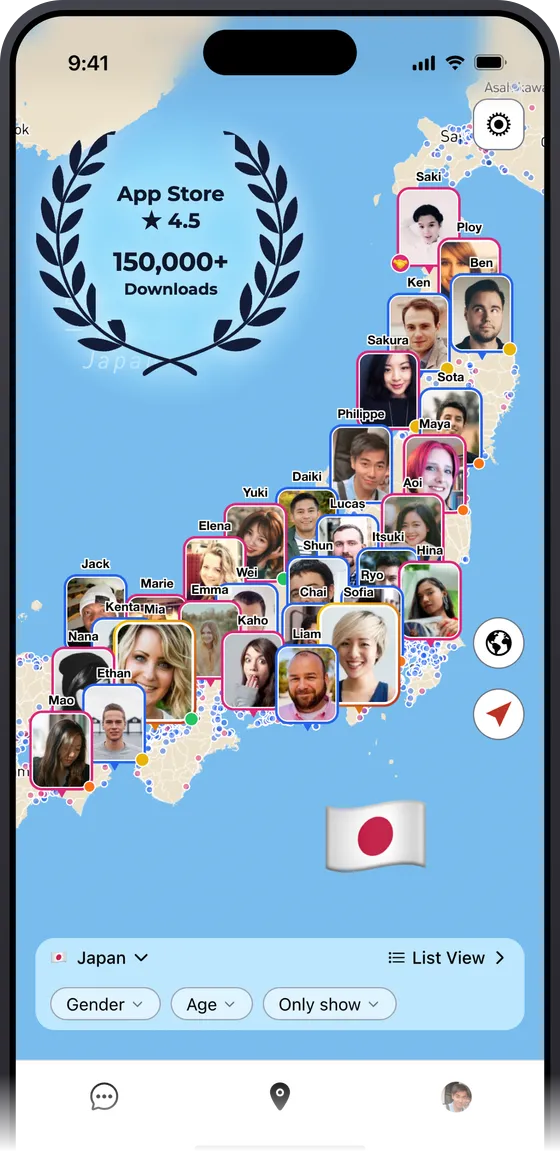
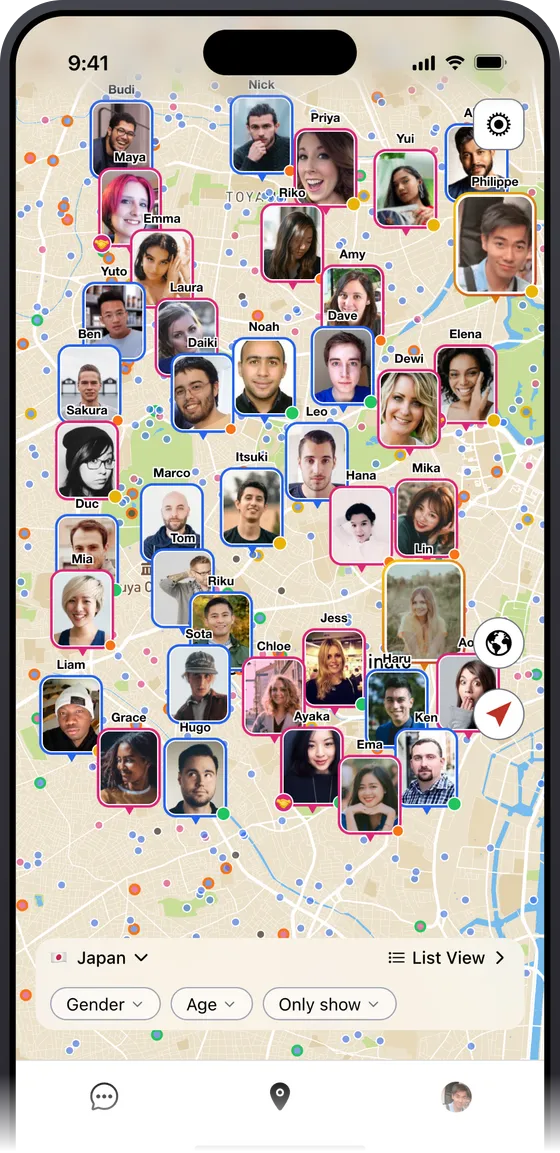
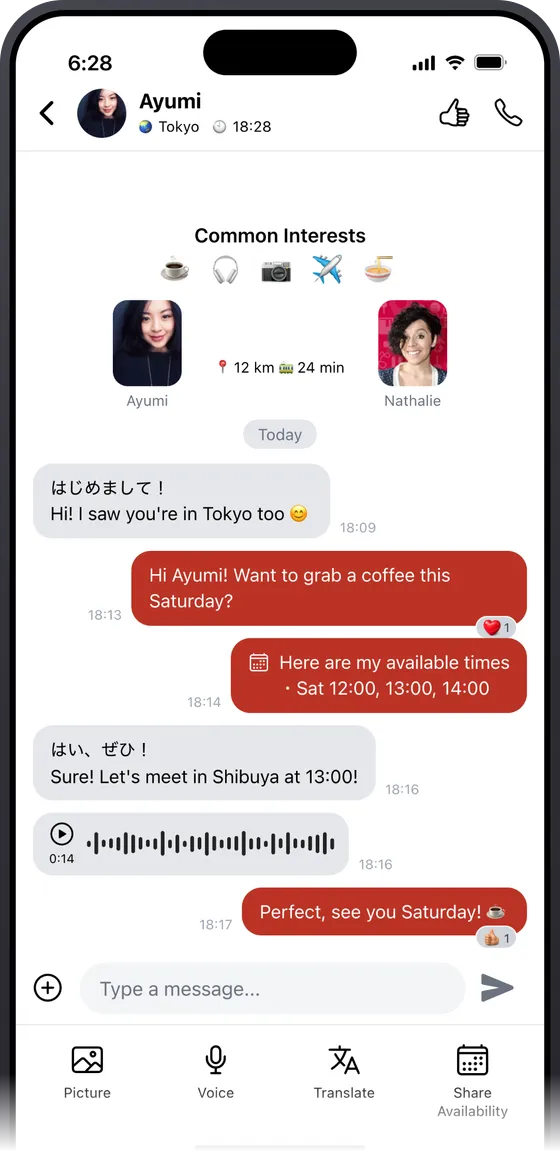


You don't need twenty of them. You need two or three people who've been through the same culture shock and can tell you, honestly, which parts are normal and which parts you're right to push back on.

If you're the one who never leaves, three things.
First, take the leave you're owed. Your 有給 is yours. Using it doesn't make you weak or foreign or a bad teammate. It makes you someone who uses what they're entitled to, like everyone else on your team already does.
Second, notice when "helping out" has hardened into "permanently absorbing everyone's overflow." Covering a shift in a pinch is kindness. Covering all of them forever is a job description nobody wrote down and nobody's paying you extra for.
Third, and this is the one that actually holds the other two up, get a couple of people into your life who aren't from work. The isolation is what makes the confusion feel permanent. An outside baseline is what tells you when to rest, when to push back, and when the thing you're staring at really is as strange as it feels.
You showed up through the typhoon. You showed up through the fall down the stairs. You can absolutely also show up for yourself.
SewaYou is a map-based app for meeting locals and fellow foreigners near you, the people who can hand you a baseline when your workplace won't. If you've become the one who never takes a day, that's exactly the network worth building.