

A guy I know has been in Japan for six years and sleeps on a futon by choice. He upgraded to a nice one early on, rolls it up every morning, and says he will probably never go back to a western bed. His foreign friends look at him like he is doing a bit. Some Japanese people look at him like he is doing it wrong, as if by now he should have bought a proper bed like a normal adult.
He asked me, half joking, whether he was just the weird one.
He is not. But the question he was actually asking has nothing to do with mattresses.
The futon is never about the futon.
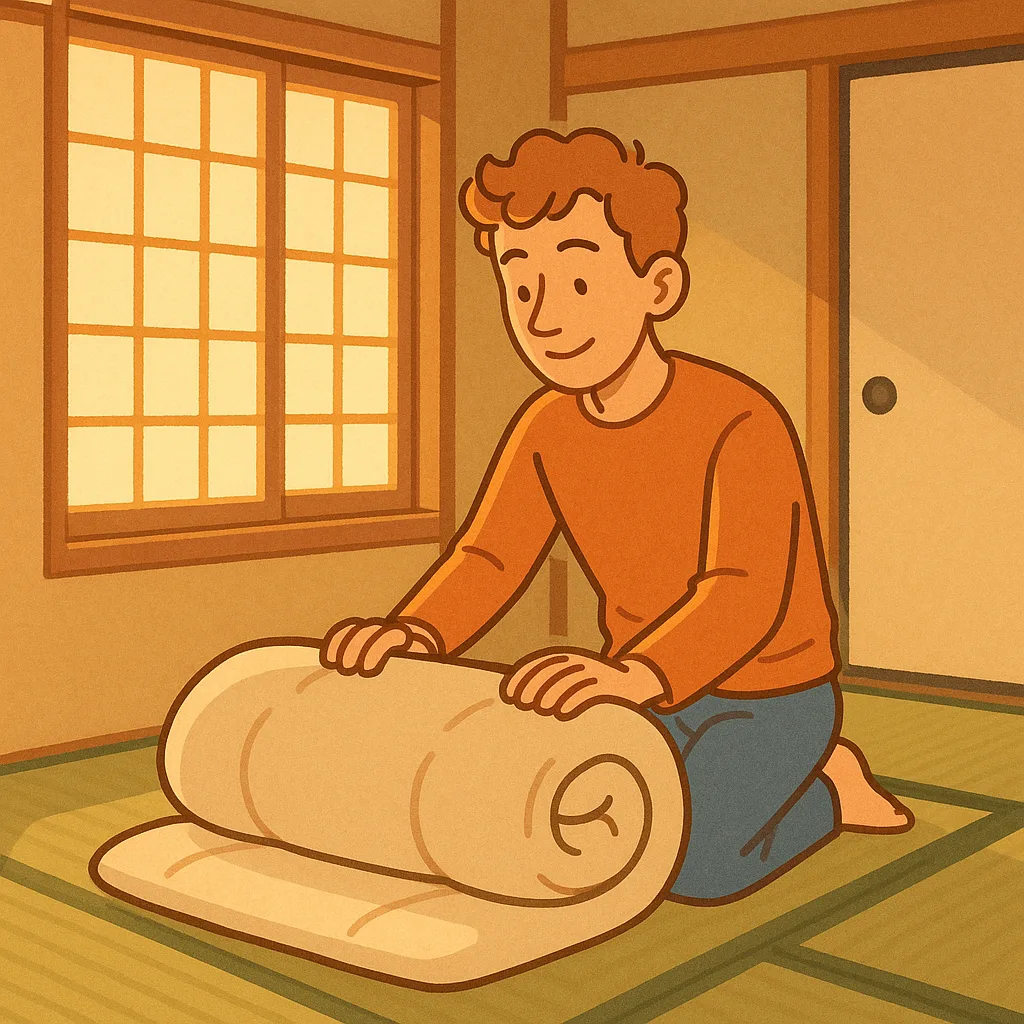
Here is the part nobody tells you before you move. When you start adopting small Japanese habits, the disapproval does not come from one side. It comes from both.
Your foreign friends think you are performing. They bought a western bed in the first week, kept their home-country coffee, and quietly decided that the goal was to live in Japan without letting Japan change anything about how they live. To them, a foreigner who likes the futon is either showing off or trying too hard.
Meanwhile some Japanese people are mildly confused that you have not "upgraded" yet. The futon is what their grandparents slept on. They moved to beds for a reason. So they see a foreigner enthusiastically choosing the thing they moved away from, and it does not compute. You are out of sync with the locals in the exact way you were trying to sync up.
You end up looking funny to everyone.
That is not a sign you made a mistake. It is the standard texture of actually living somewhere in between two cultures. The discomfort is the membership fee.
Strip the futon out and look at what is underneath. The real question is: which local habits are worth keeping, and which are you adopting just to feel like you belong?
This matters far past bedding. It is the cold green tea instead of the heater in winter. It is whether you take your shoes off at the entrance of your own apartment without thinking. It is whether you slurp the noodles or stay quiet because you are not sure if it is okay. Every one of these is a tiny fork in the road, and over a few years they add up to whether you are living in Japan or just staying in Japan with the volume turned down.
The foreigners who recreate their home country inside a Tokyo apartment are not wrong, exactly. They are comfortable. But they tend to be the same people who, three years in, still feel like guests. They optimized for the bed and lost the room.
Comfort and belonging are not the same thing.
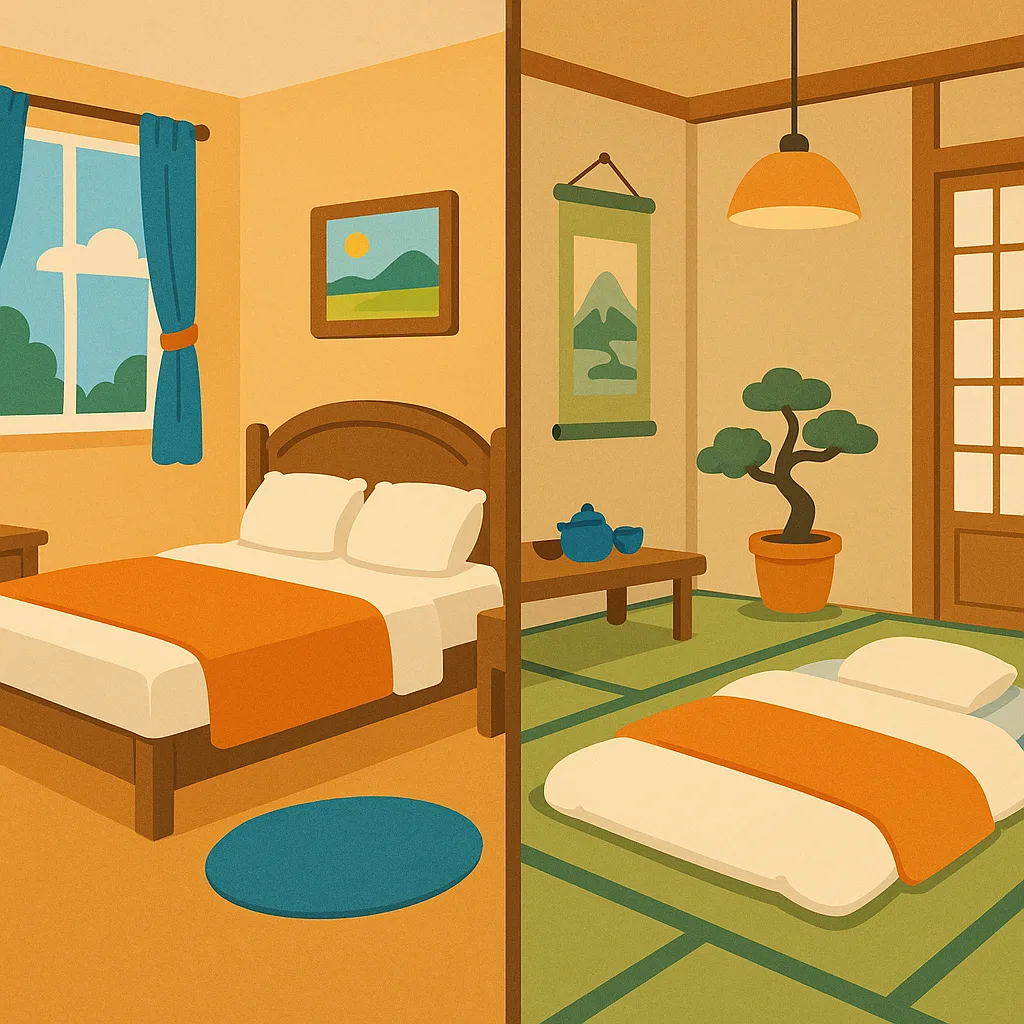
Here is the trap. You cannot actually tell which Japanese habits are worth keeping by yourself.
Left alone, you will guess. You will adopt some things because a YouTube video told you they were authentic, drop others because they felt awkward once, and never find out which calls were right. Is sleeping on a futon a genuinely better way to live in a small humid apartment, or a quirky preference you are now defending out of stubbornness? You honestly cannot answer that without someone who grew up here.
A local friend collapses the guesswork in one conversation. You mention the futon and they say "oh yeah, way easier in a tiny place, my mom still does it" and suddenly it is not a weird foreigner thing, it is just a normal choice some people make. Or they say "honestly nobody our age does that anymore, you might be romanticizing it" and that is useful too. Either way the question gets an answer instead of sitting in your head as low-grade self-doubt.
The expat forums cannot do this. They are full of other foreigners guessing right alongside you, half of them projecting their own first year onto your question. You get ten opinions and zero local context. What you needed was one person who has lived the entire thing from the inside.
Local context turns guessing into knowing.

There is a quieter reason the futon question stung enough for my friend to bring it up at all. Living between two cultures is lonely in a specific way. Nobody fully gets it.
Your friends back home think you have basically become Japanese. Your foreign friends in Japan think you are trying too hard. The Japanese people around you are kind but see you as a foreigner who is doing something slightly odd. There is no group that looks at your in-between life and just nods like it makes total sense.
That gap is where a lot of long-term foreigners quietly start to fray. Not from culture shock, which is loud and obvious and passes. From the slow lack of anyone who shares the exact texture of your daily life. The person who also rolls up a futon, also fumbles the recycling rules, also cannot fully explain to their parents why they have not come home. You do not need them to fix anything. You need them to exist so the in-between stops feeling like a personal defect.
You need witnesses, not advice.
The good news is those people are everywhere in Japan. Foreigners a few years deeper than you, locals who are genuinely curious about your version of life here, people whose apartments are also a strange mix of two countries. They are just hard to find by accident, because the places you naturally end up are either all-foreigner bubbles or all-local circles, and the in-between life lives in neither.

If you are a few years into Japan and you catch yourself wondering whether some small habit makes you the weird foreigner, that is not the real question. The real question is whether you have anyone around who can tell you the difference between a good local habit and a pose. Without those people, every little choice stays a private referendum on whether you belong here.
You do not need to commit to the futon. You do not need to prove your authenticity to anyone holding a coffee. You need two or three people in your actual city, some local and some foreign, who look at your strange in-between life and find it completely normal, because theirs looks the same.
Find those people and the funny looks stop landing. You will still roll up your futon every morning. You will just stop wondering if it means anything.
Make Japanese Friends On a Live World Map
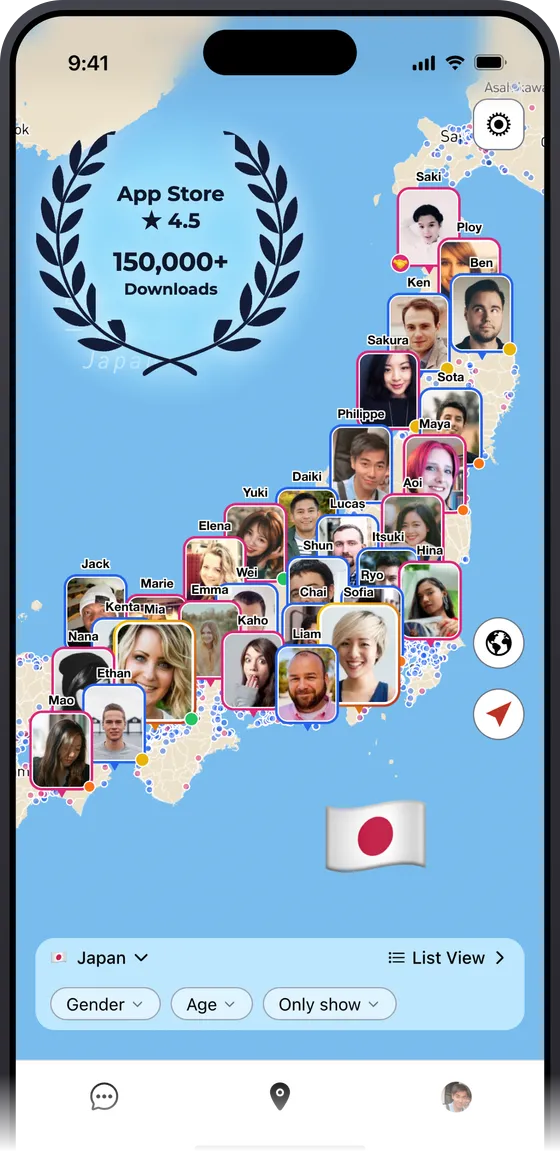
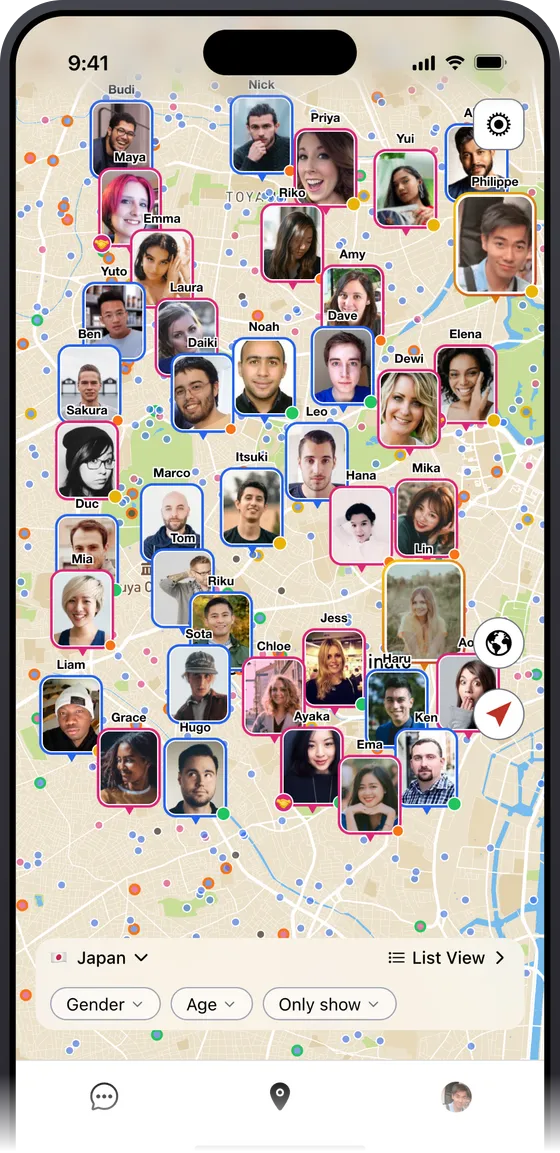
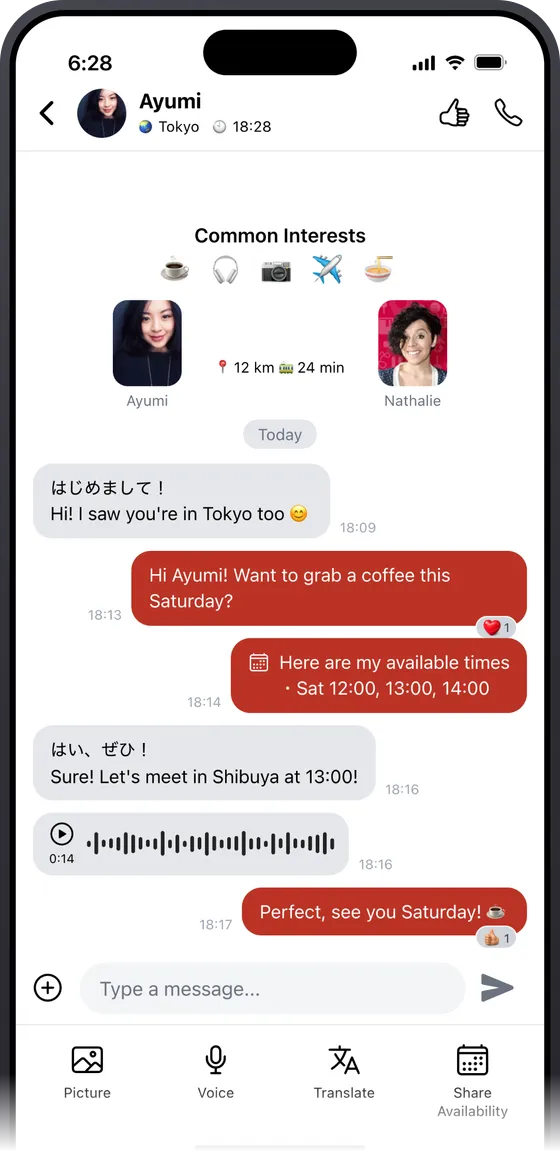


SewaYou is a map-based app for finding people near you in Japan who actually want to meet in person. Locals curious about foreign friends, foreigners who want a local one, both opting in upfront. Not a chat app, not a dating app, not another forum of strangers projecting from a different prefecture. The people who will make your in-between life feel normal are probably a few train stops away. Find them before the next small choice turns into another private referendum on whether you belong.


