

You can know how to do a job and still feel completely lost when someone asks you to put your life into unfamiliar boxes.
That is the nasty little trick of a first rirekisho, a Japanese resume form. A task that sounds like paperwork can suddenly feel like an exam in language, manners, handwriting, and whether you belong here at all.
My take? Give the form the attention it needs. Stop giving it the power to judge your entire life in Japan.
Start with the actual instructions
Before buying forms or booking a photo, reopen the job listing and the employer's message. What have they actually requested? What are you assuming because somebody told you that Japan always does things a certain way?
If the message asks for a handwritten form, plan for that application accordingly. If the format is unclear, ask whether a typed version is acceptable. One employer's request is not a reliable instruction manual for every future application.
The same goes for a photograph. Check the requested size, how recent it must be, and whether you need a printed copy or a digital file before spending money. If a detail is ambiguous, clarification is more useful than another anxious guess.
You can ask, in your own Japanese or the language the recruiter is using: “Could you confirm whether the resume needs to be handwritten, and which photo requirements I should follow?”
That is a normal administrative question. You do not need to apologize for existing before you ask it.

Draft once, reuse the groundwork
Do the thinking somewhere mistakes are cheap. A notes document is a better place to sort out dates and wording than the final sheet you intend to submit.
Gather your education and employment dates, the names you will use for schools and employers, your contact details, and any qualifications relevant to the application. Keep those details in a private master document so the next form does not send you back through old emails.
Then draft the parts that need sentences. For a motivation field, try answering two plain questions: Why this role, and what can you contribute? Start with an answer you understand before worrying about whether it sounds impressive.
An elaborate sentence you cannot explain in an interview is a poor trade for a simple, accurate one. If you use a translation tool, review the result carefully and remove any skills or achievements it has added or exaggerated.
If handwriting is required, rehearse unfamiliar names or crowded fields on scrap paper first. Leave time for a final check while you are still alert enough to notice a missing digit in your phone number.
Make the favor easy to answer
“Can you fix my Japanese resume?” sounds small when you are overwhelmed. To the person receiving it, it can mean translation, proofreading, career advice, and responsibility for whether you get hired.
Try a narrower request: “Would you have ten minutes to check whether this motivation paragraph is clear? No worries if you are busy.”
Send only the relevant excerpt, with personal information removed. Say what kind of feedback you want. Checking whether a sentence makes sense is different from asking someone to interpret an employer's hiring criteria.
A Japanese friend can be a helpful reader without knowing every company's preferences. If the question is about what the employer requires, take it back to the employer. If you need a full professional review, look for a career support service or a qualified reviewer.
And once the favor is finished, let the friendship be a friendship again. Ask about their week. Talk about something that does not have a submission deadline.

A correction is not a verdict
Imagine spotting a mistake just as you are ready to submit. Annoying? Absolutely. Proof that your Japanese is hopeless or that moving here was a mistake? That is a much bigger story than the evidence supports.
Name the actual problem. A date needs checking. A field is hard to read. A requirement needs clarification. Each description gives you something you can act on.
“This whole country is impossible” might capture your mood, but it will not tell you what to do next.
Before sending, compare the finished application with the original request. Check contact details, dates, required attachments, and the submission method. Save a private copy of what you submit so you can refer to it when preparing for an interview.
Then give yourself a stopping point. Eat something. Go outside. You are allowed to have an evening even when the application process is unfinished.
Find company beyond the job hunt
When every conversation is about your next application, an ordinary setback can start to fill the whole week. It helps to have people you can meet without needing a useful outcome from the meeting.
SewaYou is a map-based app for finding language exchange partners and making friends nearby. Use it to meet people for a coffee, a walk, or a conversation that gives your Japanese somewhere to exist outside an application form.
Make Japanese Friends On a Live World Map
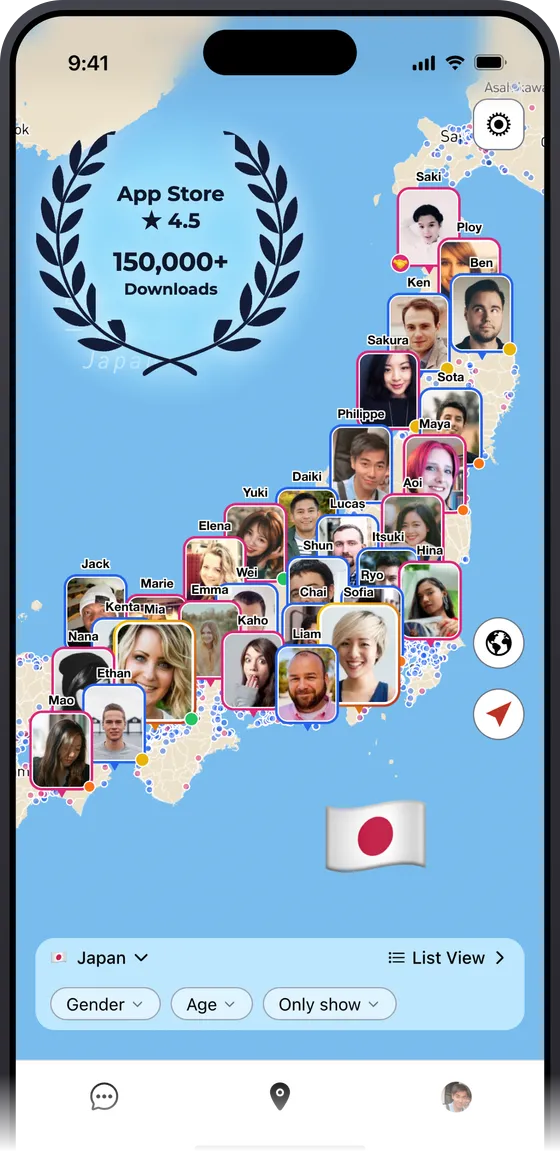
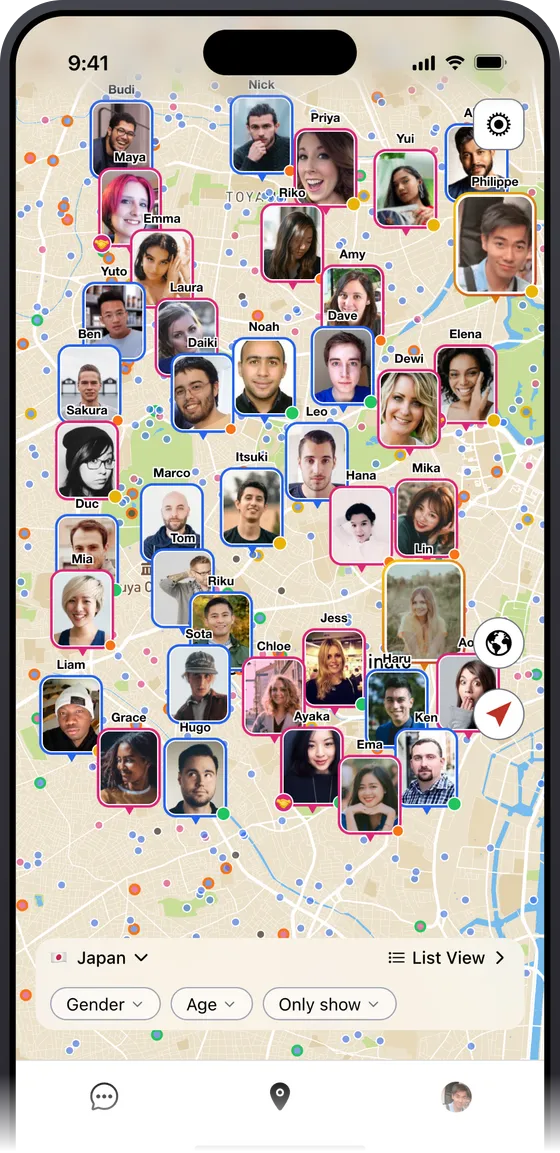
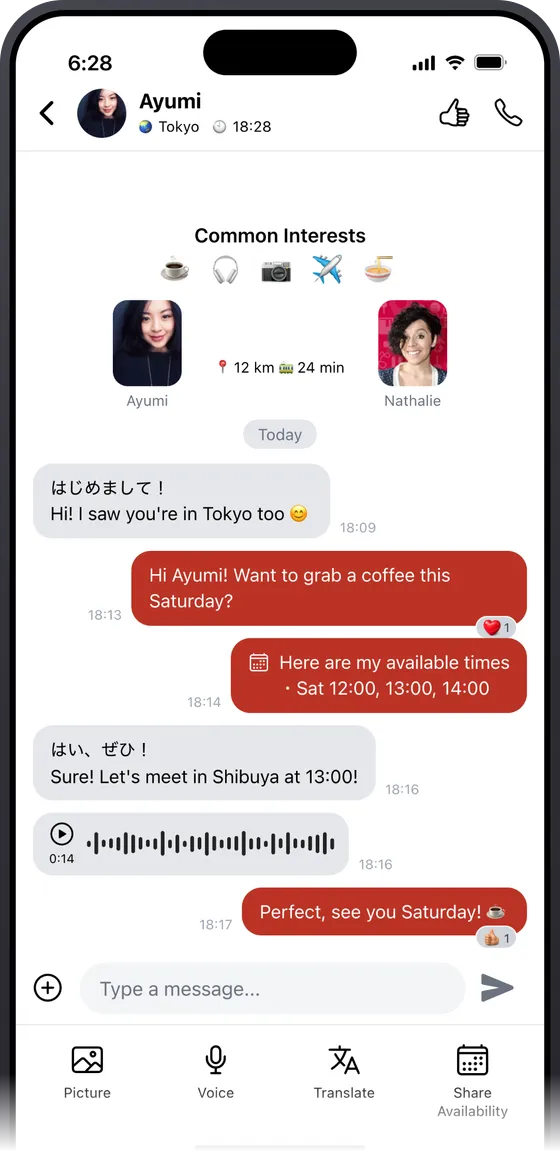



Start with a shared interest and a small invitation. A new language partner does not need to become your unpaid resume editor, and you do not need to become a perfect applicant before you deserve company.
Your first rirekisho needs a clear draft, a careful check, and the right submission details. Your week needs a little more than that.
Find someone nearby on SewaYou, and make a plan that has nothing to do with getting hired.


