

Ask someone who has lived in Japan for six months how they feel about the place and you'll get a bright, fast answer. The food. The trains that arrive to the second. The fact that you can leave your bag on a cafe table, go to the bathroom, and it'll still be there when you get back.
Ask someone who has been here eight years the same question and watch them stall.
It's not that they've soured on the country. It's that the easy answers stopped being true in the way they used to be. Japan isn't a highlight reel for them anymore. It's Tuesday. It's the same convenience store, the same commute, the same futon. When a place becomes your ordinary life, "what do you like about it?" turns into a genuinely hard question, the same way it's weirdly hard to say what you like about your own hometown.
So here is the more honest version of that question. Not what do you like about Japan, but what actually keeps you here once the novelty is gone? Because that answer is different, and almost nobody talks about it.
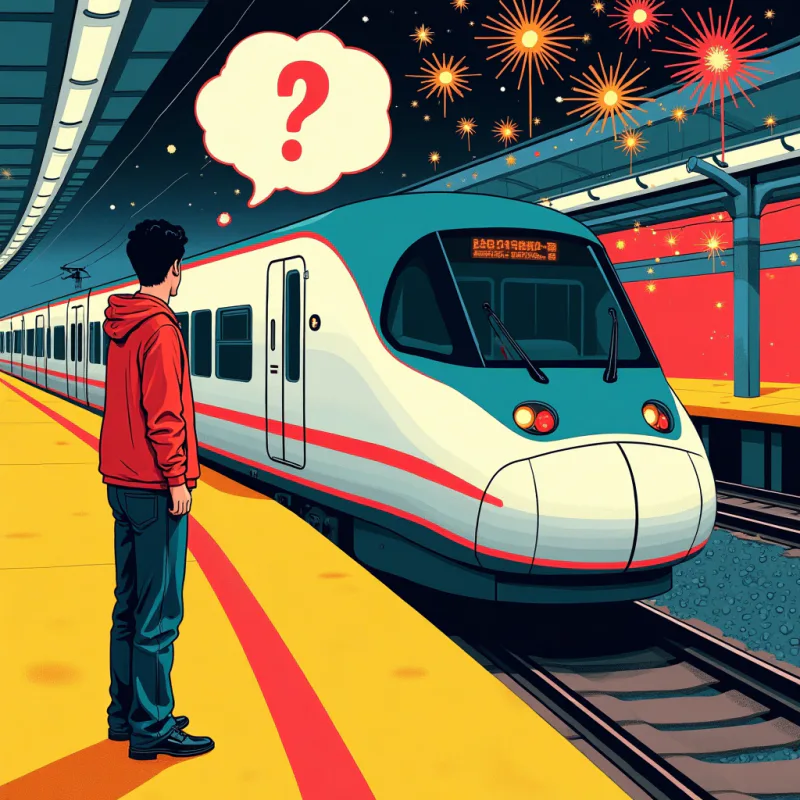
The safety, the convenience, the food, the trains. All real, all genuinely great. But here is the thing nobody warns you about: you stop noticing them.
The first time a train arrives exactly on the second, it feels like magic. By year three it's just the train. The vending machines stop being novel. The konbini stops being a wonderland and becomes the place you buy the same onigiri you always buy. This isn't Japan getting worse. It's your brain doing what brains do, filing the extraordinary under "normal" so it can stop spending energy on it.
Which means if the tourist-brochure reasons are the only thing anchoring you, you are on a timer. Sooner or later everything great becomes wallpaper, and you wake up one morning with a quiet, unsettling question: okay, so why am I actually still here?
When long-termers try to explain why they stay, the words that come up aren't "sushi" or "shinkansen." They are softer and vaguer. Home. Routine. It's just where my life is now.
That sounds boring. It isn't. It's the most important thing there is. But routine is a double-edged answer, because routine can describe two completely different lives.
One version: you have a neighborhood where the vegetable-shop guy knows your order, a couple of friends you can text on a random Tuesday, a bar where the master nods when you walk in. The routine has people in it. It's warm.
The other version: you have a commute, an apartment, a screen, and a weekend that looks exactly like last weekend. The routine is empty. It's just habit wearing the costume of a life.
Both of these people will tell you Japan is "home and routine." Same words, opposite lives. And which one you are living quietly decides everything about whether you stay happily or leave without ever quite knowing why.
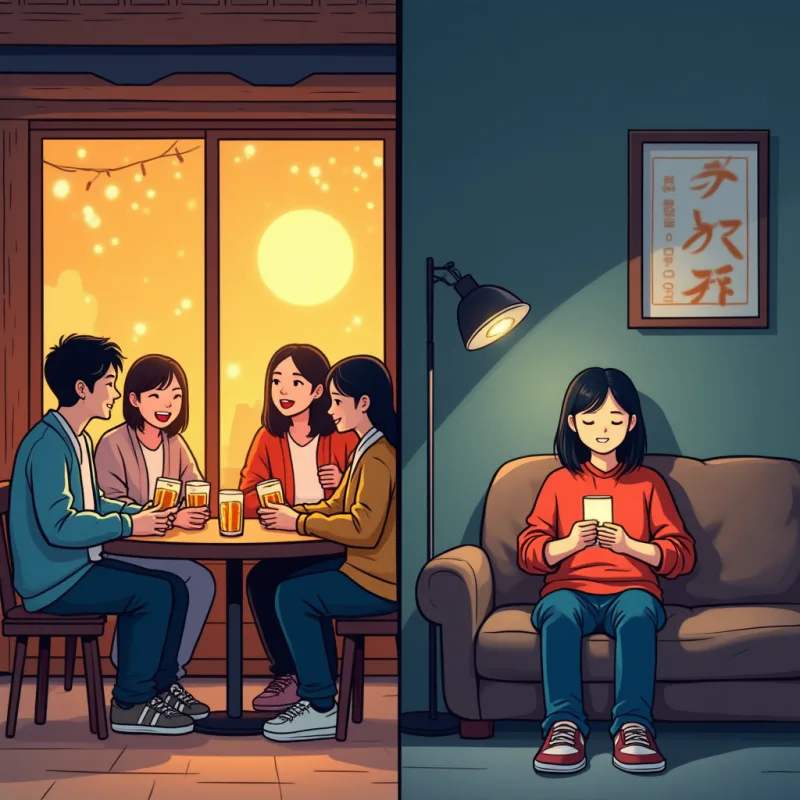
There is a pattern I've watched play out again and again. Someone arrives full of energy, learns the language, loves it, thrives. And then somewhere around year five to seven, with no dramatic event, they start talking about "maybe going home."
It's rarely one big reason. When you dig, it's almost always the same quiet thing: the human layer never got built, or it got built and then eroded. And the erosion is nobody's fault.
Your first friends in Japan were probably other foreigners, and other foreigners leave. Constantly. The English teacher moves back after two years, the exchange student graduates, the coworker gets transferred home. You rebuild your circle two or three times, and eventually you get tired of rebuilding.
Work is not friendship, either. You can spend nine hours a day surrounded by colleagues and still go home to nobody. Japanese work relationships are real, but they often stay inside the office, and when you are the foreign one there's an extra wall.
And your Japanese can be great while your local friendships stay thin, because language is the ticket in, not the room itself.
So year five arrives. The novelty is gone. The routine is the empty kind. And leaving starts to feel less like giving up and more like plain common sense. Nothing is wrong. There's just nothing holding you. The people who cross ten and fifteen years and still love it here are rooted, not luckier.

Talk to the foreigners who hit ten or fifteen years and still light up about their life here, and the thing they share isn't fluency, or a great job, or a Japanese spouse. Plenty of people have all three and still feel hollow. What they have is a small, specific, local web of people.
Concretely, it looks like this:
None of this is grand, and that is the whole point. Belonging in Japan is built from small repeated gestures, not grand ones. Showing up to the same place. Texting the same person. Saying yes to the low-key invite on a night you would rather stay in.
Here's the encouraging part: this is buildable at any point. Year one or year nine, the move is the same. You have to deliberately create the human layer, because unlike the trains and the konbini, it will never show up on its own.

Here is the honest problem with "just build a local web of people." It is the most obvious advice in the world and also the hardest to act on, especially past year three, when your old circle has scattered and there's no school or fresh job throwing new people at you every week.
That gap is exactly what SewaYou was built for.
Make Japanese Friends On a Live World Map
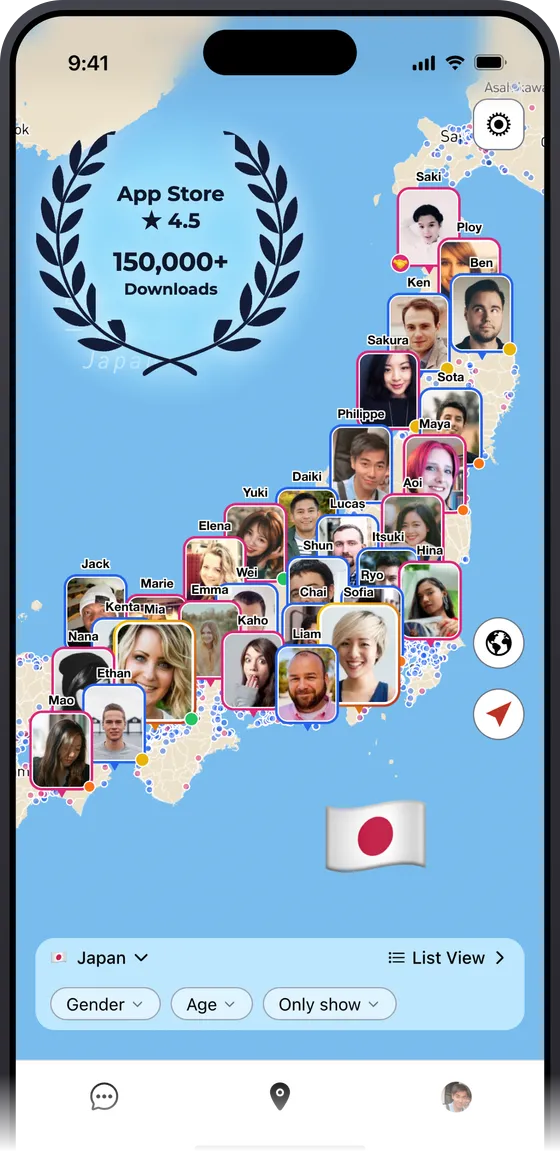
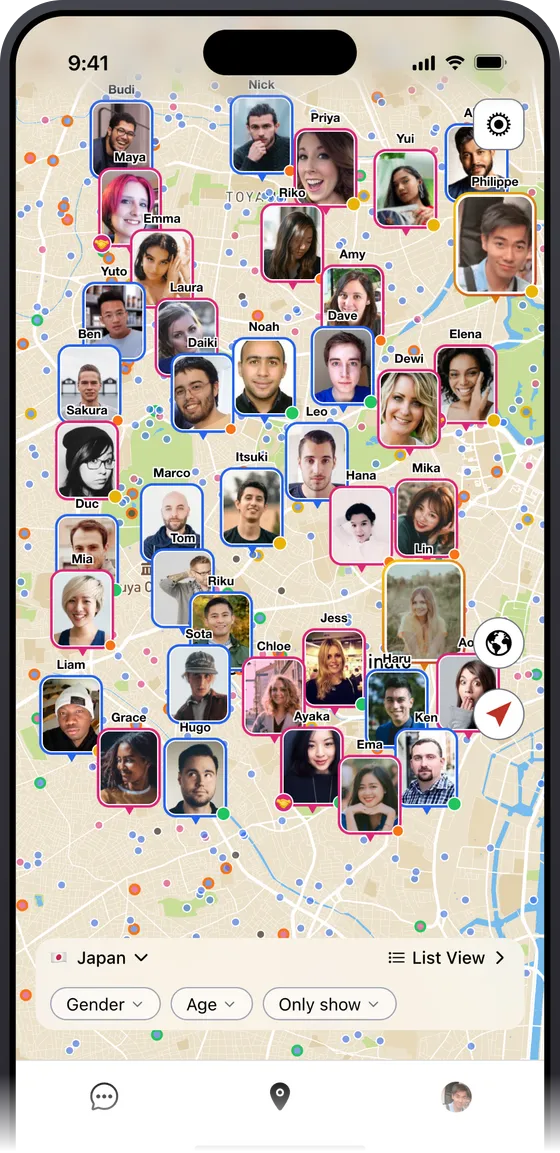
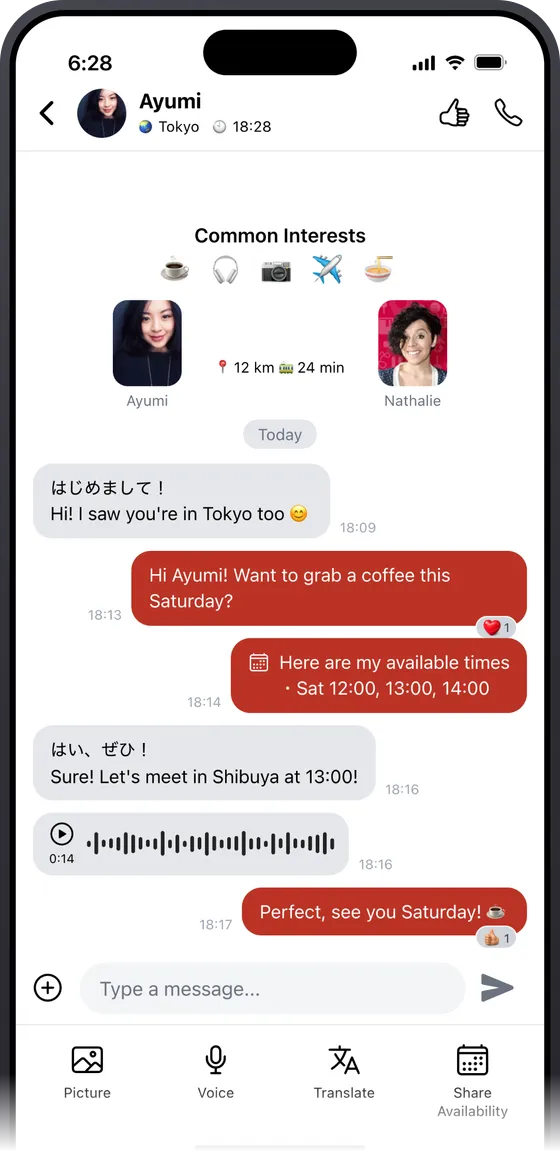


SewaYou is a map-based app that shows you who is actually near you and open to meeting: Japanese locals who want international friends, other international residents putting down roots, language exchange partners a train stop away. Instead of hoping the human layer assembles itself, you can see it on a map and reach out. It isn't a nightclub and it isn't a dating app. It's for the quieter goal of finding the few people who turn a commute-and-apartment routine into an actual home.
The novelty of Japan will always expire. The roots don't. And the roots are the only thing that turns "I live here" into "I stay here."
So the next time someone asks what you like about Japan and you catch yourself stalling, notice what that stall is telling you. Maybe you have simply been here long enough that the highlight reel stopped playing. That is normal. That is what home feels like.
Just make sure the home part is real, and that the routine has people in it. That, far more than the food or the trains, is what actually makes you stay.


