There is a specific kind of confusion that hits you in Japan the moment you realize you broke a rule you never knew existed. Nobody handed you a rulebook. There was no sign. And yet somehow you were supposed to know.
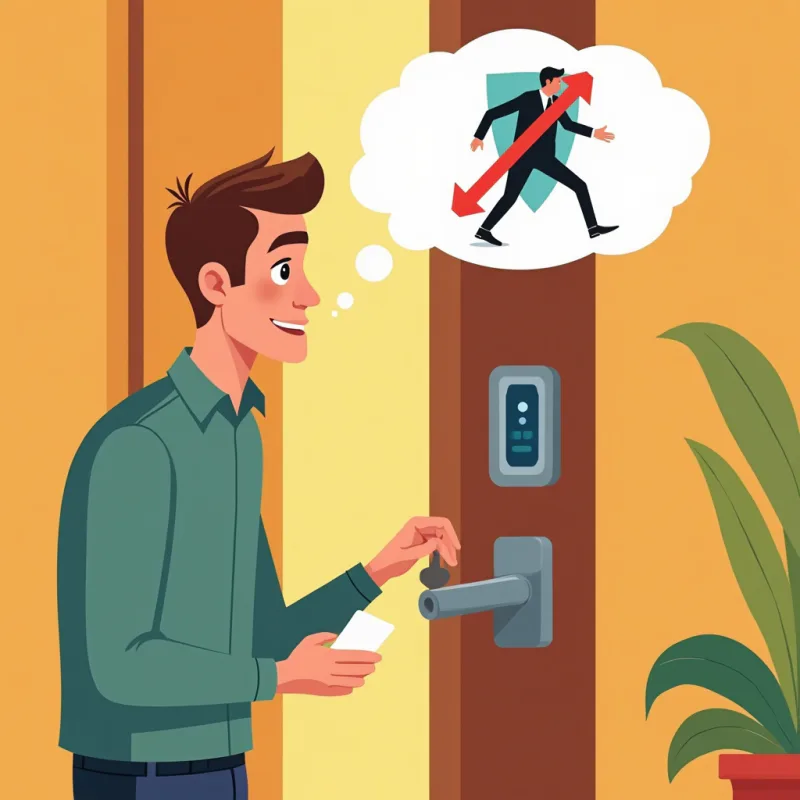
We watched it happen at an apartment building in Tokyo recently. A young woman walked home from work, exhausted, and reached the entrance just as another resident was tapping his key card. The auto-lock clicked, the glass doors slid open, and she walked straight through behind him. Reasonable, right? The door was open. She lived there. She already had her own card in her hand for the next set of doors.
He stopped her and told her, loudly, that she had bad manners.
Because in that building, the unwritten rule is that you tap your own card first, wait for the person ahead to pass through, and then tap again for yourself. Even when the door is already wide open. Even when you obviously live there.
Welcome to the invisible rulebook.

Here is the frustrating part. The keycard rule is not random. Auto-lock buildings in Japan are designed to stop 共連れ, or "tailgating," where one person's tap lets a stranger slip in behind them. Insurance terms, building management contracts, and quiet neighborhood expectations all assume that each resident taps for themselves. One tap, one person.
So the man was technically defending a real security norm. The problem is that the logic lives in his head, not on the wall. He learned it from a building notice years ago, or from his parents, or from being scolded himself. To everyone else it just looks like a stranger yelling about a door that is already open.
This is the pattern that catches people again and again in Japan. The rule makes sense once you know the why. Getting to the why is the hard part.
Once you start noticing it, the invisible rulebook is everywhere.
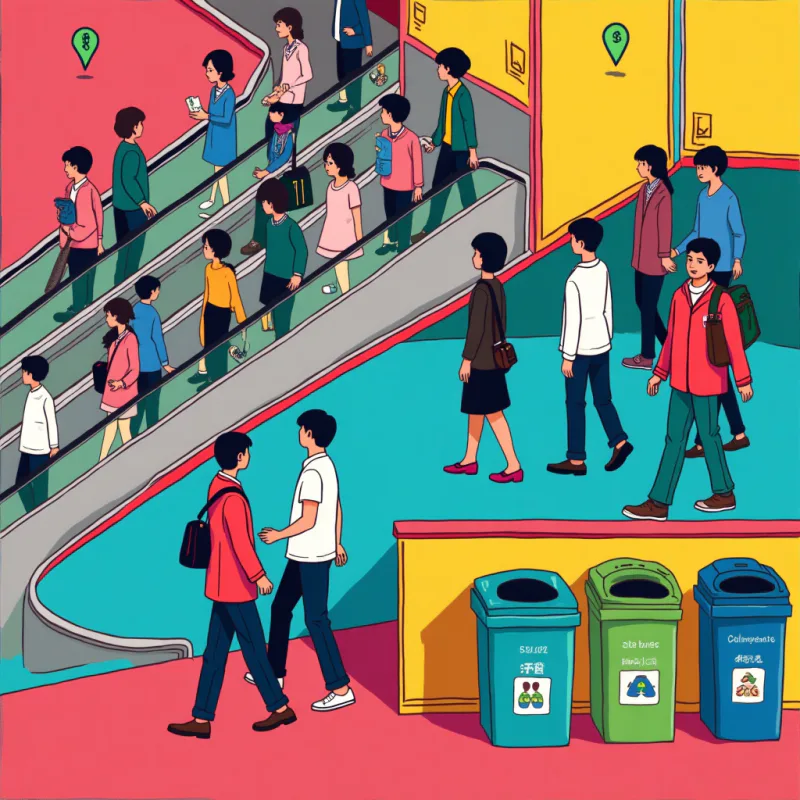
You stand on the correct side of the escalator, until you move to a different city and the correct side flips. You sort your trash into categories that change street by street. You learn that you do not walk and eat, that you carry your rubbish home, that the "we should grab dinner sometime" from a coworker may or may not be a real invitation depending on a tone you cannot yet hear.
None of this is in the guidebook that told you how to buy a train ticket. The guidebook is written for the tourist. The rulebook is lived by the resident. And the space between the two is where most newcomers quietly collect small, invisible embarrassments.
Even people who grew up here hit this wall. Come home after a few years abroad and your instincts have drifted. You start moving like the place you just left, and suddenly you are the one getting corrected at your own front door.
The obvious move is to search "Japanese etiquette rules" and memorize a list. People try. It mostly does not work, and here is why.
The real rules are contextual. They depend on the specific building, the specific neighborhood, the specific relationship, the specific tone. A list of fifty tips cannot tell you that this manager wants a reply within the hour while that one finds it pushy. It cannot tell you that in this apartment you tap twice and in the one across the street nobody cares.
Lists give you facts, not judgment. Judgment is the thing that tells you which rule applies right now, in this room, with this person. And judgment only comes from someone who lives inside the culture and is willing to explain the parts that usually go unsaid.
The people who settle into Japan smoothly almost always have the same quiet advantage. It is not a better app or a thicker guidebook. It is one or two local friends who tell them the truth without making it awkward.
A friend is the one who says, "oh, by the way, in this building you tap your own card, people are funny about it here." A friend tells you the coworker's dinner invitation was real, or was not. A friend catches the small mistake before it becomes the story a stranger yells at you about. The unwritten rules finally get written down by the friend who says them out loud.
The trouble is that these friendships are exactly what feels hardest to build when you are new, or busy, or just back from years away. You cannot schedule a local friend into existence. Or at least, you used to not be able to.
That is the whole reason we built SewaYou.
Make Japanese Friends On a Live World Map
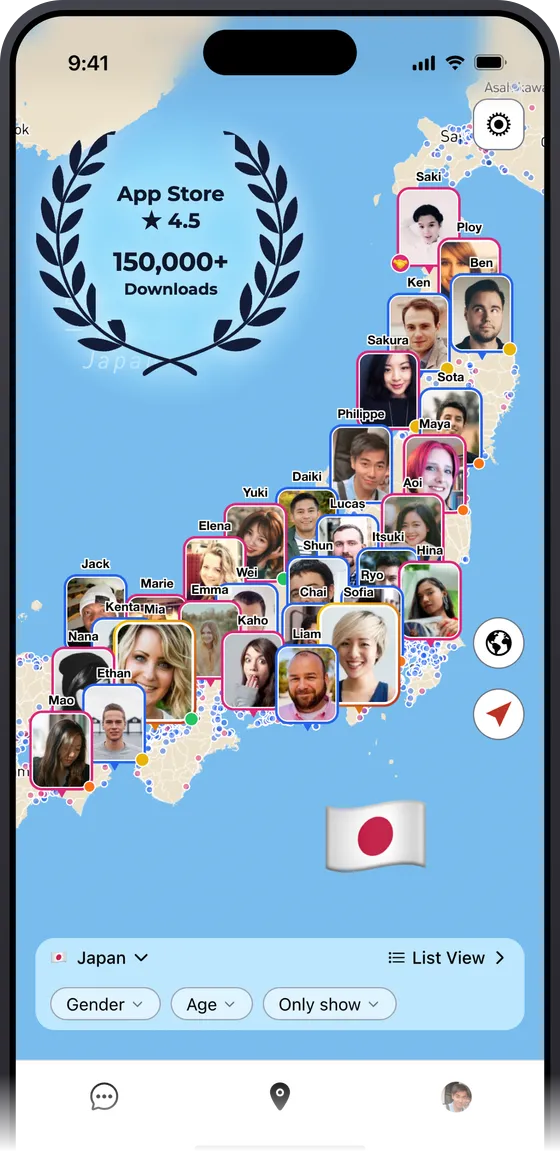
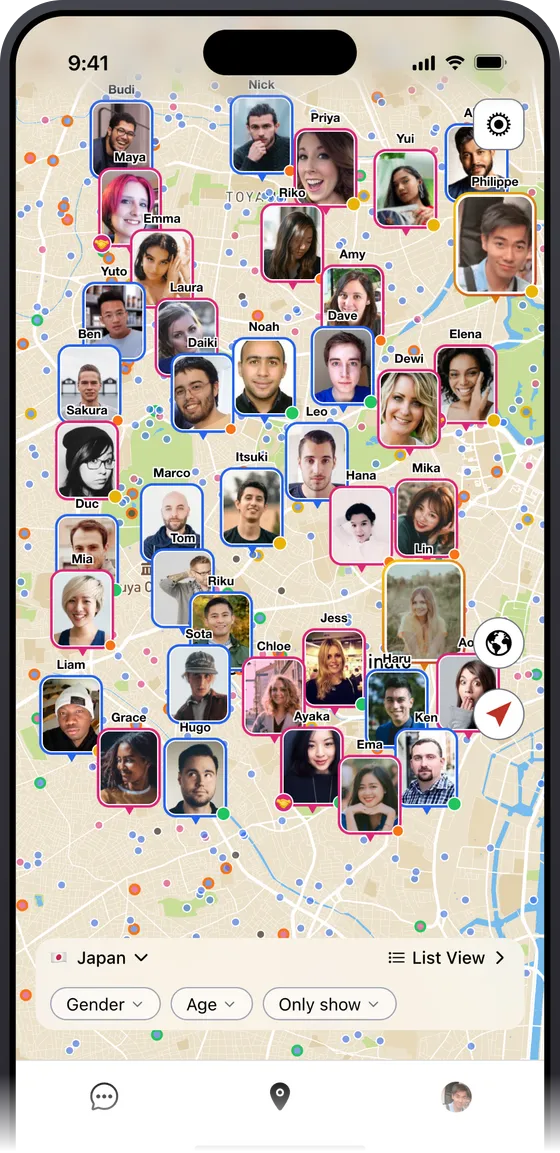
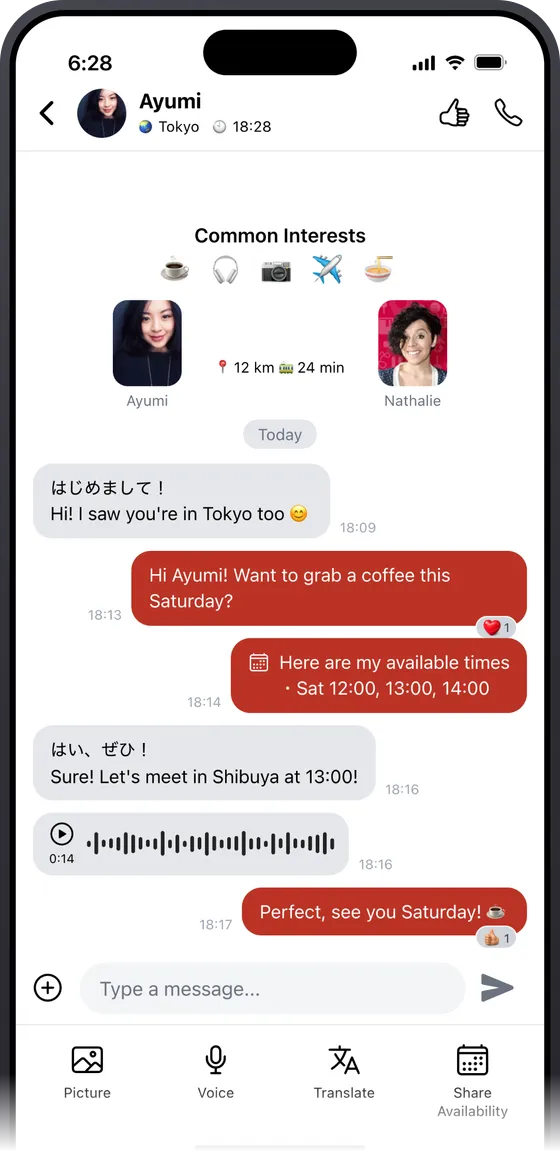



SewaYou is a map-based app that shows you real people near you who actually want to meet, whether that is a local who can explain your neighborhood's quirks or another newcomer figuring out the same doors you are. You open the map, you see who is around, you start a conversation. No swiping, no performance, just people close by who are open to a real connection and the kind of small honest advice that keeps you from getting scolded at your own entrance.
The invisible rulebook never fully disappears. But it gets a lot less intimidating when you have someone to ask.
Ready to meet the people who will let you in on the rules? SewaYou puts them on the map.