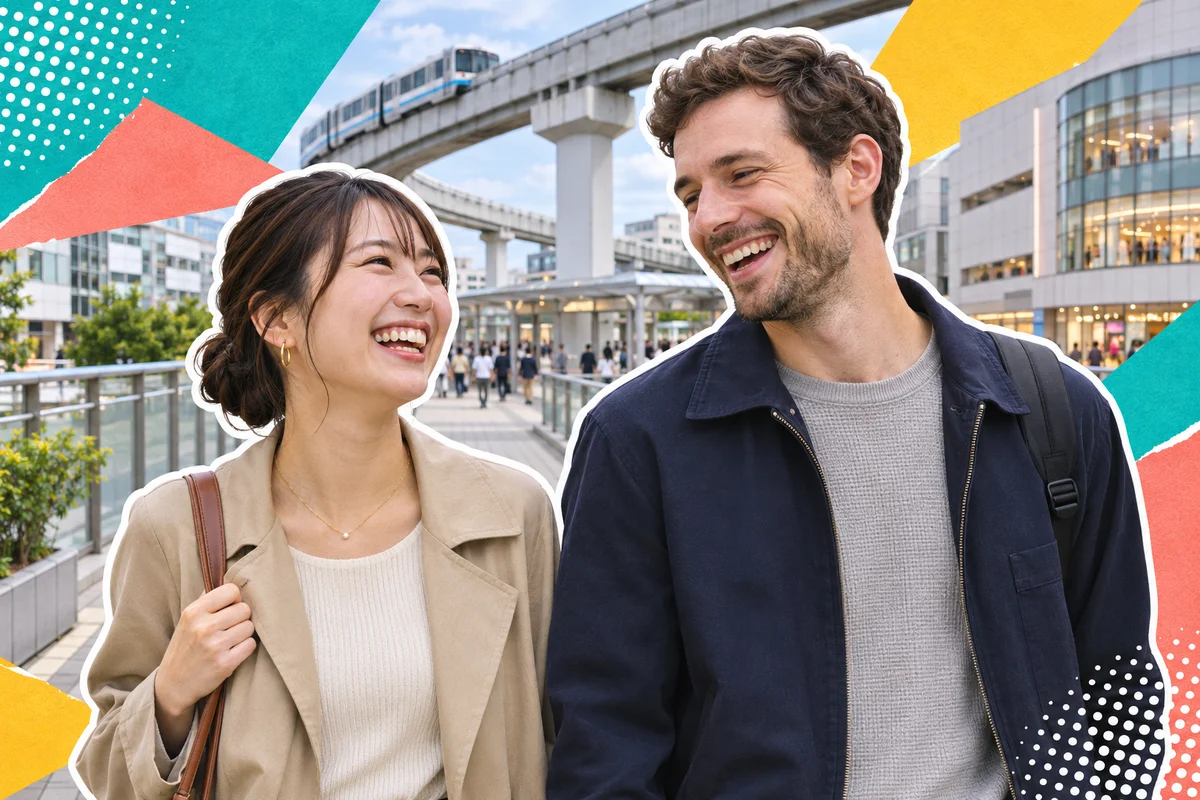
Tachikawa is the busiest hub in west Tokyo. Four rail lines meet at the station, the monorail glides over the north exit, and on a weekend afternoon you can hear English, Chinese, Tagalog and Spanish on the same pedestrian deck. So why do so many foreigners here say their social life still feels thin?
Because Tachikawa isn't built like Roppongi or Shinjuku. There's no strip of bars where internationals automatically end up. The English teachers commute out to schools across Tama, the students go home to their dorms, the Yokota families stay near Fussa, and everyone passes through the station on their own schedule. The people are here. They're just spread out.
This guide covers how to make friends in Tachikawa in 2026, area by area: the north exit and GREEN SPRINGS, the public art around Sun Sun Road, Showa Kinen Park, the bars, the Fussa side near Yokota Air Base, and the local multicultural scene. It works whether you live in Tachikawa, teach in west Tokyo, study nearby, just moved, or come in from a base town on weekends.
The short version: skip the station crowds, find slower places. A lawn at GREEN SPRINGS, a walk under the ginkgo trees at Showa Kinen Park, a cooking session at a community center. Anywhere you can sit down or walk side by side, conversations last longer. Then go back to the same place again.
Tachikawa has plenty of people. The difficulty is in how the city moves.
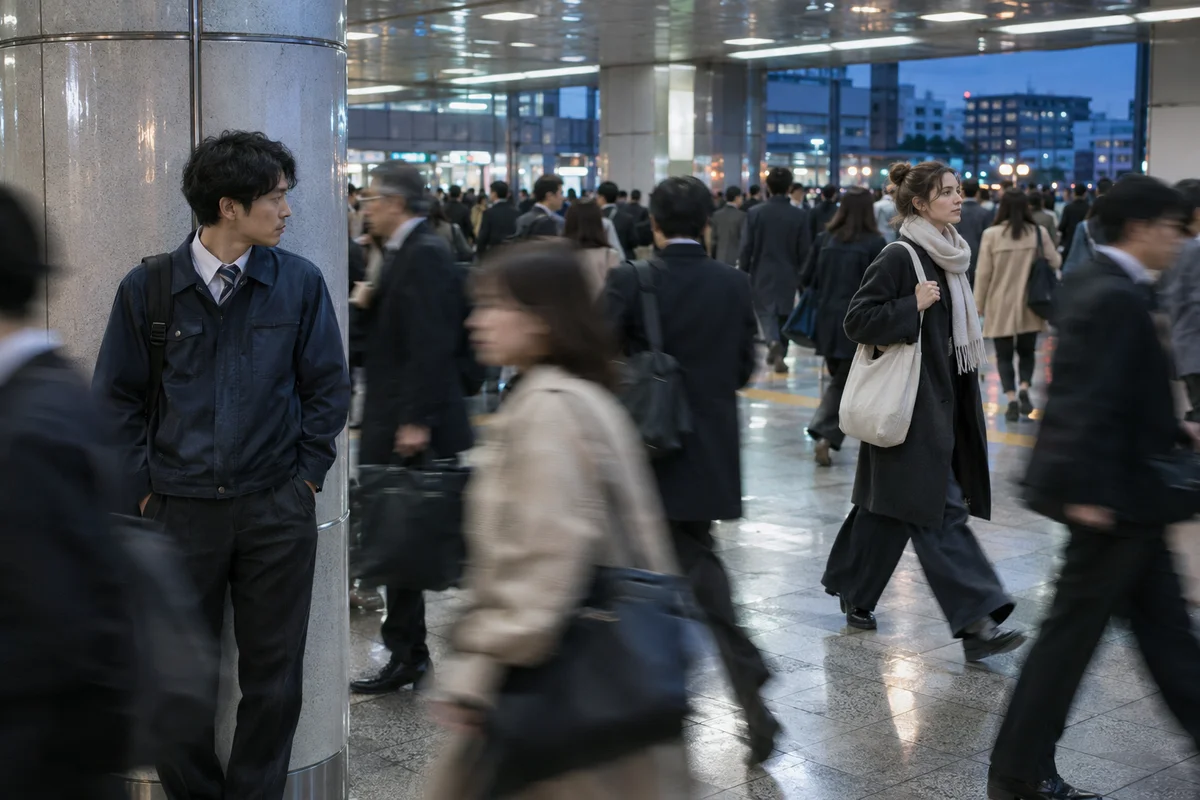
Everyone is passing through. Tachikawa Station connects the JR Chuo, Ome and Nambu lines, and the Tama Monorail stops right outside. Mornings and evenings are a river of commuters and students. Nobody stops on the deck to chat.
There's no "foreigner bar" district. In central Tokyo you can point at a neighborhood and say "that's where the internationals drink." Tachikawa has lots of izakaya and bars on both the north and south sides, but finding the ones where you'll click takes your own legwork.
Everyone's routine is different. Some foreigners live in Tachikawa, some commute in for work, some come over from Fussa and the Yokota area, and some are just visiting Showa Kinen Park. They're scattered across parks, shopping centers and events by day rather than gathered in one spot at night.
Here's the upside. Tachikawa is calmer than central Tokyo, and the same faces show up again. You won't get swept away by a crowd of millions. Someone you talk to once has a real chance of crossing your path next week.
The north exit, the park, the bar streets and the Fussa side all feel like different towns. Start with the one that fits how you like to spend time.
GREEN SPRINGS is a short walk from Tachikawa Station's north exit, right next to Showa Kinen Park. It's a district of open lawns, plazas, cafes, a hotel and a concert hall, and on weekends it fills up with families, couples and people taking their lunch outside.
What makes it good for meeting people is that nobody is in a hurry. People lie on the grass, sip coffee on terraces, watch their kids play. You'll see foreign families and groups here too, and "nice day, isn't it?" to the person next to you is a perfectly normal opener.
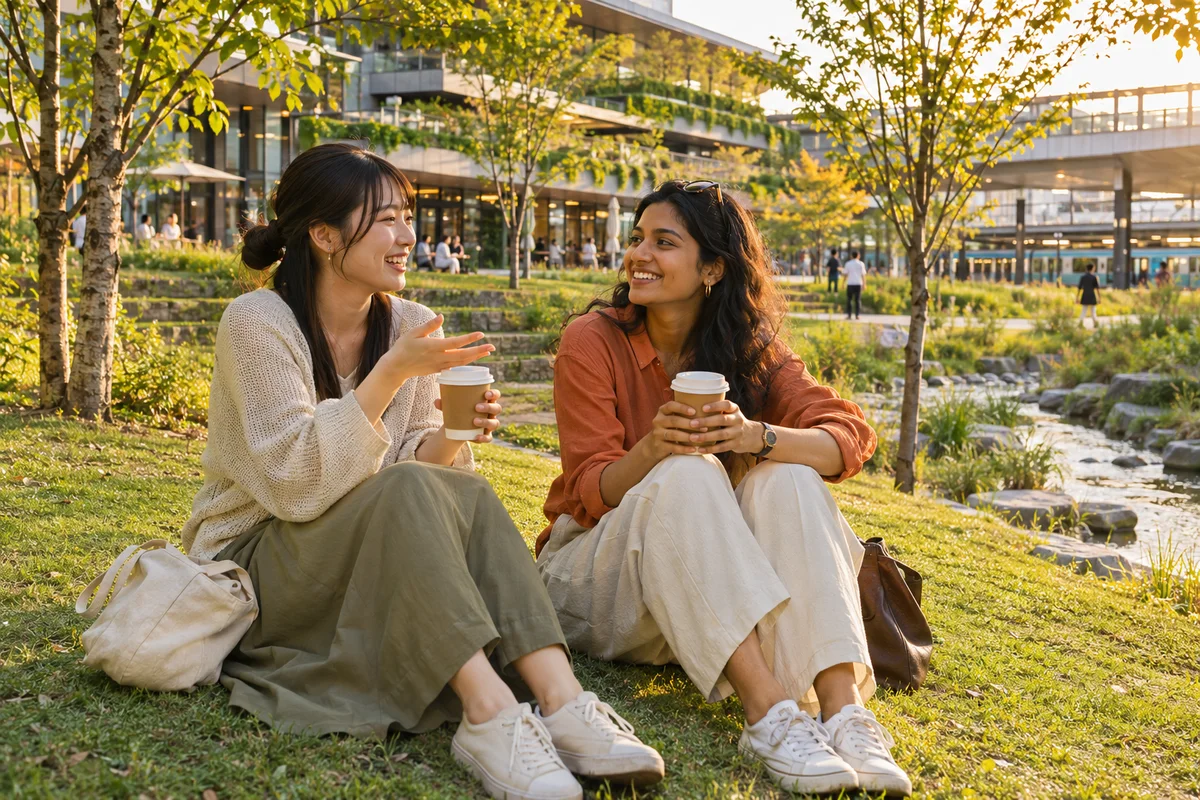
GREEN SPRINGS hosts seasonal events such as markets, outdoor jazz and workshops for kids. Event days bring more people and a looser mood where strangers talk more easily, so check the official site for what's on before you go.
From the north exit, Sun Sun Road runs under the monorail tracks. Around it is Faret Tachikawa, where 109 public artworks by 92 artists from 36 countries are placed throughout the streets. Even benches and car stoppers are artworks, which is half the fun.
If you see someone photographing a piece or trying to read its plaque, "you know that's actually a bench?" is an easy way in. There's also a Faret Tachikawa Art guide app that works in Japanese, English, Chinese and Korean, so walking the route together with someone new is an easy plan.
In spring and autumn, the Faret Tachikawa Art Museum Day event is held, sometimes with an art market on Sun Sun Road. Dates change each time, so check the official site.
If you want to meet people in Tachikawa without alcohol, start at Showa Kinen Park. It's a huge national government park spanning Tachikawa and Akishima, and Japanese and international visitors come all year for the flowers and seasonal events.
Right now, the autumn leaves and night walk event for 2026 runs until November 29. The Katarai ginkgo avenue turns gold and the maples in the Japanese garden are lit up after dark. In spring there's a flower festival and in summer a light event, so there's nearly always a reason to go.
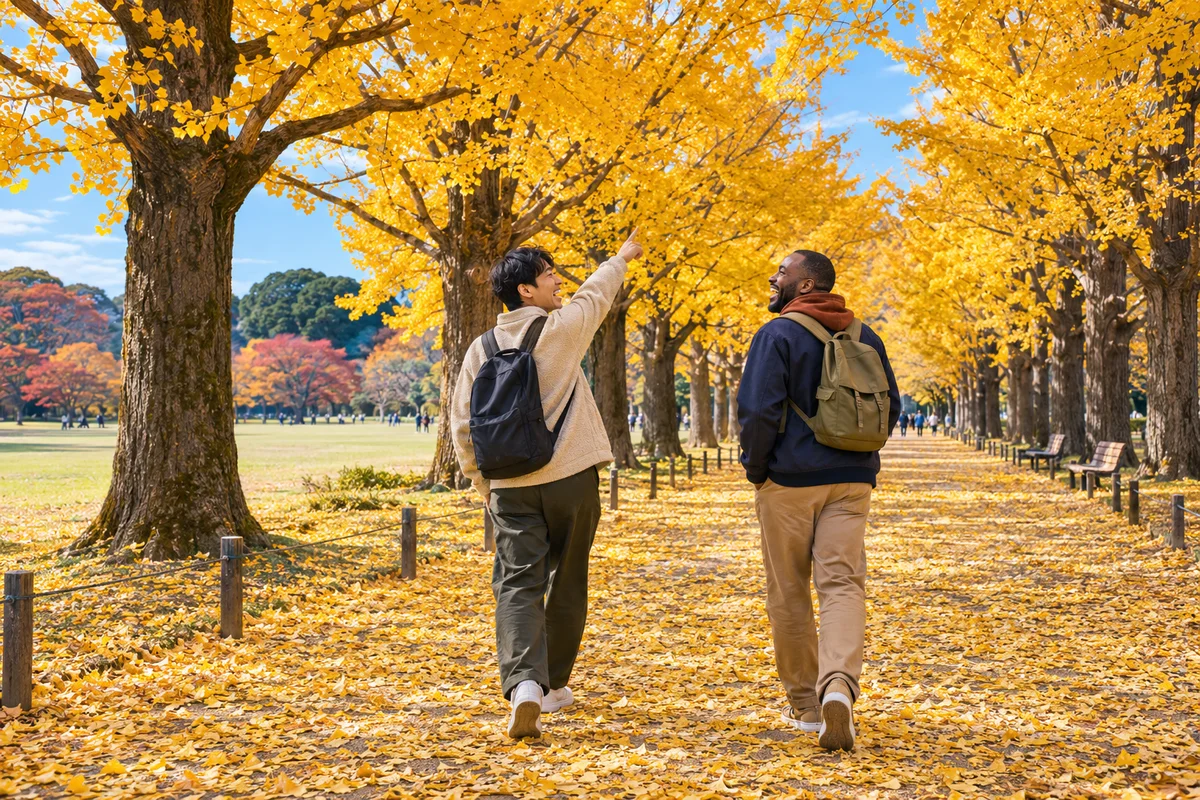
A lot of people find walking side by side easier than sitting face to face, especially across a language gap. The park also has cycling paths and picnic lawns, so "want to do a picnic at Showa Kinen Park sometime?" is a natural follow-up invite. Opening hours, admission and events change by season, so check the park's official site before you go.
People search for "Tachikawa foreigner bar" a lot. To be straight with you, Tachikawa doesn't have a famous cluster of foreigner bars. What it does have, on the north side, are darts bars and bars where you can play beer pong, some with English menus.
Game bars are great because you don't need an opening line. Throw some darts, cheer a bad shot, and you're laughing together even if your Japanese or their English is rough. The south side has its own mix of izakaya and small bars, so walk a few and find one that suits you.
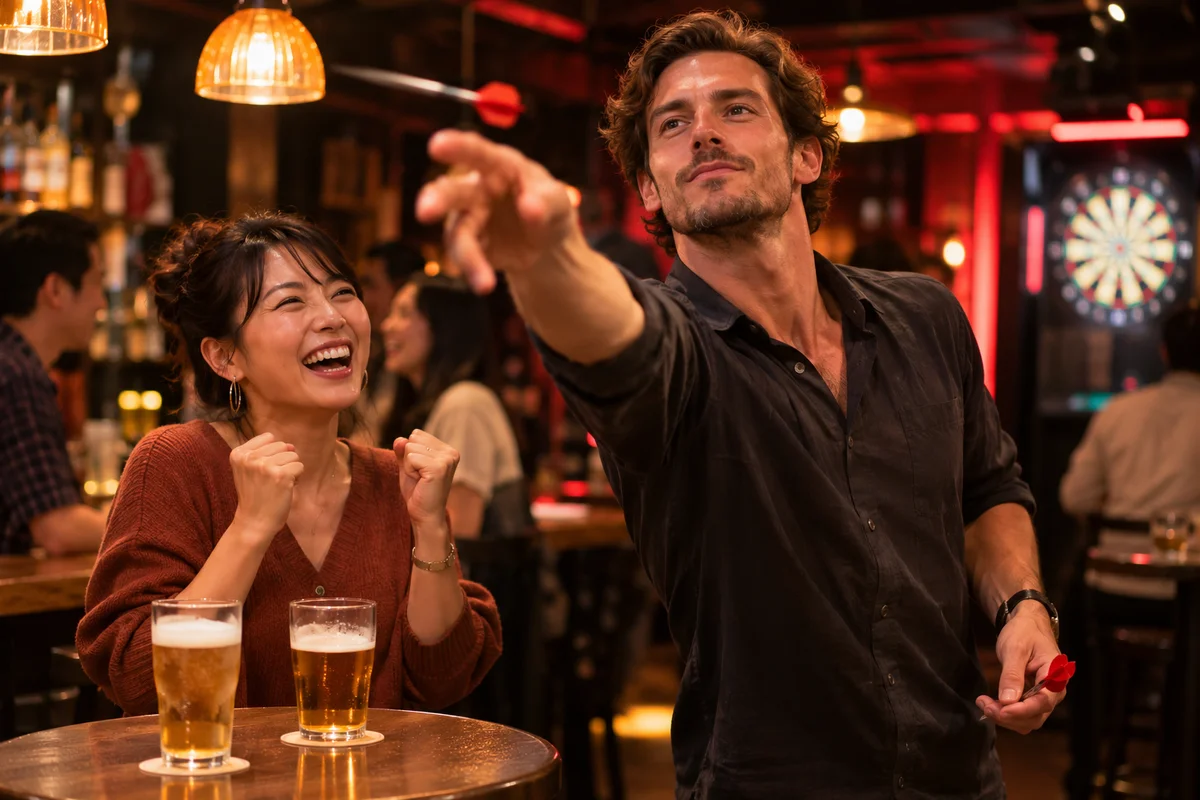
Tactic: go early on a weeknight rather than late on a packed Friday or Saturday. Once you find a bar you like, go on the same night each week so the staff start to recognize you. Vibes, prices and hours differ between bars and can change, so check before you go.
A short ride up the Ome Line from Tachikawa is Fussa, home to Yokota Air Base. Along Route 16 on the west side of the base runs Base Side Street, a stretch of about a kilometer lined with vintage clothing shops, cafes, diners and antique stores. If you like that American-in-Japan feel, it's a fun afternoon. The nearest station is Ushihama on the JR Ome Line.
Fussa and the area around Yokota are home to Americans who work on the base and their families, as well as Japanese locals who've lived alongside the base for decades. Chatting with staff and regulars at a diner or a vintage shop is how a lot of connections here start.
Every spring, Yokota Air Base holds the Japanese-American Friendship Festival and opens part of the base to the public. The 2026 festival took place on May 16 and 17 and marked its 50th year. Watch the base's official site and the Japanese Ministry of Defense's Yokota page for the next dates. In some years, visitors who aren't Japanese or US citizens need a passport or other ID to enter, so check the conditions in advance.
If you're searching for a Tachikawa international association or expat community, local groups are a more reliable bet than one-off events. Tachikawa has an NPO called the Tachikawa Multicultural Center (たちかわ多文化共生センター), which supports foreign residents and runs exchange activities.
The center runs Tsubasa, a Japanese class for children with foreign roots, offers consultations for foreign residents and recruits language volunteers. It also holds World Cooking sessions where people cook dishes from different countries together, TMC Salon gatherings for members and residents, and the World Fureai Festival. For 2026, a multicultural gathering called Tabunka Kyosei no Hiroba is scheduled for December 12.
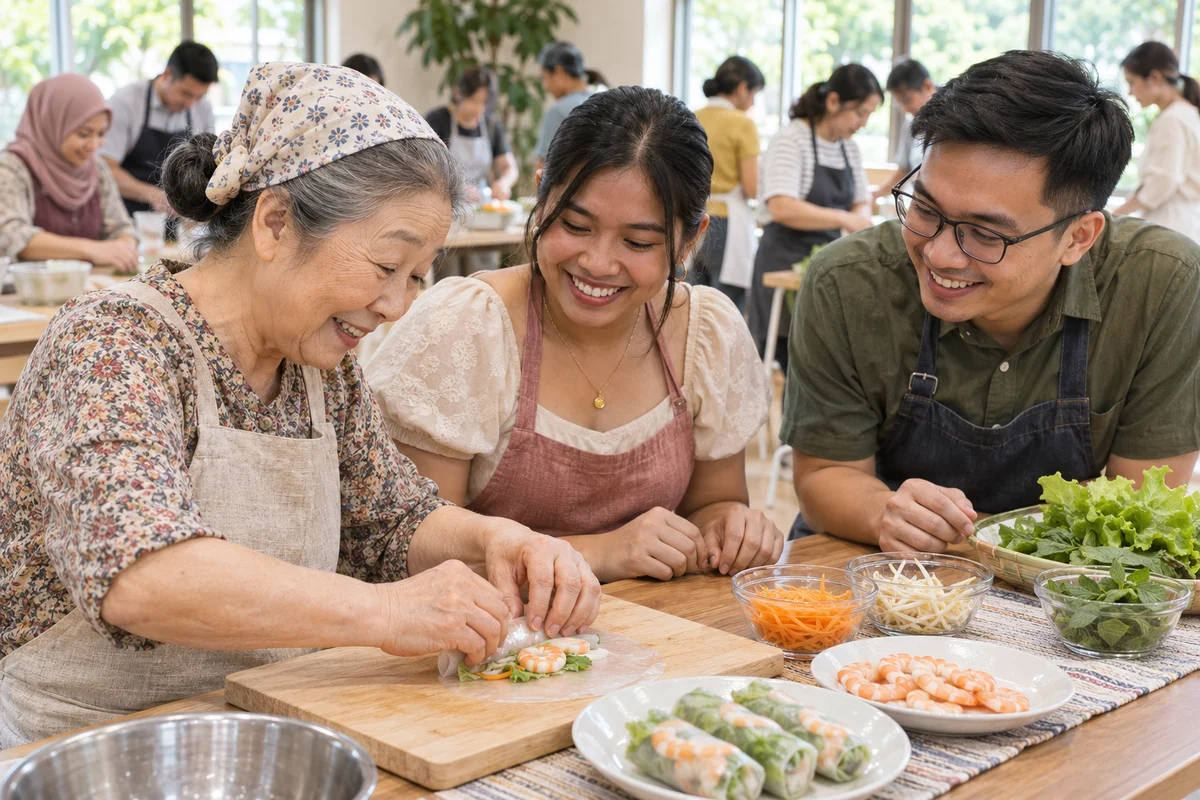
The beauty of places like this is that friendships grow from doing things together. Volunteer once a week and you'll see the same people every week, and that's when real friendships start. Locations and schedules can change, so check the center's official site for the latest. Much of its information is in Japanese, so a translation app helps.
At the Tokyo level, the Tokyo Tsunagari Foundation also runs multicultural events and workshops. If you can't find what you want in Tachikawa, look there too.
North exit and Sun Sun Road: Department stores and malls. The Faret Tachikawa art gives you easy conversation starters.
GREEN SPRINGS: Lawns and cafes. For relaxed daytime chats.
Showa Kinen Park: Walks, picnics and seasonal events. The place to make friends without drinking.
North side bar streets: Darts bars and game bars. For finding friends to go out with at night.
South exit: Lots of izakaya and small bars. For finding a place with a local-regulars feel.
Tachihi area: A big shopping complex a few minutes away by monorail. Good for meeting people while you run errands.
Fussa and Ushihama: Base Side Street. For anyone who likes an American vibe.
The most common mistake is being happy with one great conversation and leaving it there. In my experience, friends come from running into each other again and again.
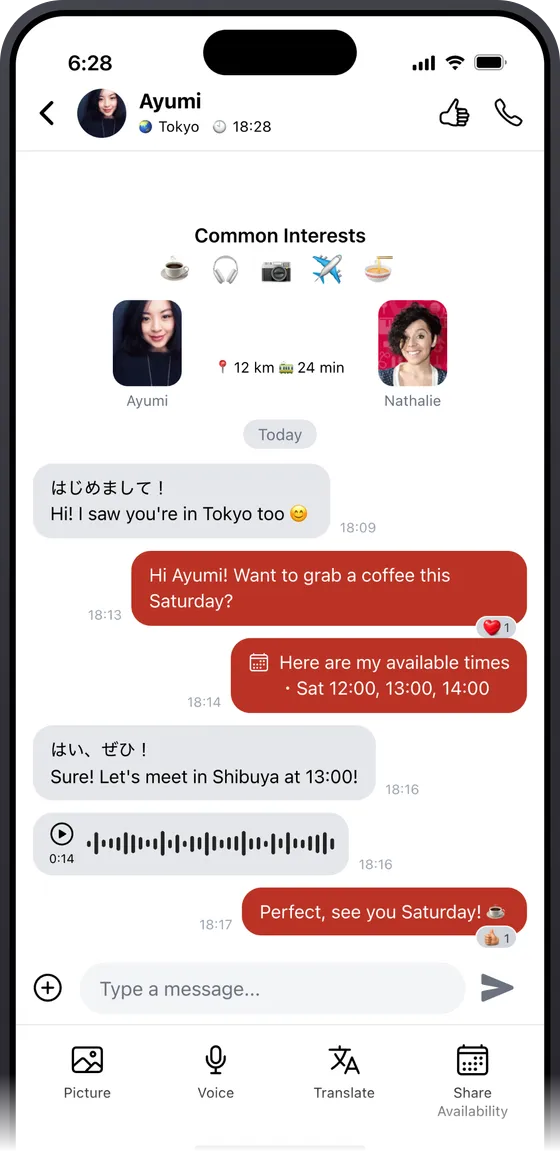
Tachikawa suits map-based apps well. As the center of the Tama area, it pulls in people who live nearby, people who work here and people coming over from Fussa and beyond. Just looking at who's around on a map shows you people from more countries than you'd expect.
It's most useful in the small gaps: after work, or a spare afternoon on a weekend. Check the map, message someone whose interests line up with yours, and suggest meeting on the north exit deck. Everyone knows Tachikawa Station, which keeps plans simple.
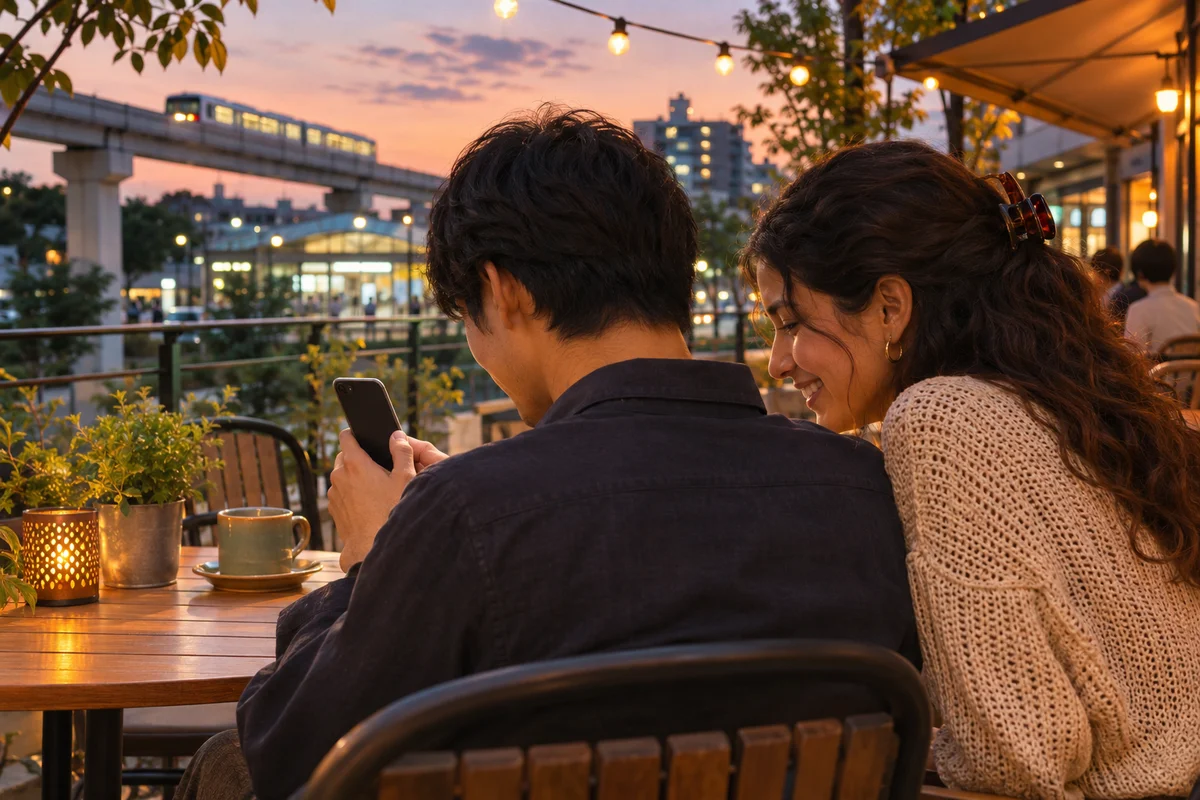
The map also goes far beyond Tachikawa. You can browse a city in another country from home and get to know the people who live there, with no travel plans needed. Or get to know people in your next destination before you fly.
If you're comparing options, see our guide to the best apps for making international friends.
By day, try the lawns at GREEN SPRINGS or Showa Kinen Park. At night, the darts bars and game bars on the north side are a good bet. Places where you can sit or walk side by side keep conversations going. If you're up for a short trip, Base Side Street in Fussa, near Yokota Air Base, is worth a visit too.
There's no single expat hub, but the NPO Tachikawa Multicultural Center supports foreign residents and runs regular activities like World Cooking, TMC Salon gatherings and the World Fureai Festival. Seasonal events at GREEN SPRINGS and Showa Kinen Park also bring people together. Check official sites for dates.
There's no Roppongi-style foreigner bar strip, but the north side has darts bars and bars with beer pong, some with English menus. Games make it easy to talk with someone you've just met.
Yes. The Tachikawa Multicultural Center recruits language volunteers and runs a Japanese class for children with foreign roots. Volunteering gives you a regular reason to see the same people, Japanese and international, every week.
Definitely. Walks and picnics at Showa Kinen Park, cafes at GREEN SPRINGS, the Faret Tachikawa art route, and community cooking sessions or volunteering are all good ways to get close without alcohol.
Want to compare other areas? See how to make friends in Shinjuku, how to make friends in Roppongi and how to make friends in Tokyo.
Tachikawa isn't as flashy as central Tokyo, but that's exactly why you keep seeing the same people.
The person you looked up at the ginkgo trees with in Showa Kinen Park. The one you traded darts throws with at a north side bar. The people at your table at World Cooking. Connect after that first meeting on socials or an app, and going from familiar face to friend doesn't take long. In the middle of Tama, someone you'll want to see again is out there.
Looking for friends in Tachikawa?
SewaYou is a map-based friendship app that shows people nearby and anywhere in the world. Find someone around Tachikawa Station or Showa Kinen Park right now and invite them for coffee, or explore a city on the other side of the world from home and make friends there. Travel plans or not, message someone who catches your eye.
Make Japanese Friends On a Live World Map
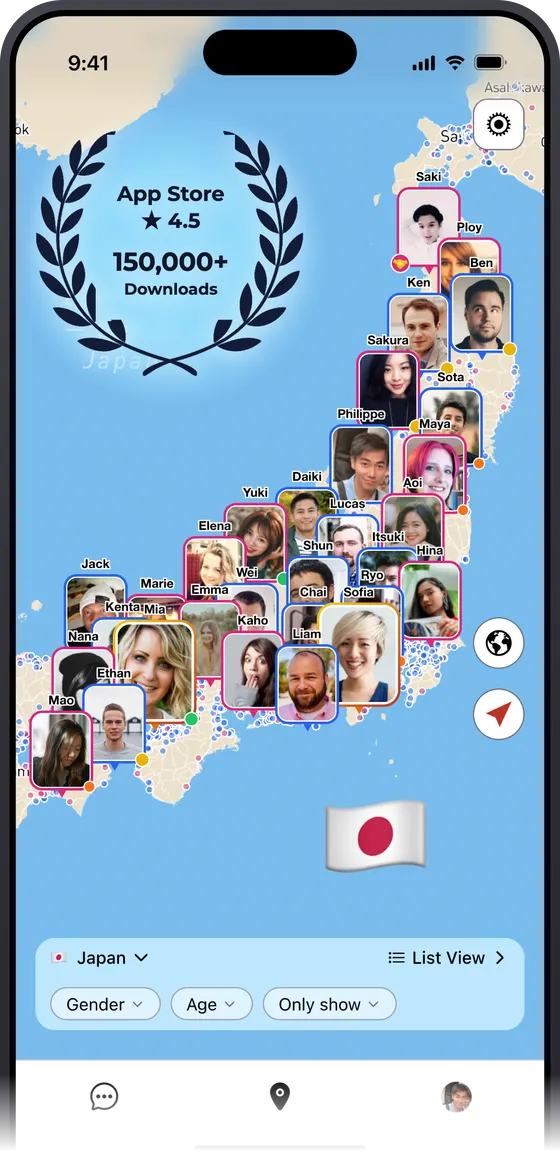
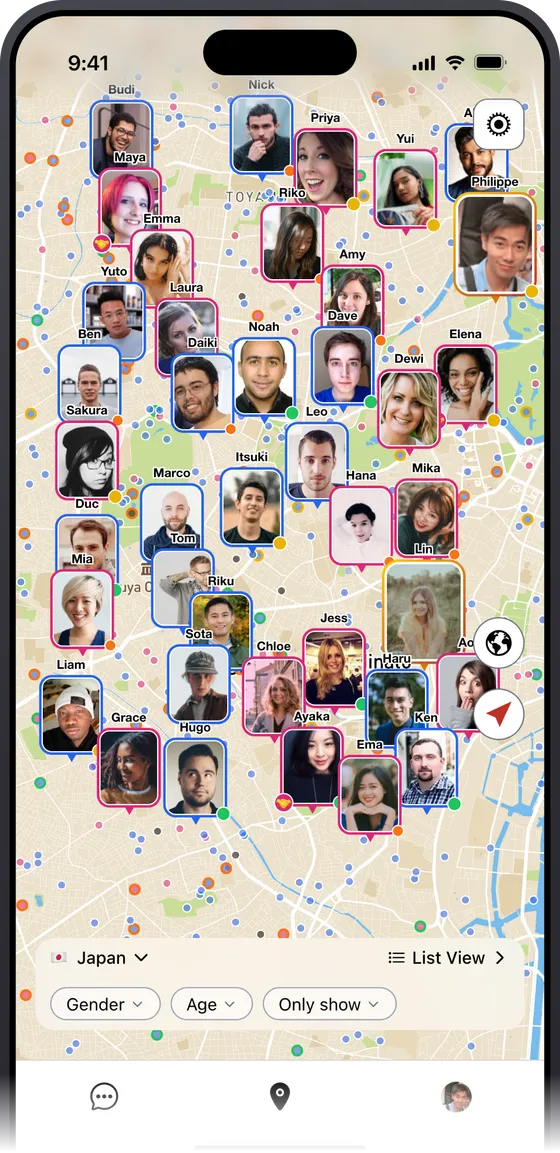


Ready to meet new people in Tachikawa? Download SewaYou and open the map.
Looking in another city? See our guide to making friends city by city.