

There is a plan almost every new arrival makes in the week before their first Japanese job, and most of them never say it out loud. The plan is simple. Keep your head down, cause no problems, and do not bother anyone until you have somehow earned the right to take up space.
If your Japanese is good enough to get by but nowhere near fluent, the plan feels even more urgent. You are already worried about bowing at the wrong moment or using casual speech with the wrong person. So you decide the safest path is to be small. Ask as little as possible. Nod a lot. Figure everything out alone so nobody has to slow down for you.
I understand the instinct completely. I also think it is the single most expensive thing you can walk into, and almost nobody warns you about it.
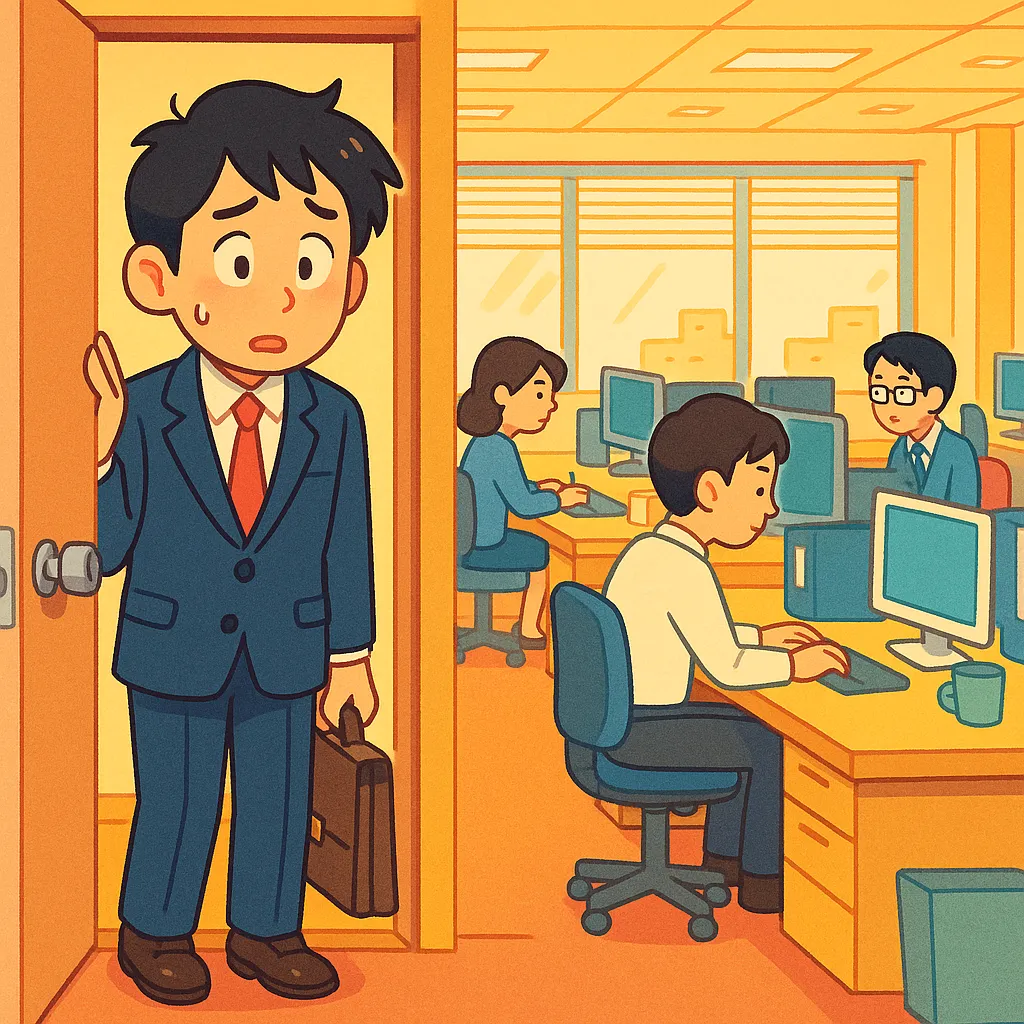
The shrinking strategy feels responsible. You are new, your Japanese is imperfect, everyone around you is fast and competent, and staying quiet looks like respect. Working things out alone looks like initiative.
Here is what it actually looks like from the other side of the desk. A new person who never asks anything is not reassuring, they are a mystery. Nobody can tell what you understood, what you missed, or whether the thing you just spent three hours on is what they actually wanted.
Trying not to be a burden becomes the burden. The silence you offered as a gift lands instead as a question mark hanging over everything you touch.
When you picture a workplace disaster, you picture something loud. A wrong word, a bad bow, a moment where the whole room turns to look at you. Those are the mistakes you keep rehearsing in your head.
But in a Japanese office, the genuinely costly errors are quiet ones. They are the things you guessed instead of confirmed. You half understood an instruction, you did not want to make someone repeat it, so you filled the gap with your best guess and got to work. A lot of the time the guess is wrong, and the wrong version does not surface until much later, when it is far more annoying to untangle.

That is the mistake that sticks. Not the awkward greeting everyone has forgotten by lunch, but the silent guess that quietly burns a whole day of work. The quiet mistakes are the expensive ones. And nearly every one of them is preventable with a single short, slightly uncomfortable question asked at the right moment.
If you learn one piece of Japanese workplace culture before day one, make it this. There is a phrase, 報連相 (hou-ren-sou), built from the words for report, contact, and consult. It is shorthand for a basic expectation: keep people updated, share information early, and check in when you are unsure.
Read that again, because it quietly flips your whole plan. Asking and confirming are not interruptions you should feel guilty about. They are the exact behavior a Japanese workplace is built to reward. The new hire who reports progress and consults early is not seen as needy. They are seen as someone who is easy to work with and safe to hand things to.
So the thing you were planning to avoid at all costs turns out to be the thing that earns you trust. Asking early is the job. You do not have to be impressive in your first month. You have to be easy to read.
Here is the real catch. Knowing you should ask is easy. Actually opening your mouth in imperfect Japanese, in front of a senior colleague, in a quiet room, when you are not sure of the right verb, is genuinely hard. The nerves eat your vocabulary alive. The sentence you rehearsed dissolves the second you need it.
That is not a knowledge problem, it is a reps problem. The ability to ask a slightly awkward question out loud, in real time, under a little pressure, is a muscle. You cannot build it by studying grammar alone at night. You build it by talking to actual people, often, in situations where getting it a bit wrong costs you nothing.

The people who walk into a Japanese workplace and ask freely from week one almost never got brave at work. They got brave somewhere safe first, then carried that nerve through the office door. Brave beats fluent. A clumsy question said out loud is worth more than a perfect one you swallowed.
The hard part is finding speaking practice that is actually low stakes. A formal lesson can feel as tense as the office itself. Apps full of strangers across the country turn into endless typing that never becomes a real conversation, and typing does not train the thing that fails you, which is your voice when you are nervous.
What helps is talking, regularly and casually, to real people who are near you and in the same boat. Not a teacher grading you, not a username three cities away, but someone close enough to actually meet, who is also practicing, who will not mind when you reach for a word and miss.
SewaYou is a map-based app that shows you real people near you who also want to make friends and practice a language. You set the map to your own neighborhood and find locals and fellow residents who are genuinely close by, so a chat can turn into a coffee, and a coffee becomes the casual, no-stakes speaking practice that slowly makes you brave. You can also explore anywhere on the world map. When you focus on your own area, these are people you can see again, which is what turns practice into a habit instead of a one-off.
Make Japanese Friends On a Live World Map
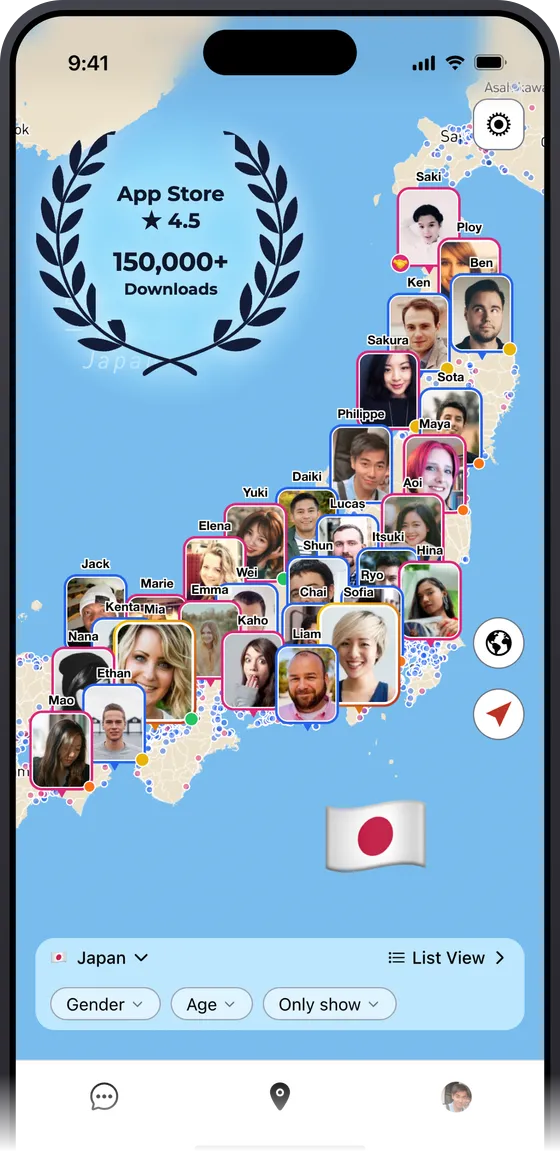
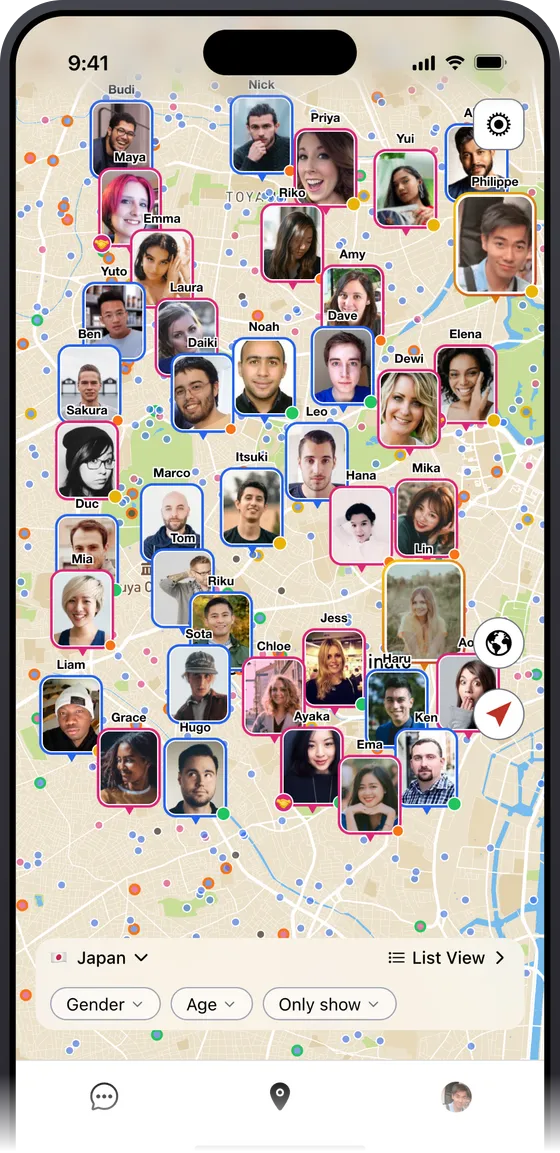
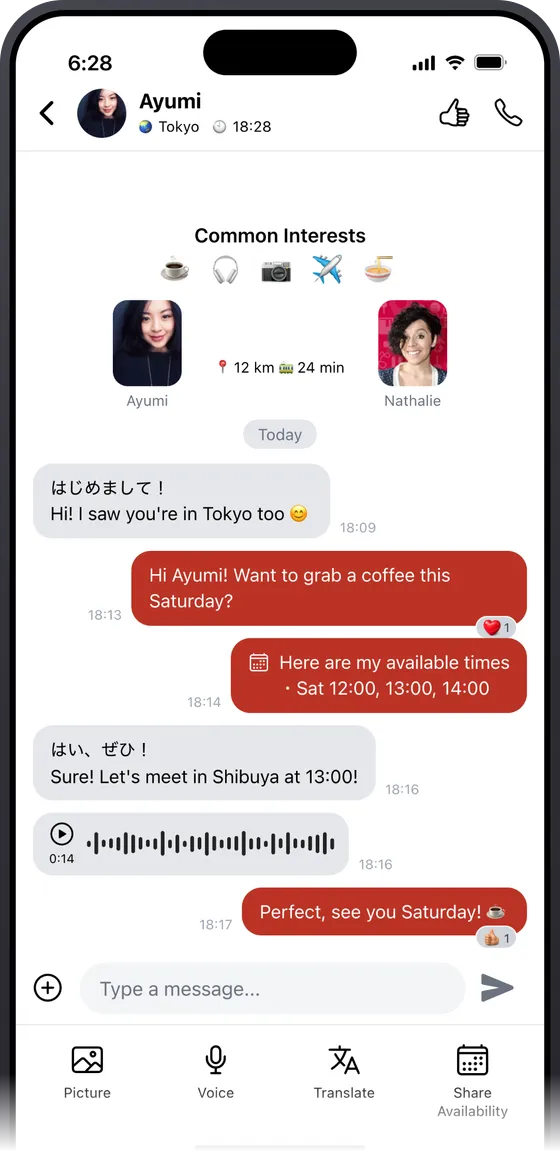


So drop the plan to disappear. Take the workplace seriously, learn 報連相, and then build the one thing that makes it possible to actually use it: the simple, well-practiced nerve to ask. Before your first day arrives, set the map to your area, read a few honest profiles, and start one real conversation. Get your first awkward questions out of the way somewhere safe, so that on day one, asking already feels like something you do.
On SewaYou, the people on the map are nearby and waiting for the same first message you are.
For the bigger picture on not letting work swallow your whole identity, Your Job in Japan Is Not Allowed to Be Your Whole Life.
For breaking out of the only-coworkers trap, How to Escape the Foreigner Bubble in Japan.


